BookBrief
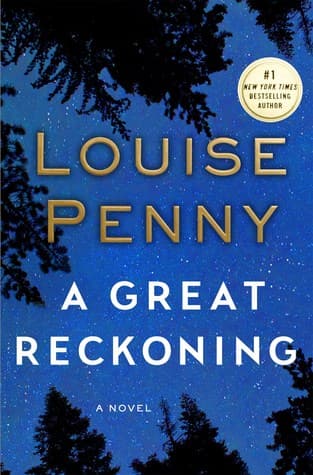
A Great Reckoning cover
Archivist's Choice

A Great Reckoning

Louise Penny (2016)

Genre

Thriller / Mystery

Reading Time

450 min

Key Themes

See below

Track Your Reading

Sign in to track this book

Chief Inspector Gamache must face his past and the dark secrets within the police academy he now leads, all while investigating a murdered professor, a cryptic antique map, and suspicions that point directly at him.

Synopsis

Chief Inspector Armand Gamache, now head of the Sûreté du Québec academy, gets a mysterious old map as a gift. At the same time, a copy of the same map is found with the body of a murdered professor at the academy. Gamache investigates, focusing on four cadets, especially Amelia Choquet, a rebellious former street kid who was close to the dead professor. As the investigation continues, it uncovers corruption within the Sûreté academy, involving high-ranking officials and a hidden organization. Gamache's past actions and his connection to Amelia make him a suspect. The map, initially a curiosity, shows a hidden history connected to the academy's founding, a tragic past involving Serge Leduc and his sister, and a stained-glass window in Three Pines. Gamache eventually identifies Superintendent Robert Lemieux as the person behind the corruption and the professor's murder, done to protect his illegal activities. Gamache must confront the Sûreté's dark history while protecting his cadets and upholding justice, leading to Lemieux's downfall and new hope for the academy's future.
Reading time
450 min
Difficulty
Medium
Pacing
Moderate
Mood
Atmospheric, Suspenseful, Thought-provoking, Dark
✓ Read this if...
You enjoy character-driven mysteries with a strong sense of place, intricate plots, and explorations of morality and corruption within institutions.
✗ Skip this if...
You prefer fast-paced, action-heavy thrillers without much introspection or detailed character development.

Plot Summary

A Mysterious Map and a New Beginning

Armand Gamache arrives at the Sûreté du Québec Academy in Nicolet to start his new job as commandant, with the goal of ending corruption. On his first day, the outgoing commandant, Superintendent Fontaine, gives him a mysterious, old, hand-drawn map. This map, called 'The Plage,' shows an area that seems to mix real and imaginary places, with Latin phrases and strange symbols. At the same time, in Three Pines, Gabri and Olivier find a similar map in a wall of the bistro during renovations. Soon after Gamache starts at the Academy, Professor Stephen Horowitz, a respected but controversial lecturer, is found murdered in his room. Next to his body is a copy of the same unusual map.

The Cadets and the Investigation Begins

Gamache quickly identifies four cadets who were close to Professor Horowitz: Amelia Choquet, a troubled young woman with a criminal past; Serge Leduc, a smart but arrogant cadet; Sophie Dubois, quiet and observant; and Veronique Tremblay, earnest and seemingly innocent. These four were in a special seminar with Horowitz, where they discussed ethics and the difficult parts of policing. As Inspector Lacoste from Homicide begins investigating Horowitz's murder, Gamache becomes a suspect because of his new position and the map found with the body, which he also has. The cadets, especially Amelia, become key to the mystery, as each has possible reasons and secrets.

Amelia Choquet's Past and the Academy's Corruption

It comes out that Gamache has a personal connection to Amelia Choquet. Years earlier, he had saved her from a life of crime and encouraged her to join the Sûreté, seeing her potential despite her difficult past of abuse and neglect. This connection makes his role in the murder investigation more complicated. As Gamache starts his work as commandant, he finds the Academy full of systemic corruption, a problem he was brought in to fix. He notices the subtle ways cadets are tested, not just academically but morally, and how the institution itself seems to continue certain bad traditions and power structures, especially concerning a secret group called 'the Plage.'

The Plage and Horowitz's Legacy

Gamache, with Jean-Guy Beauvoir and Isabelle Lacoste, looks into the history of 'The Plage.' They discover it is not just a fictional place on the map but a secret, powerful, and corrupt organization within the Sûreté, going back decades. Professor Horowitz had been researching this secret group, planning to expose its members and activities. His seminar with the four cadets was partly a way to test their moral judgment and prepare them for the tough realities of policing, possibly even getting them ready to help him with his exposé. The Latin phrases on the map, at first thought to be just obscure, are found to be clues and warnings about this shadowy group.

A Second Death and Heightened Stakes

The investigation takes a bad turn when a second body is found: Veronique Tremblay, one of the four cadets in Horowitz's seminar, is found dead, an apparent suicide. However, Gamache and his team quickly suspect murder. Veronique had been upset and had told others she felt threatened. Her death, like Horowitz's, is connected to 'the Plage' and the secrets Horowitz was trying to uncover. This second death raises the stakes a lot, suggesting the killer is still active within the Academy and is targeting those close to Horowitz's research. Suspicion falls more heavily on the remaining cadets and even on Gamache himself, as his reform efforts are seen as a threat.

The Map's True Meaning and Three Pines Connection

The map found in Three Pines by Gabri and Olivier, and the copies found at the Academy, are more than just interesting items. They are a literal and symbolic guide to the Sûreté's corruption and a key to understanding Horowitz's murder. 'The Plage' on the map represents the secret, elite, and very corrupt group within the Sûreté, whose members have protected each other for years. The map also points to a specific place in Three Pines – the stained-glass window in the church. This window, showing Saint Jude, holds a hidden secret central to 'the Plage's' activities and the cover-up of past crimes, connecting the quiet village to the Academy's dark side.

The Stained Glass Window and Past Crimes

Gamache, with his family and friends in Three Pines, including Myrna and Ruth, finds a hidden compartment behind the stained-glass window of Saint Jude in the village church. Inside, they find old documents, photographs, and records that show 'the Plage's' long history of covering up crimes, framing innocent people, and protecting its own. These documents specifically detail a cold case from decades ago, where a young woman was falsely accused and jailed for a murder committed by a member of 'the Plage.' This discovery proves Horowitz's theories about the deep corruption and provides solid evidence against the secret group, confirming his dangerous research.

The Confession of Serge Leduc

Under great pressure and with growing evidence against him, Cadet Serge Leduc confesses to the murders of Professor Horowitz and Veronique Tremblay. He claims he killed Horowitz to protect 'the Plage' and Veronique because she was about to expose him. While the confession seems to end the case, Gamache is not convinced. He believes Leduc is a pawn, forced or tricked into confessing to protect a larger group of corrupt officers. Gamache suspects that the real person behind the murders, and the leader of 'the Plage,' remains hidden, controlling things from the shadows. The confession feels too easy, too simple, for the complex corruption they have uncovered.

The True Mastermind Revealed

By careful thought and understanding the subtle clues left by Horowitz and the map, Gamache realizes that Superintendent Fontaine, the former commandant who gave him the map, is the true leader of 'the Plage' and the one who planned the murders. Fontaine had been using Leduc as a scapegoat and had carefully planned Horowitz's murder to prevent 'the Plage' from being exposed. He had also made Veronique's death look like a suicide. Gamache confronts Fontaine, revealing his knowledge of Fontaine's long history of corruption, his role in the old cover-up, and his ultimate responsibility for the recent deaths. Fontaine's reason was to protect 'the Plage' and his own power within the Sûreté.

A Great Reckoning and Future Hopes

In a final confrontation, Gamache exposes Fontaine's crimes and his leadership of 'the Plage' to the authorities. Fontaine is arrested, and the old, corrupt secret group within the Sûreté is finally broken up. The evidence found in the Three Pines church, along with Horowitz's research and Gamache's careful investigation, ensures that justice is served, not only for Horowitz and Veronique but also for the victims of 'the Plage's' past wrongdoings. Amelia Choquet, after going through the emotional difficulties and dangers of the investigation, finds a sense of purpose and belonging. She chooses to stay at the Academy, committed to upholding the true values of policing, now under Gamache's guidance, suggesting a new, hopeful time for the Sûreté du Québec.

Principal Figures

Armand Gamache

The Protagonist

Gamache moves from a position of authority in homicide to one of reform at the Academy, facing both external and internal battles to cleanse the Sûreté.

Amelia Choquet

The Supporting

Amelia grapples with her past and present, ultimately choosing a path of integrity within the Sûreté, guided by Gamache's mentorship.

Stephen Horowitz

The Mentioned/Catalyst

Though deceased, Horowitz's actions and research posthumously expose deep corruption within the Sûreté.

Jean-Guy Beauvoir

The Supporting

Beauvoir continues to grow in his role as Gamache's trusted confidant and investigator, proving his loyalty and capability.

Isabelle Lacoste

The Supporting

Lacoste navigates the complexities of investigating a superior, eventually aligning with Gamache to expose deeper corruption.

Serge Leduc

The Supporting/Antagonist

Leduc attempts to use his intelligence to navigate and control the situation, but ultimately becomes a pawn in a larger game of corruption.

Superintendent Fontaine

The Antagonist

Fontaine is exposed as the ultimate corrupt force within the Sûreté, culminating in his downfall and the dismantling of 'the Plage.'

Ruth Zardo

The Supporting

Ruth remains a steadfast, if eccentric, voice of truth and observation within the Three Pines community.

Myrna Landers

The Supporting

Myrna continues to offer wisdom and stability to Gamache and the community of Three Pines.

Themes & Insights

Corruption and Integrity

The main theme is the deep corruption within the Sûreté du Québec, shown by 'the Plage' and its leader, Superintendent Fontaine. Gamache's job at the Academy is to expose and get rid of this corruption, leading to a conflict between institutional decay and individual honesty. The novel explores how corruption can become normal over time, affecting generations of officers, and the great courage needed to oppose it, as shown by Horowitz's research and Gamache's strong moral stance. The cadets' moral choices reflect the struggle between giving in to or resisting this widespread influence.

Evil is the lack of empathy. If you can understand that, you can understand a lot.

Armand Gamache

Mentorship and Legacy

Mentorship is important, especially through Gamache's relationship with Amelia Choquet and Professor Horowitz's effect on his cadets. Gamache's past kindness to Amelia directly leads to her being at the Academy, making her a key, though complicated, part of the investigation. Horowitz, through his seminar and the map, tries to leave a legacy of telling the truth, even after his death, guiding Gamache to uncover 'the Plage.' The novel explores how mentors greatly affect their protégés, shaping their moral values and influencing their choices for good or bad, and how these legacies can either continue or break cycles of corruption.

What you permit, you promote.

Stephen Horowitz (often quoted)

The Nature of Truth and Deception

The story constantly deals with how hard it is to find truth, hidden under layers of lies, secrets, and institutional cover-ups. The mysterious map itself is a symbol of this, a mix of truth and fiction meant to both reveal and hide. Characters like Fontaine act through complex deceptions, manipulating others to protect their secrets. Gamache's role is to remove these layers, telling real clues from false ones. The cadets, too, must learn to tell truth from the tempting lies of power, making them face uncomfortable facts about themselves and the institution they want to join.

It took a very long time for them to realize that the map was not of a place, but of a time. A history.

Narrator

Redemption and Second Chances

Amelia Choquet's journey shows the theme of redemption and second chances. Despite a troubled past of crime and difficult situations, Gamache believes she can change and offers her a way to a new life within the Sûreté. Her struggles during the investigation show how hard it is to overcome one's past and the prejudices that come with it. The novel suggests that even institutions, like the Sûreté, can seek redemption through reform, getting rid of their corrupt parts to become forces for good. Gamache's own past decisions and their results also reflect this theme, as he tries to correct past wrongs.

We are all capable of good and evil. The question is, which do we choose to feed?

Armand Gamache

The Power of Symbols and Language

Symbols and language are important in the mystery, especially the puzzling map with its Latin phrases and strange drawings. The map is not just a plot device but a key to understanding the deeper history of corruption. The stained-glass window in the Three Pines church, with its hidden compartment, is also a strong symbol, hiding evidence of past injustices. Ruth Zardo, a poet, often gives insights into the hidden meanings of words and symbols, helping Gamache look beyond the obvious. This theme shows how truth can be coded and kept in unexpected forms, waiting to be understood.

Sometimes the smallest word holds the greatest truth.

Ruth Zardo

Plot Devices & Literary Techniques

The Plage Map

A mysterious, hand-drawn map that serves as both a literal and metaphorical guide to corruption.

The 'Plage' map is the central plot device, initially given to Gamache and later found with Horowitz's body. It depicts a combination of real and fictional locations, filled with Latin phrases and cryptic symbols. It functions as a puzzle, gradually revealing the existence and history of 'the Plage' – a secret, corrupt society within the Sûreté. The map acts as Horowitz's posthumous guide, leading Gamache to uncover the truth. Its duality, being both a physical object and a metaphorical representation of a hidden world, drives the entire investigation, linking past crimes to present ones and tying the Academy to Three Pines.

The Sûreté Academy Setting

The primary setting, symbolizing institutional corruption and the crucible for future officers.

The Sûreté Academy in Nicolet serves as a critical plot device. It is not just a backdrop but a character in itself, embodying the institutional corruption Gamache is tasked with rooting out. The Academy's traditions, its power dynamics, and its secret societies ('the Plage') are integral to the plot. It acts as a microcosm of the larger Sûreté, where young cadets are either groomed for integrity or drawn into the corrupt system. The confined, high-pressure environment intensifies the mystery and forces confrontations, highlighting the challenges of reform from within a deeply flawed institution.

The Stained Glass Window

A symbolic and literal hiding place for evidence of historical corruption.

The stained-glass window of Saint Jude in the Three Pines church is a significant symbolic and literal plot device. It initially appears as a beautiful, unremarkable piece of art, but it conceals a hidden compartment containing crucial documents. These documents expose the historical misdeeds and cover-ups orchestrated by 'the Plage,' providing concrete evidence to support Horowitz's research and Gamache's suspicions. The window symbolizes how truth can be hidden in plain sight within seemingly innocent or sacred spaces, connecting the idyllic village to the Sûreté's dark past and providing the ultimate 'reckoning' for the corrupt.

The Four Cadets (Amelia, Serge, Sophie, Veronique)

A group of characters who represent different moral choices and avenues of investigation.

The four cadets in Professor Horowitz's seminar – Amelia Choquet, Serge Leduc, Sophie Dubois, and Veronique Tremblay – function as a collective plot device. Each cadet represents a different response to the corrupt environment and a different facet of the investigation. Their individual backstories, motivations, and relationships with Horowitz and each other provide multiple avenues for suspicion and discovery. They serve as a moral compass for the reader, showcasing the pressures faced by those entering a flawed system. Their interactions and secrets are crucial in unraveling the murder and exposing 'the Plage.'

Critical analysis

Notable Quotes

It was the most astonishing thing, to realize that the person you thought you knew, the person you loved, was capable of such a thing. And not just capable, but had done it. And done it for years.

Armand Gamache reflecting on the betrayal and hidden life of Beauvoir's father.

Evil isn't born, it's made. And it's made by us. By our choices. By our indifference. By our silence.

Gamache's philosophical musings on the origins of evil.

The past isn't dead. It isn't even past. It just keeps circling back, sometimes in disguise, sometimes in plain sight.

Gamache discussing the enduring impact of past events on the present.

Courage isn't the absence of fear, it's the triumph over it.

A general reflection on the nature of courage, often attributed to characters like Gamache or Lacoste.

We're all broken. That's how the light gets in.

A poignant observation on human imperfection and vulnerability, echoing a common theme in the series.

The greatest trick the devil ever pulled was convincing the world he didn't exist.

A classic line, used in the context of hidden evils and the difficulty of recognizing them.

Sometimes the kindest thing you can do is to let go. To let go of the anger, the pain, the need for revenge.

Gamache's advice on forgiveness and moving forward.

Every secret comes with a cost. And the longer you keep it, the higher the price.

Reflecting on the burden and consequences of keeping secrets.

It’s not just about finding the killer. It’s about understanding the darkness that led to the killing.

Gamache explaining his approach to investigations, focusing on motives and human nature.

The truth has a way of coming out, eventually. Like a stubborn weed, it pushes through the cracks.

A character's belief in the inevitability of truth being revealed.

We are defined not by our mistakes, but by how we recover from them.

A message of resilience and growth after error, often a theme for Beauvoir.

There’s a difference between being right and doing right.

Gamache's moral compass guiding his decisions, even when unpopular.

Life is a series of choices. And each choice has a ripple effect.

A general observation on the interconnectedness of actions and consequences.

Quiz

Test Your Knowledge

Ready to see how well you understood this book? Take our interactive quiz with 10 questions.

10
Questions
~5
Minutes
?
Best Score

Key Questions (FAQ)

"A Great Reckoning" sees former Chief Inspector Armand Gamache begin a new role as commandant of the Sûreté academy, where he uncovers corruption and murder. A mysterious old map, found in the walls of the bistro in Three Pines, connects to a dead professor at the academy and implicates Gamache himself in the unfolding mystery. The investigation delves into his past, his relationship with a troubled cadet named Amelia Choquet, and the dark secrets hidden within the academy and Three Pines.

About the author






