“The dead don't talk, but they listen, and sometimes they whisper in the wind.”
— Opening line introducing the cemetery setting and its inhabitants.

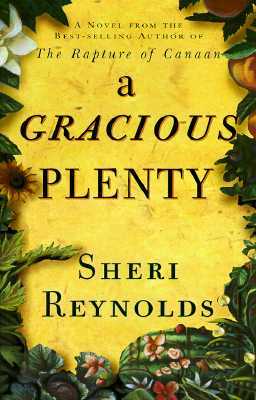
Sheri Reynolds (1997)
Genre
Fantasy
Reading Time
240 min
Key Themes
See below
Sign in to track this book
Scarred by fire and shunned by the living, a young woman finds comfort and understanding in the spectral voices of the dead in her father's cemetery, uncovering forgotten lives and untold secrets.
Finch Nobles lives in the rural, isolated town of Gracious Plenty. As a young child, she suffers severe burns when a kerosene lamp explodes. Her face and body are permanently disfigured, making her an outcast in the community. She finds comfort in her father's cemetery, a place she visits daily. From a young age, she begins to hear faint whispers from the graves, which she first thinks are her imagination or the wind. As she gets older, these voices become clearer, eventually revealing themselves as the spirits of the deceased, sharing parts of their lives and deaths. Her father, a quiet and distant man, does not know about her unique gift, though he lets her be herself among the tombstones.
As Finch grows up, the voices from the graves change from whispers to clear stories. She learns about the lives, loves, and regrets of the town's dead, gaining detailed knowledge of Gracious Plenty's past. This unique connection increases her isolation from the living, as she struggles to relate to people who cannot understand her experiences. Her appearance also adds to her reclusive nature; she often wears a veil or hides her face, preferring the company of the dead to the stares and pity of the living. Her only regular interactions are with her father, who sees her as a quiet helper, and occasionally with Mrs. Clara, a kind but unusual neighbor.
Reverend Millard, a young and engaging preacher, arrives in Gracious Plenty. He brings a new perspective that both interests and bothers the community. Finch, at first wary of his attempts to talk to her, watches him from afar, gathering information about him from the cemetery voices. The spirits reveal details about the town's hidden biases and the complex relationships that existed before their deaths, giving Finch a deeper understanding of the living community's dynamics. Millard, despite Finch's distance, keeps trying to connect with her, seeing beyond her physical scars to a unique spirit. His presence gently challenges Finch's long-held isolation, sparking a bit of curiosity about the world outside the cemetery.
Finch's interactions with Reverend Millard become more frequent, though still cautious. He shows her genuine kindness and respect, treating her not as a victim but as someone with valuable insights. At the same time, Mrs. Clara, an elderly woman in town, begins to confide in Finch, sharing stories and seeking comfort. Finch, using what she learns from the dead, offers Mrs. Clara meaningful and often mysterious advice, which the older woman finds very comforting. These growing relationships with Millard and Mrs. Clara slowly begin to lessen Finch's self-imposed isolation, making her question her complete separation from the living world. She starts to see that her gift can be a connection, not just a barrier.
Among the many voices, Finch becomes especially interested in the faint, sad whispers coming from an unmarked grave, believed to be that of a baby. The spirits of other townspeople hint at a sad secret around this infant's death and burial. Finch feels a strong need to uncover the truth, sensing a deep wrong. By listening carefully and putting together fragmented stories from various deceased residents, she learns that the baby was born outside of marriage to a young woman named Lily and that its death was surrounded by shame and secrecy, involving some important living members of the community. This mystery becomes a main focus for Finch, pushing her to use her unique abilities for a specific goal.
Finch carefully puts together the full story of Lily, a young woman who was shunned and shamed by the community for her pregnancy. The voices reveal that Lily's baby was stillborn or died soon after birth, and because of the town's harsh judgment, she was forced to bury the child in secret, without proper recognition or mourning. The spirits expose the roles played by various living townspeople in Lily's suffering, especially the strict moral attitudes that condemned her. This revelation deeply affects Finch, as she sees a similarity between Lily's rejection and her own, though for different reasons. The truth of Lily's story shows the hypocrisy and lack of kindness in Gracious Plenty, strengthening Finch's desire for justice for the forgotten infant.
Moved by a sense of duty to Lily and her baby, Finch decides to tell the living community the truth. She chooses a public setting, likely a church service or town gathering, to share the story. With new courage, she speaks not only for herself but for the voiceless dead, detailing Lily's sad situation and the town's involvement. Her words, though spoken with quiet certainty, shock the townspeople, making them face their past actions and the results of their judgments. Reverend Millard, seeing Finch's bravery, supports her, further validating her claims. The revelation creates clear tension, making the community deal with uncomfortable truths.
The town's first reaction to Finch's revelations is a mix of shock, denial, and anger. Some residents are defensive, unwilling to admit their past wrongs, while others are visibly moved by the weight of the truth. However, Finch's steady conviction and the clear details she provides, which resonate with some older members of the community, begin to break through their resistance. The story of Lily and her baby forces a collective self-reflection. While not an immediate embrace, there is a subtle change in how the town sees Finch. She is no longer just the scarred outcast but a truth-teller, a link to their shared history, and a voice for the forgotten. The first steps of change are taken, suggesting a more compassionate future for Gracious Plenty.
After her brave act, Finch starts to experience a different kind of acceptance from the town. While her scars remain, her perceived strangeness turns into respect for her unique ability to connect with the past. Reverend Millard continues to be a supportive presence, building a deep, unspoken understanding between them. Finch no longer feels the need to hide her face or her gift. She realizes her role is not just to listen to the dead, but to explain their stories for the living, providing comfort, closure, and wisdom. She becomes an important, though unusual, part of Gracious Plenty, bridging the gap between generations and between life and death. Her isolation is replaced by a sense of purpose and belonging.
Finch fully accepts her identity as the listener to the dead, a role that brings her both comfort and influence. She continues to visit the cemetery, not just for refuge, but as a source of wisdom and connection. Her relationship with Reverend Millard grows into a deep spiritual and emotional bond, based on mutual respect and understanding. She finds a true sense of belonging in Gracious Plenty, no longer defined only by her scars but by her extraordinary gift. The town, in turn, slowly learns to appreciate her unique perspective, seeing her as a keeper of history and a source of quiet wisdom. Finch's journey ends with a sense of peace, having found her place where the living and the dead coexist, and where her voice, once unheard, now has meaning.
The Protagonist
From a reclusive, scarred outsider, Finch transforms into a courageous truth-teller and a vital bridge between the living and the dead, finding acceptance and purpose.
The Supporting
Remains largely consistent, a quiet anchor for Finch, demonstrating silent acceptance and unwavering presence.
The Supporting
Starts as an outsider trying to connect, and through his interactions with Finch, becomes an integral part of her acceptance and the town's awakening.
The Supporting
Remains a consistent, supportive figure, benefiting from Finch's unique wisdom and helping Finch connect with the living.
The Mentioned
Her story is revealed retrospectively, acting as a catalyst for Finch's personal and communal awakening.
The Supporting
Their collective narrative guides Finch's journey, becoming clearer and more purposeful as she learns to interpret them.
The Supporting
Initially judgmental and dismissive, they are slowly forced to confront their past and begin to accept Finch and her unique gift.
Finch's severe burns and ability to hear the dead first lead to deep isolation from the living. She finds comfort and connection only among the deceased, who share their stories freely. However, through her interactions with Reverend Millard and Mrs. Clara, and by using her gift to bring justice to Lily, Finch begins to connect her inner world with the community. This theme shows how even deep isolation can become a unique form of connection and belonging, using one's differences as a bridge instead of a barrier.
“The dead, they don't judge you by your face. They only care about what's true.”
The novel relies heavily on uncovering hidden truths, especially through the collective memory of the dead. Finch acts as a channel for these memories, revealing past injustices and secrets that the living townspeople have forgotten or suppressed. The story of Lily and her baby is central to this, showing how societal shame can bury truth, and how memory, even from beyond the grave, can demand justice. This theme highlights the power of truth to heal and change a community, even when it is uncomfortable.
“Some truths, they just sit under the ground, waiting for someone to listen.”
Finch's physical disfigurement is a main element, causing her to be judged and pitied by the living. However, her inner world is rich with empathy, wisdom, and courage. The story consistently contrasts the superficial judgments based on her appearance with the deepness of her character and her unique spiritual gift. Reverend Millard's ability to see beyond her scars is important to her growth. This theme questions common ideas of beauty and worth, showing that true value is internal and that external flaws can often hide extraordinary abilities.
“They saw the burns, but they never saw the listening.”
Gracious Plenty, as a community, is at first shown as inward-looking, judgmental, and weighed down by unaddressed past wrongs, as seen in their treatment of Lily. Finch's act of revealing the truth about Lily's baby forces the town to face its collective conscience. While the path to redemption is not quick or easy, the novel suggests that acknowledging past mistakes and accepting truth can lead to healing and a more compassionate community. Finch, once an outcast, becomes an important part of this changing community, helping it move toward a more 'gracious plenty' for all.
“A town can't truly live until it remembers all its dead, and what it did to them.”
The cemetery functions as a dynamic library of the town's history and secrets.
The cemetery in 'A Gracious Plenty' is more than just a burial ground; it acts as a living, breathing archive of the town's past. Each grave represents a narrative, and the collective voices of the dead form a comprehensive, albeit fragmented, historical record. This device allows Finch to access intimate details of Gracious Plenty's history, its inhabitants' lives, and its hidden truths, particularly the story of Lily. It serves as the primary source of information and wisdom for Finch, guiding her actions and shaping her understanding of both life and death. The cemetery is essentially a character in itself, constantly whispering its secrets.
Finch's unique ability to hear and communicate with the dead.
Finch's supernatural ability to hear and later converse with the spirits of the deceased is the central magical realism element and a key plot device. This gift not only defines her character and her isolation but also drives the entire narrative. It allows her to gain profound insights, uncover hidden injustices (like Lily's story), and ultimately act as a bridge between the living and the dead. Without this ability, Finch would remain a mere outcast; with it, she becomes the town's reluctant oracle and catalyst for change. It's the engine that propels the story's unique blend of the mundane and the miraculous.
A specific, forgotten grave that symbolizes collective guilt and forgotten injustice.
The unmarked grave of Lily's baby serves as a powerful symbolic plot device. Its anonymity and the tragic story it represents encapsulate the collective shame, hypocrisy, and forgotten injustices of the Gracious Plenty community. Finch's persistent efforts to uncover the truth behind this specific grave highlight her empathy and determination. It acts as a focal point for the narrative, providing a tangible mystery for Finch to solve and a concrete injustice for her to rectify. The eventual recognition and memorialization of this grave symbolize the town's potential for redemption and healing, catalyzed by Finch's actions.
Finch's physical act of concealing her disfigured face, symbolizing her isolation and later her courage.
Finch's habit of wearing a veil or otherwise concealing her burned face is a significant symbolic and character device. Initially, it represents her self-consciousness, her desire to avoid the pity and stares of the living, and her self-imposed isolation. As the story progresses and Finch gains confidence and purpose, her willingness to reveal her face, especially during her public confrontation, signifies her newfound courage, self-acceptance, and her readiness to fully engage with the living world. It marks a crucial turning point in her character arc, showing her transition from hiding to embracing her true self, scars and all.
“The dead don't talk, but they listen, and sometimes they whisper in the wind.”
— Opening line introducing the cemetery setting and its inhabitants.
“A story untold is a wound that never heals.”
— Reflection on the importance of sharing secrets and histories.
“In a graveyard, the only thing that grows is regret.”
— Observation about the emotional landscape of the cemetery.
“We are all just keepers of each other's ghosts.”
— Philosophical musing on memory and connection.
“The truth doesn't set you free; it just gives you something heavy to carry.”
— Challenging the common adage about truth and freedom.
“A name is a story waiting to be remembered.”
— Reflection on tombstones and the identities of the dead.
“Grief is a language that only the broken can speak fluently.”
— Describing the shared experience of loss among characters.
“The living visit the dead, but the dead visit the living in dreams.”
— Exploration of the boundary between life and death.
“Forgiveness is a seed that grows in the soil of understanding.”
— Advice given to a character struggling with past hurts.
“Silence is not empty; it is full of answers we refuse to hear.”
— Meditation on the power of quiet and introspection.
“Every ghost is just a story that hasn't found its ending.”
— Explanation of the lingering spirits in the cemetery.
“Love doesn't die; it just changes its address.”
— Comforting thought about enduring bonds beyond death.
“The heart is a cemetery where we bury our deepest hurts.”
— Metaphor for emotional pain and memory.
“To listen is to hold someone's soul in your hands.”
— Emphasizing the importance of empathy and attention.
Ready to see how well you understood this book? Take our interactive quiz with 10 questions.

Biography coming soon.







