“The dead are not dead until they are forgotten.”
— Reflection on memory and loss in Vietnamese culture.

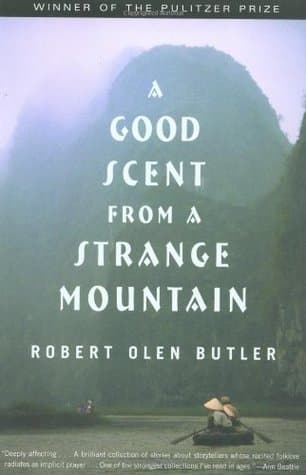
Robert Olen Butler (1992)
Genre
Literary Fiction / Historical Fiction
Reading Time
360 min
Key Themes
See below
Sign in to track this book
Robert Olen Butler's Pulitzer-winning collection uses the voices of Vietnamese immigrants and ghosts to show the lasting effects of war and memory after the Vietnam War.
In 'Love', Mr. Chinh, a Vietnamese man in Louisiana, thinks about his life after Saigon fell. He talks to the ghost of his former lover, Theresa, who died during the war. He describes moving to America, his new life with his wife and children, and his difficulties adapting to a new culture while still thinking about Vietnam and Theresa. He talks about everyday American life, like watching TV or working, but always returns to Theresa, describing moments with her and her effect on him. His story shows deep loss and how the past shapes his present, even as he tries to build a new life.
In 'The Trip Back', the story follows Bao Dai, Vietnam's last emperor, living in exile on the French Riviera. He is old, and his thoughts are a mix of longing, regret, and a desire for a Vietnam he no longer knows. He tells about his past, his childhood, his giving up power, and his political actions, all from the distant view of a man whose power and importance are long gone. He dreams of returning to Vietnam, not for power, but to see it again, to feel its air, and to reconnect with the land that defined who he was, even though he is physically separated from it.
In 'Snow', Mai, a young Vietnamese woman, travels to America with her mother to find her American father, Frank, a soldier who left Vietnam before she was born. Mai describes her impressions of America, especially the snow, which is new to her. She tells about the emotional meeting with Frank, who is now married with an American family. The story explores their new relationship, the cultural differences, and Mai's own struggle to balance her Vietnamese identity with her new American heritage. She thinks about a father who was absent for so long and what his return means for her life.
In 'Mr. Green', Mr. Van, who translated for American forces during the Vietnam War, now lives in the US and thinks about his past. He remembers translating for an American soldier, Mr. Green, who had shell shock and questioned his actions. Mr. Van's story shows the psychological cost of war, not just for soldiers but for those caught between cultures, helping communication in a conflict that divided his country. He carries the weight of seeing terrible things and the lingering guilt of his involvement, even as he tries to build a peaceful life in America.
In 'Open Arms', Mrs. Chau, an elderly Vietnamese woman, describes a recurring dream about her younger brother, who died during the war. In the dream, her brother, still a child, appears and talks about a beautiful, peaceful place. She also tells of a mystical experience where she believes she saw her brother's spirit, or her grief, in her new American home. Her story explores Vietnamese beliefs about spirits and ancestors, and how these beliefs offer comfort and help deal with loss, even in a foreign country. The dream connects her to her past and her loved ones.
In 'Good Scent from a Strange Mountain', Mr. Vinh, a former high-ranking official in the South Vietnamese government, tells about escaping Vietnam and his life as a refugee in America. He describes the difficulties of his journey and the emotional weight of leaving his homeland. He made a promise to a dying Buddhist monk in Vietnam: to find a place where the scent of the frangipani tree, sacred in Vietnamese culture, could be found again. This search becomes a metaphor for his search for peace, belonging, and a spiritual connection to his heritage in his new, unfamiliar home.
In 'A Ghost Story', Mr. Hoa, an aging Vietnamese man, struggles with his daughter becoming more American. He sees her adopting American customs and language, which creates a subtle distance between them. He tells about a conversation with his daughter about her American boyfriend and her future plans, which seem to pull her further from her Vietnamese roots. Mr. Hoa feels a sense of loss, not only for his homeland but also for the cultural bond with his daughter. He thinks about the ghosts of his past in Vietnam and how they still affect him, contrasting with his daughter's easy integration into American life.
In 'The American Couple', the story features an elderly Vietnamese illusionist, now in America, who tells about his life and his love for magic. He describes his shows in Vietnam and the wonders he created for his audiences. He watches an American couple, who seem unaware of the magic around them, which leads him to think about illusion and reality, and cultural differences in how people see them. His story shows wonder and quiet dignity, even as he lives a somewhat reduced life in exile. He sees magic as a way to go beyond reality and connect with something deeper, a feeling he thinks many Americans miss.
In 'The Fairy of Vietnam', Mr. Khanh, a Vietnamese man, finds comfort and escape in studying French. He carefully practices French, finding beauty and order in its grammar and words, which contrasts with the chaos and displacement of his past. He tells about his experiences in Vietnam, especially his admiration for French culture before the war, and how the language now connects him to a more refined, ordered world. His obsession shows a desire for a lost elegance and a way to maintain a connection to a specific part of his past before the war's trauma, giving him identity and intellectual refuge.
In 'Salem', a former Viet Cong soldier, now an old man, returns to the Vietnamese jungle where he fought. His grandson, who is largely disconnected from the historical importance of the place, goes with him. The old soldier, however, is deeply lost in his memories, telling about specific battles, the deaths of his comrades, and the harsh realities of jungle warfare. He speaks of the spirits of the dead and the lasting presence of the past in the landscape. His journey is a pilgrimage, a way to face his personal demons and to honor those he lost, showing the lasting effect of war on individuals and the land.
In 'Missing', an elderly Vietnamese mother travels to America, specifically to a Vietnamese community in Louisiana, looking for her son, a former ARVN soldier last seen during the fall of Saigon. She carries a worn photograph and a deep, steady hope. She meets different Vietnamese refugees, each with their own stories of loss and survival, but no one can give her clear news of her son. Her journey shows a mother's lasting love, the desperation of those left behind, and the unresolved grief many Vietnamese families carried after the war, showing the human cost of conflict.
The Protagonist
He moves from a state of raw grief and longing for his past to a quiet acceptance of his new life, though the past always remains present.
The Protagonist
He moves from a life of past political engagement to a state of resigned reflection, finding peace in memory and the longing for his homeland.
The Protagonist
She begins as an innocent observer of America and her father, growing to understand the complexities of her identity and new family.
The Protagonist
He carries the burden of his past as a translator, continually processing and reflecting on the moral complexities of his wartime role.
The Protagonist
She finds spiritual solace and connection to her deceased brother through dreams and cultural beliefs, allowing her to cope with loss.
The Protagonist
He transforms from a displaced official to a spiritual seeker, finding a symbolic connection to his homeland through a promise.
The Protagonist
He struggles with the bittersweet reality of his daughter's assimilation, clinging to his past while observing her future.
The Protagonist
He maintains his sense of wonder and dignity as an illusionist, even in a foreign land where his art is perhaps less appreciated.
The Protagonist
He finds a renewed sense of purpose and intellectual refuge through his dedication to the French language, connecting him to a lost cultural identity.
The Protagonist
He undertakes a pilgrimage to his past battlegrounds, seeking a form of reconciliation with his wartime experiences and fallen comrades.
The Protagonist
She embarks on a hopeful yet ultimately poignant quest to find her missing son, embodying enduring maternal love and the unresolved grief of war.
The collection explores how the past, especially the Vietnam War and life in Vietnam, shapes the characters' present lives. Memories are not just recollections but active, often haunting, presences. Mr. Chinh talks to his dead lover's ghost daily ('Love'). Bao Dai dreams of a Vietnam he cannot return to ('The Trip Back'). Mr. Van carries the trauma of his translation work ('Mr. Green'). These memories are not just personal but shared, representing a national trauma that refugees carry, making assimilation difficult and often painful.
“I carry her in the little hollow of my throat, where the skin is thin and the pulse beats. I carry her in my breath, in the air that goes in and out of me.”
Many characters deal with their Vietnamese identity in their new American lives. They are caught between two worlds, trying to balance their heritage with the need to fit in. Mai, the child of a Vietnamese mother and an American father, shows this dual identity ('Snow'). Mr. Hoa watches his daughter become American with pride and sadness, feeling the cultural distance between them grow ('A Ghost Story'). Characters find different ways to cope: some hold on to the past, some try to integrate, and others find comfort in specific cultural elements, like Mr. Khanh with the French language ('The Fairy of Vietnam').
“I want to explain to my American father that the snow, too, is a ghost.”
The stories show deep grief and loss for loved ones, for a homeland, for a way of life. Characters often seek meaning or comfort in spiritual beliefs, cultural practices, or personal quests. Mrs. Chau finds comfort in dreams of her dead brother and Vietnamese spiritual beliefs ('Open Arms'). Mr. Vinh searches for the 'good scent from a strange mountain' to keep a promise to a dying monk and find spiritual connection ('Good Scent from a Strange Mountain'). The Mother in 'Missing' shows the relentless search for a lost loved one, driven by lasting maternal grief.
“My life has been one long sorrow. But sorrow is a kind of love, isn't it? A way of holding on.”
Despite being physically displaced, the spirit of Vietnam—its culture, traditions, landscape, and people—remains strong for the characters. This appears through sensory details (the smell of frangipani, the taste of Vietnamese food), spiritual connections, or the lasting presence of the land itself. The former Viet Cong soldier in 'Salem' returns to the jungle, feeling the spirits of the dead and the history in the soil. The collection shows that while the political situation changed, Vietnam's essence continues to deeply affect its people, wherever they are.
“The jungle remembers. The trees remember. The earth remembers. We are all part of it.”
Several stories explore the unclear line between reality and illusion, especially in memories, dreams, and spiritual beliefs. Mr. Chinh's talks with Theresa's ghost are very real to him ('Love'). Mrs. Chau's dreams and visions of her brother are deeply felt and comforting, blurring the line between dream and waking life ('Open Arms'). The Illusionist, through his art, thinks about how perceptions of reality differ across cultures and how magic can offer a different truth. This theme suggests that for these characters, subjective experience and belief are as powerful as objective reality.
“Magic is not to make you see what is not there. Magic is to make you see what is there, in a way you have not seen before.”
Each story is told from the perspective of a different Vietnamese character.
Every story in 'A Good Scent from a Strange Mountain' is narrated in the first person by a different Vietnamese character. This device allows for a deeply personal and intimate exploration of individual experiences and perspectives on the aftermath of the Vietnam War and life in America. It provides direct access to the characters' inner thoughts, memories, and emotional states, creating a strong sense of authenticity and empathy. The monologues often feel like confessions or reflections, drawing the reader into the unique psychological landscape of each narrator, from the ghost-haunted Mr. Chinh to the exiled Emperor Bao Dai.
Extensive use of smells, tastes, and sounds to evoke memory and cultural connection.
Butler frequently employs rich sensory imagery, particularly focusing on smells, tastes, and sounds, to evoke memories of Vietnam and create a visceral connection to the characters' pasts. The 'good scent from a strange mountain' (frangipani) is a central metaphor, connecting Mr. Vinh to his spiritual homeland. Characters often recall the smells of specific foods, the sounds of the jungle, or the scent of a loved one. This device makes the past tangible and immediate, illustrating how sensory experiences are powerful triggers for memory and cultural identity, grounding the abstract themes of loss and displacement in concrete details.
Integration of ghosts, dreams, and mystical experiences into everyday reality.
Many stories incorporate elements of magical realism or Vietnamese spiritual beliefs, where ghosts, dreams, and mystical experiences are presented as integral parts of the characters' realities. Mr. Chinh regularly converses with the ghost of his dead lover ('Love'), and Mrs. Chau experiences vivid, meaningful dreams and visions of her deceased brother ('Open Arms'). These elements are not treated as supernatural aberrations but as natural extensions of the characters' cultural and emotional worlds, providing comfort, continuity, or a means of processing trauma. This device highlights the unique cultural lens through which these characters perceive the world and cope with their losses.
Contrasting life in Vietnam with life in America.
The narrative structure frequently juxtaposes the characters' memories and experiences in Vietnam with their current lives in America. This contrast highlights the profound changes they have undergone and the cultural dissonance they often experience. Characters might be performing mundane American tasks while their minds are entirely immersed in vivid recollections of wartime Vietnam or a lost way of life. This device underscores the theme of displacement and the ongoing struggle to reconcile two vastly different worlds, emphasizing that for many, the past is never truly left behind but continues to inform and shape the present.
“The dead are not dead until they are forgotten.”
— Reflection on memory and loss in Vietnamese culture.
“A good scent from a strange mountain is still a good scent.”
— Metaphor for finding beauty in unfamiliar places.
“We carry our country in our hearts, even when our feet are on foreign soil.”
— A character's thoughts on exile and homeland.
“The past is a ghost that whispers in your ear when you least expect it.”
— Describing the haunting nature of memories.
“In America, even the silence has a different sound.”
— Observation on cultural displacement.
“Love is not a thing you can translate into another language.”
— Comment on the ineffability of deep emotions across cultures.
“Sometimes the only way to hold on is to let go.”
— Advice about coping with loss and change.
“A story is a bridge between two worlds.”
— On the power of storytelling for immigrants.
“The moon in Louisiana is the same moon that shone over Saigon.”
— Finding connection to homeland in a new place.
“We are all exiles from our own childhoods.”
— Philosophical musing on time and innocence.
“Food is the first language of home.”
— Reflecting on how cuisine evokes cultural memory.
“The heart has its own geography, unmapped and wild.”
— Describing the emotional landscape of immigrants.
“To remember is to resist forgetting.”
— On the act of preserving history and identity.
“In the end, we are all just stories waiting to be told.”
— Closing reflection on human existence and narrative.
Ready to see how well you understood this book? Take our interactive quiz with 10 questions.

Biography coming soon.







