“There was, he reflected, something about the English that made them particularly susceptible to the lure of the tropics.”
— Charlie Fanshaw's observation about his countrymen's attraction to Africa.


William Boyd (1992)
Genre
Historical Fiction
Reading Time
7-8 hours
Key Themes
See below
Sign in to track this book
In 1980s Kinjanja, a British diplomat navigates political intrigue, venereal disease, and a dead body, all while seeking professional redemption and a ticket home.
Morgan Leafy, a jaded and self-serving Second Secretary at the British High Commission in Kinjanja, appears amidst the heat and political instability of the fictional West African country. He is immediately shown to be flawed: a womanizer, a heavy drinker, and prejudiced against the local population. His main concerns are avoiding work, pursuing women, and getting his next drink. He struggles with a venereal disease, tries to bribe an official for treatment, and generally bumbles through his diplomatic duties, showing his incompetence and moral compromises. His thoughts reveal a man always calculating his next move for personal gain or pleasure, often at others' expense.
Priscilla Fanshawe, the beautiful daughter of High Commissioner Arthur Fanshawe, arrives and immediately captures Morgan's attention. At the same time, Morgan is assigned to 'Operation Kingpin,' a secret mission to monitor Dr. Murray, a seemingly corrupt but popular frontrunner in the upcoming Kinjanian national elections. Morgan is tasked with observing Dr. Murray and reporting to his superiors, specifically Dickie Trade. He sees this as a potential path for career advancement and a way out of Kinjanja. His professional duties quickly become mixed with his personal pursuits, as he tries to balance the operation's demands with his pursuit of Priscilla, often leading to comical and disastrous results.
Morgan's ongoing struggle with venereal disease leads him to Dr. Sam Adekunle, a local physician. To get preferential treatment and silence about his condition, Morgan tries to bribe Dr. Adekunle. However, the doctor turns the tables, blackmailing Morgan with the threat of exposing his condition and his attempted bribe to the High Commission. This incident further illustrates Morgan's corrupt nature and his inability to handle even simple social interactions without creating a mess. The blackmail puts him under pressure, forcing him into desperate and morally questionable actions to protect his reputation and career, which he values most.
During a social engagement, Morgan meets a local woman, Hazel, whom he tries to seduce. Their encounter takes an unexpected turn when they find a dead body, belonging to a local politician, stored in a freezer in Hazel's house. Panicked and fearing involvement, Morgan immediately plans to dispose of the body, further entangling himself in Kinjanian politics and crime. This event raises the stakes, moving beyond professional incompetence to active involvement in concealing a potentially serious crime, forcing Morgan into desperate and ethically compromised situations.
Morgan's surveillance of Dr. Murray for Operation Kingpin is more challenging than expected. He struggles to gather concrete evidence of corruption, often due to his own incompetence and distractions. He frequently misinterprets situations or fails to understand the nuances of Kinjanian politics. His reports are often speculative and based on rumors rather than solid intelligence. The operation becomes less about gathering information and more about Morgan trying to appear competent to his superiors, particularly Dickie Trade. He finds himself caught between the mission's demands and his personal entanglements, highlighting his inability to perform his duties.
Morgan's pursuit of Priscilla Fanshawe is repeatedly blocked, not only by his own incompetence but also by Priscilla's apparent interest in other men, particularly Dr. Murray. This fuels Morgan's intense jealousy, making him even more determined to 'win' her. He sees Priscilla as a prize, rather than an individual with her own will. His attempts to sabotage her other relationships often backfire, further embarrassing him and complicating his already precarious social standing. His obsession with Priscilla becomes another significant distraction from his professional duties and personal responsibilities.
The Kinjanian national election takes place, and Dr. Murray wins, against many expectations. This outcome complicates Operation Kingpin and further destabilizes the political landscape. Morgan's reports and efforts during the operation are largely irrelevant. The election's aftermath brings increased tension and uncertainty, which Morgan, as usual, fails to handle effectively. The political shifts in Kinjanja only worsen Morgan's personal and professional problems, making his desired reassignment seem even more distant. He is left to deal with the consequences of his poor judgment.
Morgan's lies, bribes, and cover-ups begin to unravel. Dr. Adekunle's blackmail continues to threaten him, and the dead body in the freezer becomes a growing source of anxiety. His superiors, particularly Dickie Trade, grow suspicious of his erratic behavior and inconsistent reports regarding Operation Kingpin. There are hints that his venereal disease and other indiscretions are becoming known within the High Commission. Morgan finds himself increasingly cornered, facing the consequences of his actions and the exposure of his true character, leading to uncomfortable confrontations and a loss of any respect he might have had.
As things close in, Morgan becomes desperate to secure his reassignment out of Kinjanja. He tries various tactics, from exaggerating his contributions to Operation Kingpin to attempting to use any connections he might have. His desperation leads him to ill-conceived schemes and more ethical compromises. He believes that escape from Kinjanja is his only salvation, viewing it as a personal hell rather than acknowledging his own role in his misfortunes. His efforts are largely futile, as his reputation precedes him, and his previous actions have already sealed his fate within the diplomatic service.
In the resolution, Morgan's many deceptions and failures are fully exposed. His involvement with the dead body, his attempted bribes, his incompetence in Operation Kingpin, and his sexual escapades all come to light. He faces a final, humiliating confrontation with High Commissioner Fanshawe and other senior officials. Stripped of his diplomatic post and any remaining dignity, Morgan is dismissed and forced to leave Kinjanja. He departs the country in disgrace, his dreams of career advancement and reassignment shattered, leaving behind a trail of chaos and ill-will, a fitting end to his misadventures.
The Protagonist
Morgan's arc is largely one of stagnation and decline, as his flaws lead him to continuous failures and ultimately, disgrace and expulsion from Kinjanja. He gains little self-awareness.
The Supporting
Fanshawe remains largely unchanged, representing the rigid, often oblivious, colonial establishment.
The Supporting
Priscilla's arc shows her growing awareness of the complexities around her, maintaining her independence despite Morgan's attempts to control her.
The Supporting
Dr. Murray rises to political power, demonstrating the changing landscape of Kinjanja.
The Supporting
Dickie Trade remains a consistent figure of cynical manipulation, largely unaffected by the chaos around him.
The Supporting
Adekunle successfully leverages Morgan's weakness to his own advantage, demonstrating local power.
The Supporting
Hazel serves as a catalyst for Morgan's further entanglement, remaining a somewhat enigmatic figure.
The novel portrays the end of British colonialism in a fictional African nation. Morgan Leafy embodies the worst aspects of this era: a sense of superiority, contempt for local culture, and a belief in his own entitlement, all while being ineffective. The British High Commission operates with a detached, often ignorant, view of Kinjanian realities, shown by Arthur Fanshawe's pompous but ultimately weak authority. The rise of local figures like Dr. Murray and Dr. Adekunle, who outmaneuver or blackmail Morgan, symbolizes the shifting power dynamics and the impotence of the former colonial masters. Operation Kingpin's futility further shows the British inability to truly influence or understand the country.
“He hated Africa. He hated the heat, the dust, the flies, the smells, the people, the food, the very air he breathed. He hated it with a passion that bordered on the psychotic.”
Corruption exists at every level of society depicted, from local Kinjanian politicians and doctors to the British diplomatic corps. Morgan Leafy is a prime example of this moral decay; he attempts bribery, engages in sexual misconduct, and actively tries to cover up a dead body. His actions are driven by self-preservation and personal gain, with little regard for ethics or law. Even the supposedly 'clean' operation, Kingpin, is rooted in suspicion and manipulation. The novel suggests that corruption is not limited to one culture but is a human failing, made worse by power vacuums and personal weakness, as seen in Dr. Adekunle's blackmail of Morgan.
“In Kinjanja, everything had a price, and everyone was for sale, including, he was beginning to suspect, himself.”
The novel is full of absurdity, particularly through Morgan's chaotic and incompetent attempts to handle his life and duties. The diplomatic world is shown as a realm of pointless protocol, meaningless reports, and self-important individuals who achieve little. Morgan's bumbling attempts to conduct surveillance, his farcical sexual encounters, and his desperate efforts to dispose of a dead body all contribute to a darkly comedic portrayal of life's inherent meaninglessness and the futility of human effort. The idea of 'Operation Kingpin' itself, a clumsy attempt by outsiders to influence a complex political landscape, is presented as inherently absurd.
“He was a cog in a machine that was slowly grinding to a halt, and he knew it. The absurdity of it all was almost unbearable.”
Morgan Leafy's character is defined by his relentless and often degrading sexual obsession. Women are often portrayed as objects of his lust or tools for his manipulation, rather than individuals. His pursuit of Priscilla Fanshawe, in particular, is driven by a possessive desire, rather than genuine affection. His venereal disease serves as a constant, physical reminder of his promiscuity and lack of self-control. The novel highlights how destructive such obsessions are, as they consistently distract Morgan from his responsibilities and lead him into compromising situations, cementing his moral decline and the novel's cynical view of his character.
“Women, he thought, were either to be pursued, conquered, or avoided. There was no middle ground, no comfortable truce.”
The contrast between expectation and reality, often used for comedic or critical effect.
Irony is a pervasive device, particularly situational and dramatic irony. Morgan's self-perception as a shrewd operator often clashes with his actual incompetence, leading to humorous and humiliating outcomes. For instance, his attempt to bribe Dr. Adekunle backfires spectacularly, making him the victim of blackmail. The British High Commission's attempts to exert influence through 'Operation Kingpin' are undermined by their own detachment and Morgan's ineptitude, highlighting the ironic futility of their colonial aspirations in a post-colonial world. This constant gap between what Morgan intends and what actually happens underscores the novel's cynical tone.
A plot mechanism where a character is forced into actions under threat of exposure.
Blackmail serves as a crucial plot device, significantly raising the stakes for Morgan Leafy. Dr. Adekunle's blackmail over Morgan's venereal disease and attempted bribe forces Morgan into a desperate and escalating series of actions to protect his reputation and career. This device not only drives much of the immediate plot but also exposes Morgan's moral cowardice and his willingness to compromise his principles. It makes him a pawn in a game he doesn't fully understand, trapped by his own indiscretions, and highlights the precariousness of his position within the corrupt Kinjanian society.
Hints or clues about future events in the story.
Foreshadowing is subtly used to hint at Morgan's eventual downfall. Early descriptions of his incompetence, his casual disregard for rules, and his increasing entanglements with various women and dubious characters all suggest that his chaotic lifestyle will inevitably lead to serious consequences. His initial venereal disease and his attempts at bribery, for example, foreshadow the later blackmail by Dr. Adekunle. The general atmosphere of political instability and corruption in Kinjanja also foreshadows the difficulties and dangers that Morgan will encounter, suggesting that his bumbling nature will be no match for the harsh realities of his environment.
The use of humor, irony, exaggeration, or ridicule to expose and criticize people's stupidity or vices.
Satire is a dominant plot device, primarily aimed at criticizing British colonialism, diplomatic incompetence, and human folly. Morgan Leafy himself is a satirical figure, embodying the worst traits of a jaded expatriate: racist, sexist, and self-serving. The portrayal of the British High Commission, with its pompous High Commissioner Arthur Fanshawe and the largely ineffectual 'Operation Kingpin,' satirizes the pretensions and ultimate impotence of colonial power. The novel uses exaggerated situations and character flaws to ridicule the absurdity of the diplomatic world and the moral decay of its inhabitants, particularly Morgan.
“There was, he reflected, something about the English that made them particularly susceptible to the lure of the tropics.”
— Charlie Fanshaw's observation about his countrymen's attraction to Africa.
“Africa was a continent that devoured good intentions.”
— A recurring thought of Charlie's, reflecting on the challenges of development and aid.
“He was, in short, a man whose life was a continuous series of small, avoidable disasters.”
— A description of Charlie Fanshaw's general predicament and character.
“The heat was a living thing, an oppressive, suffocating blanket that never lifted.”
— Sensory detail describing the relentless African climate.
“Diplomacy, Charlie had discovered, was simply the art of polite lying.”
— Charlie's cynical view of international relations and his own role.
“He often felt that he was living in a play, a farce of his own making, with himself as the leading buffoon.”
— Charlie's self-awareness of his own ridiculous situations.
“The British Empire, he mused, was built on gin and tonic, and a profound misunderstanding of the natives.”
— Charlie's satirical take on the foundations of British colonial rule.
“There was a certain perverse pleasure in knowing that one had plumbed the depths of one's own ineptitude.”
— Charlie's dark humor about his repeated failures.
“The trick to surviving in Africa, he had learned, was to expect the unexpected, and then be surprised anyway.”
— Charlie's hard-won wisdom about life on the continent.
“He possessed that peculiar British blend of arrogance and diffidence that was so baffling to foreigners.”
— A characterization of the typical British expatriate in Africa.
“The sheer, unadulterated chaos of it all was, in its own way, magnificent.”
— Charlie's conflicted feelings about the tumultuous nature of life in Africa.
“He had come to Africa to make his fortune, and instead, he was merely making a fool of himself.”
— Charlie's realization about his failed ambitions.
“The path to hell, he often thought, was paved with good intentions, especially in this part of the world.”
— Another reflection on the futility of well-meaning efforts in Africa.
“Life, in Africa, was not a straight line, but a series of bewildering zigzags and unexpected detours.”
— Charlie's summary of the unpredictable nature of existence on the continent.
Ready to see how well you understood this book? Take our interactive quiz with 10 questions.
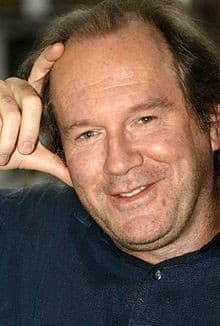
Biography coming soon.







