“When you're not afraid no more, when you're not afraid of them white people no more, then you're free. And that's what I want for you, son.”
— Mathu speaks to Charlie about courage and freedom.

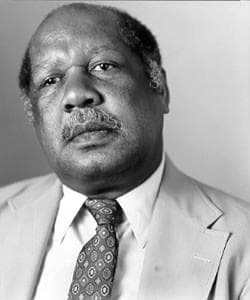
Ernest J. Gaines (1983)
Genre
Literary Fiction / Historical Fiction
Reading Time
240 min
Key Themes
See below
Sign in to track this book
In 1970s Louisiana, a shotgun blast on a sugarcane plantation starts a tense standoff as a group of elderly black men conspire to protect one of their own from a white farmer's racially charged murder.
The story begins with the discovery of Beau Boutan, a white Cajun farmer, shot dead in the yard of Mathu, an elderly black sharecropper on the Marshall plantation. Sheriff Mapes investigates, finding Mathu sitting calmly with a shotgun beside him. Candy Marshall, the white woman who runs the plantation and feels loyalty to Mathu, takes charge. To protect Mathu, who she believes killed Beau in self-defense, Candy states that all the old black men in the community will claim responsibility for the murder. She gathers them, instructing each to arrive at Mathu's cabin with a shotgun and a spent shotgun shell, to create a united front against the justice system.
As Candy instructs, the old black men of the quarter, including Dirty Red, Gable, Rufe, and others, gather at Mathu's cabin. Each man, some frail, brings a shotgun and a spent shell, prepared to confess to Beau's murder. Their reasons for participating vary: some respect Mathu, others are tired of the injustices they've faced, and some follow Candy's lead. Sheriff Mapes, seeing the growing crowd and the identical confessions, finds himself in a perplexing situation, realizing he cannot identify a single killer.
Sheriff Mapes, frustrated by the collective confession, questions the old men one by one in Mathu's cabin. He uses intimidation, logic, and appeals to their sense of truth, trying to find inconsistencies in their stories. Each man, however, sticks to the script, claiming Beau Boutan's murder. The old men, many of whom have endured a lifetime of oppression, find strength in their shared defiance. Tension in the quarter grows as more old men arrive, and the white townsfolk, including Luke Will and his group, gather, anticipating a confrontation and demanding justice for Beau.
Fix Boutan, Beau's powerful father, arrives at the plantation with his other sons and a group of armed white men. Fix is known for his violent temper and his family's history of enacting their own justice. He is furious and intends to lynch Mathu, or whoever killed his son, without waiting for legal proceedings. His arrival increases racial tension and the risk of violence. Sheriff Mapes, caught between his duty to uphold the law and the pressure from Fix, tries to maintain order and prevent a bloodbath, knowing that the old black men are prepared to die.
Amidst the growing tension and Mapes's questions, Gable, one of the oldest and most respected of the black men, breaks from the collective lie. He confesses that he shot Beau Boutan. Gable explains that Beau had brutally beaten his grandson, Charlie, earlier that day for a minor offense. In a moment of righteous fury and a desperate attempt to protect his family and reclaim dignity, Gable ambushed and killed Beau. This revelation changes the dynamic, as Gable's confession is rooted in self-defense for his family, rather than the orchestrated collective lie.
The story details the events leading up to Beau Boutan's death, focusing on Charlie, a young black man working on the plantation. It is revealed that Beau had beaten Charlie earlier that day, for a perceived insult or inefficiency, but more likely as a display of power. This brutal act, witnessed by Gable, was the direct cause of Beau's murder. Charlie himself, ashamed and traumatized by the beating, had fled into the cane fields. His humiliation and the injustice he suffered are central to understanding Gable's motive and the collective outrage of the old men.
With Gable's confession, the focus shifts, but the danger remains. Fix Boutan and his armed white men, led by the volatile Luke Will, surround the plantation quarter, demanding Gable be handed over. Luke Will, known for his racist provocations, tries to incite violence, taunting the old black men and challenging Sheriff Mapes's authority. The old men, now united not just in a lie but in a shared stand against oppression, refuse to back down, forming a protective circle around Gable. The air is thick with the threat of a violent confrontation, with both sides armed and determined.
Unexpectedly, Robert Boutan, one of Fix's other sons and Beau's brother, arrives and challenges his father's desire for immediate, violent revenge. Robert, a more educated and less prejudiced man than his father, argues against a lynching, emphasizing the need for due process and the potential for a larger race war if they proceed with mob justice. His intervention is important, as he appeals to his father's sense of family honor and the potential consequences of their actions, reminding Fix of his own past mistakes and the futility of endless cycles of violence. His voice offers a glimmer of reason in the volatile atmosphere.
After a tense exchange with Robert and facing the solidarity of the old black men, Fix Boutan, though still angry, reluctantly agrees to allow Sheriff Mapes to take Gable into custody. This decision marks a significant, though fragile, victory for the black community. It means that traditional power dynamics are challenged, and the old men, through their collective courage, force the white community to adhere, however minimally, to the rule of law rather than resorting to immediate mob violence. The immediate threat of a lynching is averted, and a new, if precarious, balance is established.
Following the standoff, Charlie, who had been hiding in the cane fields, returns to the quarter. He is no longer the cowering, humiliated young man but has found a new sense of dignity and courage, inspired by the stand taken by the old men. His return symbolizes the broader shift in the community, as the act of collective defiance has empowered not just the elders but also the younger generation. The story ends with cautious optimism, suggesting that while racial tensions remain, a significant step has been taken towards regaining agency and justice for the black community on the plantation.
The Protagonist/Symbolic Figure
Mathu's arc is less about personal change and more about being a catalyst for collective action, inspiring others to stand up.
The Protagonist/Catalyst
Candy's arc involves realizing the limits of her individual power and the growing agency of the black community she seeks to protect.
The Antagonist/Moral Arbiter
Mapes's arc involves a gradual, grudging acknowledgment of the old men's dignity and the complexities of justice beyond simple legal facts.
The Protagonist/True Killer
Gable's arc is one of finding his voice and courage, moving from silent suffering to a defiant act of retribution and confession.
The Antagonist
Fix's arc involves being forced to confront the changing times and the defiance of the black community, ultimately backing down from mob violence.
The Supporting/Catalyst
Charlie's arc is one of moving from humiliation and fear to finding a sense of self-worth and dignity, inspired by the collective stand of the old men.
The Antagonist/Provocateur
Luke Will's arc is static; he remains a symbol of unyielding racism and violence, ultimately frustrated by the lack of a lynching.
The Supporting/Mediator
Robert's arc is about using his influence to de-escalate a dangerous situation, challenging his family's traditional ways of enacting justice.
The novel explores the struggle for dignity and respect within the black community, especially for the elderly black men who have endured a lifetime of subjugation. Their collective act of claiming responsibility for Beau Boutan's murder is not just about protecting Mathu, but about reclaiming their self-worth and asserting their humanity in the face of systemic racism. Scenes like the old men arriving with their shotguns, ready to die for their stand, show a powerful, collective assertion of dignity that goes beyond individual fear, ending in Gable's confession, which is an act of reclaiming honor for his family.
““A man got to have something to stand on. He got to have some ground to stand on.””
A central theme is the interplay between formal law and a more community-based sense of justice. Sheriff Mapes represents the law, trying to apply it fairly, but he is constantly confronted by the community's understanding of justice, shaped by generations of racial inequality. Candy Marshall's initial plan to have all the old men confess defies legal procedure but aims for a moral justice for Mathu. Gable's act of killing Beau, while illegal, is portrayed as an act of justice for Charlie's brutal beating, highlighting the limitations and biases of the legal system in a racially stratified society.
““Justice ain't for colored folks in this parish, Sheriff.””
The novel shows the strength found in collective action and solidarity, especially within an oppressed community. The gathering of the old men, each bringing a shotgun and a spent shell to claim Beau's murder, is a monumental act of unity. This collective front challenges the established power structure and forces the white community, including Sheriff Mapes and even Fix Boutan, to confront their resolve. It transforms individual fear into a powerful, unified resistance, showing that even the most marginalized can achieve agency when they stand together.
““One man can't stand alone, Sheriff. Not in this parish.””
The story is deeply affected by the past, as the old men's actions are shaped by generations of racial oppression, lynchings, and humiliation. Their willingness to stand up is a culmination of decades of silent suffering. The novel also explores generational change through characters like Charlie, who initially flees, but ultimately returns with new courage, and Robert Boutan, who represents a potential shift in the white community's approach to racial justice. The confrontation forces both black and white characters to reckon with the historical legacy of racism and the possibility of a different future.
““We ain't got nothing to lose no more, Sheriff. We lost it all a long time ago.””
Multiple characters confess to the same crime to protect the true culprit.
The collective confession is the central plot device, orchestrated by Candy Marshall. By having all the old black men claim responsibility for Beau's murder, it creates a deliberate ambiguity for Sheriff Mapes, making it impossible for him to identify a single perpetrator. This device serves multiple purposes: it protects Mathu, highlights the solidarity of the black community, and exposes the absurdity and inherent biases of the legal system when confronted with such a unified front. It forces the authorities to confront a moral dilemma rather than a simple criminal investigation, ultimately shifting the power dynamic.
The story is told through the eyes of various characters, offering diverse viewpoints.
The novel utilizes a framing narrative, primarily told through the perspective of the unnamed reporter, but frequently shifting its point of view to various characters—Sheriff Mapes, Candy Marshall, Mathu, and the old men themselves. This allows the reader to understand the motivations, fears, and internal struggles of a diverse cast of characters from both the black and white communities. This multi-perspectival approach enriches the narrative, providing a comprehensive and nuanced understanding of the racial tensions, power dynamics, and individual choices that drive the plot.
Symbolic objects used to signify participation in the collective confession.
The shotgun and the spent shell are crucial symbolic objects. Each old man brings these items to Mathu's cabin, signifying their participation in the collective confession. The shotgun represents their willingness to fight and their potential for violence, while the spent shell symbolizes their shared 'guilt' and their defiance of the white power structure. These objects become powerful symbols of unity, courage, and a collective stand against oppression, transforming mundane items into emblems of resistance and dignity.
A recurring setting that represents both refuge and confinement.
The sugarcane field serves as a significant recurring setting in the novel. It is where Charlie hides after his beating, seeking refuge from humiliation and potential further violence. It also represents the arduous labor and confined existence of the black sharecroppers. The cane field is a place of concealment and escape, but also a symbol of the limitations and boundaries imposed upon the black community. Its vastness and density reflect the hidden histories and unspoken truths within the community, providing a backdrop for both fear and eventual defiance.
“When you're not afraid no more, when you're not afraid of them white people no more, then you're free. And that's what I want for you, son.”
— Mathu speaks to Charlie about courage and freedom.
“A man got to stand for something. If he don't stand for nothing, he ain't nothing.”
— Several characters echo this sentiment about a man's worth.
“It was like all of us old men, all of us old colored men, had been waiting for this day, waiting for somebody to stand up.”
— The narrator reflects on the collective resolve of the old men.
“You can kill a man, but you can't kill his spirit if he got one.”
— Mathu's philosophy on enduring oppression.
“Sometimes you got to make a stand, even if you know you ain't gonna win.”
— The idea of making a stand despite the odds.
“We ain't got nothing to lose no more. We done lost everything but our lives, and now they trying to take that.”
— One of the old men expressing their desperation and determination.
“He done killed a white man. Now they gon' kill him. And we ain't gon' do nothing.”
— The initial fear and resignation of the community before their resolve hardens.
“A man ain't supposed to live in fear. A man supposed to live free.”
— A recurring theme about overcoming fear and living with dignity.
“It's a shame, ain't it? A man got to wait till he's ninety years old to feel like a man.”
— The poignant realization of the old men finding their voice later in life.
“The past is never dead. It's not even past.”
— While not a direct quote from the book, this Faulknerian sentiment strongly resonates with the historical weight and recurring racial tensions in 'A Gathering of Old Men'.
“You got to be tough to live in this world, boy. Tough and smart.”
— A lesson passed down about survival in a harsh environment.
“They ain't never seen us together like this before. They gonna know we mean business.”
— The old men gathering together, forming a united front.
“The law ain't for us. It's for them.”
— The harsh reality of racial inequality in the justice system.
“Sometimes you got to pick up that gun, even if you don't want to.”
— The necessity of defending oneself or one's community.
Ready to see how well you understood this book? Take our interactive quiz with 10 questions.
Biography coming soon.







