“There are some things in this world that are not meant to be understood, only endured.”
— Medea speaking to Rumpelstiltskin about the nature of their magical abilities.

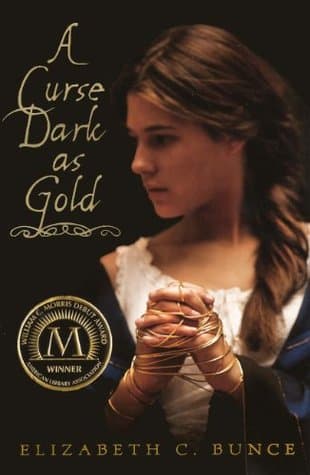
Elizabeth C. Bunce (2008)
Genre
Fantasy / Historical Fiction / Young Adult / Romance
Reading Time
8-10 hours
Key Themes
See below
Sign in to track this book
In a town built on wool and shadowed by an old curse, Charlotte Miller must bargain with a stranger who spins straw into gold, risking her heart and family legacy to break a dark enchantment before it destroys everything she loves.
Charlotte Miller, a practical and determined young woman, takes over the family's woolen mill, Golden Mill, after her father's sudden death. The mill is the lifeblood of their small town, Oakhaven, but it faces financial ruin due to an old, unpaid debt. Her overbearing Uncle Matthew arrives, threatening to sell the mill if Charlotte cannot make it profitable. This threat is worsened by local talk of a curse on the Miller family, which Charlotte has always dismissed as nonsense. Now, however, it seems to appear in a series of misfortunes, including workers leaving and supplies running low. Her younger sister, Rosie, reminds Charlotte of their family's uncertain situation.
As the mill's situation worsens and the debt collector, Mr. Hastings, demands payment, a mysterious and charming stranger named Jack Spinner appears in Oakhaven. He claims to be a master weaver and offers Charlotte an amazing deal: he can spin straw into gold thread, which would save the mill. Skeptical but desperate, Charlotte agrees to his terms. For his first night's work, he demands her mother's wedding ring as payment. Despite her doubts, the chance to save her family and town is too strong, and she reluctantly hands over the cherished heirloom, hoping for a miracle.
True to his word, Jack Spinner turns bales of straw into beautiful gold thread overnight. The golden fabric revives the mill's business, bringing new orders and prosperity back to Oakhaven. However, Spinner's demands for payment increase. For the second batch of gold thread, he asks for Charlotte's silver thimble, a gift from her father. With each successful trade, Charlotte feels a growing unease. She tries to understand his methods, but he stays evasive, and his presence in the mill at night becomes a source of both relief and fear, as townspeople start to whisper about his unnatural abilities.
Amidst the stress of the mill and Spinner's unsettling presence, Charlotte finds herself drawn to the local banker, Elias Thorne. Their shared concern for Oakhaven and Elias's kind nature offer comfort. Their romance grows, giving Charlotte a short break from her worries. Meanwhile, the mill's success demands more gold thread, and Spinner's final, frightening demand for his services is revealed: he wants Charlotte's firstborn child. Horrified, Charlotte tries to back out of the deal, but Spinner reminds her of her desperate promises, leaving her in an agonizing problem.
Determined to break free from Spinner's terrible bargain, Charlotte begins to research her family's history and the supposed curse on the Golden Mill. She looks through old ledgers, family journals, and town records, searching for any mention of similar deals or misfortunes. Her investigation reveals a pattern of strange events and sudden prosperity followed by ruin in previous generations of Millers. She learns that her ancestors also faced impossible debts and made desperate bargains, and that the 'curse' might be a result of these forgotten pacts, passed down through the family line.
Charlotte's research leads her to realize that the 'curse' is not a supernatural problem but a series of bargains made with a fey creature, a 'Spinner,' who has targeted the Miller family for generations. This creature, Jack Spinner, is a trickster who grants impossible wishes in exchange for terrible prices, often asking for the family's children or their most cherished possessions. She discovers that her own father had made a bargain to save the mill, and the current debt was a result of that unresolved pact. The gold thread is not just spun; it is woven with the essence of the bargains themselves.
As Charlotte puts the truth together, she realizes that her younger sister, Rosie, is in great danger. Spinner's interest in Rosie becomes clear, as he subtly tries to charm and manipulate the innocent girl. Charlotte deduces that if she cannot fulfill her part of the bargain, Spinner might turn his attention to Rosie as a substitute. This realization strengthens Charlotte. She knows she must find a way to defeat Spinner and break the cycle of the curse, not just for herself, but to protect her sister and ensure no future Miller ever falls prey to his schemes again. She begins to form a desperate plan.
Armed with her new knowledge of fey lore and her family's history of bargains, Charlotte confronts Jack Spinner. She uses what she learned about his true nature and the specific rules governing his magic. She challenges him, not with force, but with a battle of wits, trying to find a loophole in his contract. She learns that his power is tied to human fear and desperation and that he can only claim what is freely given or promised. She also understands that knowing his true name, though never explicitly stated, gives her some power over him.
During the tense confrontation, Charlotte proposes a new bargain to Jack Spinner. Instead of her firstborn child, she offers him something else of great value, something she knows he wants and that would truly break the curse's hold: the mill itself, but on her terms. She negotiates, using her understanding of fey contracts to ensure that this final bargain will sever all ties between Spinner and the Miller family forever. This final act of defiance and sacrifice is Charlotte's desperate attempt to reclaim her family's destiny and free Oakhaven from its old burden, even if it means losing her beloved Golden Mill.
Through a clever use of fey law, Charlotte outwits Jack Spinner. The exact details of the final bargain are unclear, but it breaks Spinner's power over the Millers. He disappears, and the golden thread he spun turns back into straw, but the mill itself remains, though in a simpler state. The town understands the true nature of the 'curse' and the sacrifices made. Charlotte, having shown her strength and intelligence, is free. She embraces her future with Elias Thorne, looking forward to rebuilding the Golden Mill through honest hard work, free from the dark shadow of old bargains and curses.
The Protagonist
Charlotte transforms from a practical skeptic burdened by responsibility into a courageous, cunning leader who breaks an ancient curse through intellect and sacrifice.
The Antagonist
Spinner remains largely static in his nature as an ancient fey, but his long-standing dominion over the Miller family is ultimately challenged and broken by Charlotte.
The Love Interest / Supporting
Elias grows from a cautious admirer to a trusted confidant and partner for Charlotte, representing a future free from the curse.
The Supporting
Rosie remains largely innocent, serving as a catalyst for Charlotte's actions and representing the future generations Charlotte seeks to protect.
The Supporting
Uncle Matthew's role is largely static, representing the external pressures on Charlotte to succeed or fail financially.
The Mentioned
Mr. Hastings's role is to apply financial pressure, which he does consistently without significant personal development.
This theme explores the dangerous appeal of quick fixes and the high cost of desperate bargains. Charlotte, driven by the mill's impending ruin and her family's legacy, turns to Jack Spinner, believing his magic is her only option. The golden threads he spins symbolize the superficial attraction of instant wealth, but each thread comes with a hidden, rising price, ending with the demand for her firstborn child. This shows how seemingly easy solutions can lead to much bigger, unforeseen problems, as seen in the repeated mistakes of previous Miller generations who also made similar pacts to avoid hard work or financial ruin.
“There's always a price, Miller. Always.”
The novel explores the burden and privilege of inherited legacy. Charlotte is weighed down by her father's death and the failing Golden Mill, which is not just a business but the heart of Oakhaven and a symbol of her family's identity. She feels a great responsibility to uphold her family's name and save the mill, even if it means sacrificing her own future. The 'curse' itself is a dark legacy, a series of unfulfilled bargains passed down through generations, forcing Charlotte to confront not only her present challenges but also the unresolved mistakes of her ancestors. Her goal is to break this cycle, ensuring a healthier legacy for Rosie and future Millers.
“The mill was more than just wood and stone; it was the breath in Oakhaven's lungs, and it was dying.”
Charlotte's journey shows the power of intellect and research. Initially overwhelmed by magical forces, she refuses to be a passive victim. Instead, she diligently researches her family's history, looking through old books, ledgers, and local stories to understand the true nature of the 'curse' and Jack Spinner. Her intellectual curiosity and determination to uncover the truth give her the knowledge she needs to outsmart a powerful fey creature. It is not brute strength or magic that saves her, but her ability to analyze, learn, and use the rules of fey contracts against Spinner, proving that understanding is a powerful weapon against the unknown.
“Knowing the rules, even rules you didn't invent, was half the battle.”
The theme explores how personal love and sacrifice connect with the welfare of an entire community. Charlotte's love for her family—her father's memory, her sister Rosie—and her growing romantic love for Elias Thorne are strong motivators. However, her ultimate sacrifice is not just for her immediate family; it is to save Oakhaven, which relies on the Golden Mill. Her willingness to give up her firstborn, and later to risk the mill itself, shows a deep, selfless commitment to the greater good. This theme emphasizes that true love often requires sacrifice, and that a strong community is built on individuals' willingness to look beyond their own immediate desires for the benefit of all.
“Some things are worth more than gold, even if you can't hold them in your hand.”
A symbolic setting that represents family legacy and community life.
The Golden Mill is more than just a setting; it's a central symbol in the story. It represents the Miller family's legacy, their prosperity, and their connection to the town of Oakhaven. Its decline signifies the family's troubles, and its revival through Jack Spinner's magic highlights the deceptive nature of easy wealth. Ultimately, it becomes the focal point of the curse, the bargaining chip, and the symbol of Charlotte's struggle to reclaim her family's destiny. The mill's fate is intrinsically linked to the fate of the Miller family and the entire community.
A generational burden and a metaphor for unresolved past mistakes.
The 'curse' on the Miller family is initially presented as a supernatural affliction but is revealed to be a series of unfulfilled, generational bargains made with a fey creature. It functions as a plot device to drive Charlotte's investigation and desperation. It symbolizes the long-term consequences of making desperate choices and the burden of inherited debt, both literal and metaphorical. By unraveling the true nature of the curse, Charlotte gains the knowledge needed to break the cycle, transforming it from a mystical threat into a solvable problem through understanding and wit.
A magical ability that serves as a deceptive solution and a source of conflict.
The magical ability to spin straw into gold thread is the primary catalyst for the plot. It represents the seductive power of instant wealth and the temptation of shortcuts. While it temporarily solves the Miller family's financial woes, it comes with an escalating, sinister price, driving the central conflict between Charlotte and Jack Spinner. This device is a direct reference to the Rumpelstiltskin fairy tale, signaling to the reader that such magical solutions are rarely without dire consequences and that a hidden bargain is always at play.
A fey agreement that binds characters and drives the narrative's tension.
The bargain or contract is the fundamental mechanism through which Jack Spinner operates and the entire plot unfolds. It's a key element of fey lore, where promises, even unstated ones, hold immense power. Charlotte's agreement with Spinner, initially for her mother's ring, then a thimble, and finally her firstborn child, creates escalating tension and forces her to confront impossible choices. The intricacies of these contracts and the search for loopholes become central to Charlotte's strategy to defeat Spinner, highlighting the power of words and agreements in the story's magical framework.
“There are some things in this world that are not meant to be understood, only endured.”
— Medea speaking to Rumpelstiltskin about the nature of their magical abilities.
“Gold is a hard master. It buys much, but it costs more.”
— Liesl pondering the burden of the gold she has acquired.
“A bargain is a bargain, and a promise is a promise, even when made to a monster.”
— Liesl reflecting on her agreement with Rumpelstiltskin.
“Fear is a poison, Liesl. It twists what is good and makes it seem evil.”
— Poppa's advice to Liesl when she is struggling with her fears.
“Sometimes the only way to save something is to let it go.”
— Liesl's internal monologue about the fate of the mill.
“The past is a heavy cloak, but it doesn't have to smother you.”
— A conversation between Liesl and Kael about their respective family histories.
“What you seek may not be what you find, and what you find may not be what you need.”
— A cryptic warning given to Liesl early in her quest.
“Love, true love, is not about what you gain, but what you are willing to lose.”
— Liesl's realization about her feelings for Kael.
“There is a difference between being strong and being unbreakable.”
— Medea explaining the limits of power to Liesl.
“Every choice has a price, and sometimes that price is paid in blood.”
— Rumpelstiltskin's chilling reminder of the stakes involved.
“The greatest magic is not in making gold, but in knowing what to do with it once it is made.”
— Liesl's final understanding of the true nature of her ordeal.
“Even the darkest curse can be broken, if you are brave enough to face its heart.”
— Liesl finding courage to confront the curse on the mill.
“Sometimes the monster is not what you expect, and sometimes it's yourself.”
— Liesl's internal struggle with her own actions and desires.
“Hope is a fragile thing, but it is also the strongest.”
— Liesl clinging to the possibility of a better future.
Ready to see how well you understood this book? Take our interactive quiz with 10 questions.

Biography coming soon.







