““There are good days and bad days for us all.””
— Feyre reflecting on the challenges of their new life and the ongoing recovery from war.

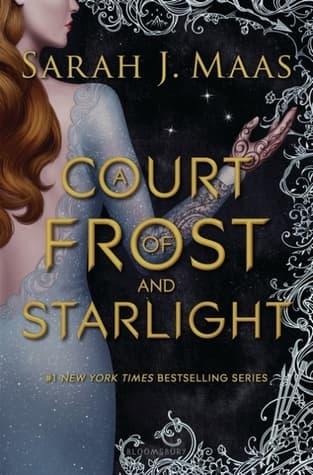
Sarah J. Maas (2018)
Genre
Fantasy / Young Adult / Romance
Reading Time
90 min
Key Themes
See below
Sign in to track this book
As the Winter Solstice brings a fragile peace to the rebuilt Night Court, High Lady Feyre uncovers the hidden wounds and lingering shadows threatening to unravel the festive facade and the future of those she holds dearest.
As Winter Solstice nears, Feyre Archeron, High Lady of the Night Court, prepares for the festivities with Rhysand. Despite the joyous mood, the recent war against Hybern has left deep emotional scars on their inner circle. Feyre sees her friends' quiet struggles: Cassian recovers from severe injuries, Nesta is withdrawn and depressed, and Elain deals with her Fae transformation and the loss of her human fiancé, Graysen. Even Rhysand, the stoic leader, shows signs of his immense burden, working tirelessly to rebuild Velaris and the Fae lands. Feyre's main concern is her loved ones' well-being, especially her sisters, as she tries to help them heal.
Feyre uses her art as a therapeutic outlet for her own lingering trauma and to express her new life as High Lady. She paints a portrait for Rhysand, a symbolic Solstice gift. Meanwhile, Rhysand is busy with the political and logistical challenges of rebuilding the continent. He attends frequent meetings, deals with neighboring courts, and ensures Velaris's safety and prosperity. Feyre often sees his exhaustion and the silent toll of his duties. Their intimate moments are a comfort, but the underlying tension of their responsibilities and their friends' struggles reminds them that peace is still fragile.
Nesta Archeron has moved into the House of Wind but mostly keeps to herself. She refuses to engage with her sisters or the Inner Circle. She spends her days reading and avoids social interaction or healing. Cassian, still deeply affected by his feelings for Nesta and her withdrawal, tries to reach out to her repeatedly, often leading to terse, painful exchanges. His frustration grows as Nesta pushes him away, making it clear she does not want his help or pity. Her isolation deeply worries Feyre and Elain, who struggle with how to approach their sister without alienating her further.
Elain Archeron, though still quiet and reserved, has found peace by cultivating a garden at the House of Wind. Her connection to nature and her growing Fae senses allow her to bring life to the barren winter landscape. She occasionally shares her produce with the household, a small but significant step toward re-engagement. Lucien Vanserra, her mate by the Cauldron, stays mostly in the background. While he visits Velaris occasionally and offers quiet support, his position in the Night Court is uncertain, and Elain has not yet acknowledged their bond, leaving their relationship unresolved.
Morrigan, the High Lady's Emissary and Rhysand's cousin, continues her important work for the Night Court but also deals with her personal life, especially her identity as gay in a society that expects her to marry a male. She confides in Feyre about her past and her family's expectations. Azriel, the Shadowsinger, remains his usual quiet, observant self. He is a constant, steady presence, but his inner thoughts and feelings, especially regarding Elain and Mor, remain largely hidden, adding to the unspoken tension within the group. Feyre senses the depth of his unspoken burdens.
On the eve of Winter Solstice, Feyre gives Rhysand her gift: a painted portrait of their family, representing their inner circle. Rhysand is deeply moved, finding solace and joy in the artwork. However, Feyre still senses his underlying weariness and the immense pressure he is under. She expresses concern about his constant work and lack of rest, urging him to delegate more and take time for himself. Rhysand reassures her, but Feyre remains aware of the silent sacrifices he makes for their court and people, a burden she feels helpless to fully alleviate.
The Winter Solstice celebration brings the entire Inner Circle together, along with other Night Court members. There is a palpable sense of warmth and camaraderie, with gift-giving, feasting, and shared laughter. Yet, beneath the festive surface, the unresolved tensions and individual struggles of each character are still present. Nesta largely keeps to herself, Elain is quiet but engaged, and the unspoken feelings between Azriel, Mor, and Elain create subtle undercurrents. Feyre and Rhysand observe their friends, aware of the healing still needed, even as they cherish moments of shared peace and belonging.
Beyond her immediate family, Feyre begins to plan a broader initiative to help the less fortunate citizens of Velaris and beyond, especially those displaced or scarred by the war. She starts a secret project, planning to establish art and healing programs for children and adults. This endeavor gives her purpose and a way to channel her own experiences into positive action. This nascent project represents a glimmer of hope not just for those she aims to help, but also for Feyre herself, as she steps into her role as High Lady with a proactive vision for her court's future.
As the Winter Solstice ends, many conversations remain unfinished, and many truths unspoken. Nesta's pain is still raw, Elain's future with Lucien is uncertain, and Mor's personal struggles continue. Rhysand and Feyre acknowledge the long road ahead for their court and their friends. They understand that while the war is over, the work of healing and rebuilding is far from complete. The novel ends on a note of cautious optimism, with Feyre and Rhysand committed to supporting their loved ones and facing whatever challenges the future holds, together.
In a quiet moment, Rhysand finally confides in Feyre about a new, unsettling development. He reveals lingering factions and threats from the continent, whispers of unrest and potential new conflicts beyond their borders. This revelation adds another layer of complexity to their demanding lives, confirming Feyre's earlier suspicions about his weariness. It shows that their hard-won peace is fragile and constantly under threat, setting the stage for future challenges that they, as High Lord and High Lady, will inevitably confront to protect their court and their people.
The Protagonist
Feyre transitions from a war-worn survivor to a thoughtful leader, focusing on healing and rebuilding, both personally and for her court.
The Protagonist
Rhysand continues to shoulder the immense responsibilities of leadership and healing his court, while also navigating his personal relationship and the lingering effects of war.
The Supporting
Nesta is largely static in her isolation, but her presence highlights the deep, unresolved trauma from the war.
The Supporting
Elain slowly begins to heal and find purpose through her connection to nature, though her romantic future remains uncertain.
The Supporting
Cassian grapples with unrequited love and the emotional toll of the war, trying to find a way to help Nesta.
The Supporting
Azriel remains a steadfast and silent protector, his internal struggles and affections largely unrevealed.
The Supporting
Mor continues to navigate her public duties and private struggles with identity and family expectations.
The Mentioned
Lucien remains hopeful but distant, waiting for Elain to acknowledge their mate bond.
The novel explores the lingering psychological and emotional scars of war. Each character, especially Nesta, Elain, and Rhysand, deals with the aftermath of the conflict with Hybern. Nesta's severe depression and isolation show the deep impact of trauma, while Elain's quiet withdrawal and Feyre's artistic expression show different coping mechanisms. The theme emphasizes that while the physical war may be over, the internal battles for recovery are ongoing and complex, requiring patience, understanding, and personal effort. This is evident in Feyre's constant concern for her sisters' well-being and Rhysand's hidden weariness.
““The war had ended, but the battle for our souls had not.””
Feyre and Rhysand's experiences highlight the immense responsibilities and pressures of leadership, especially in a post-war world. Rhysand constantly works, dealing with political matters and ensuring his court's stability, often at the expense of his own rest. Feyre, as High Lady, also feels the burden of supporting her people and her Inner Circle, recognizing the need to not only govern but also to foster healing and hope. Their shared duties strengthen their bond but also reveal the sacrifices inherent in their roles, as seen in Rhysand's hidden burdens and Feyre's efforts to create new programs.
““Heavy is the head that wears the crown, even when that crown is invisible.””
The bond between Feyre, Rhysand, and their Inner Circle is central to the story, showing the strength of both blood family and chosen family. Feyre's unwavering concern for her sisters, Nesta and Elain, despite their individual struggles, shows the enduring power of sibling love. The Inner Circle — Cassian, Azriel, and Mor — acts as a supportive, if sometimes strained, chosen family, providing loyalty and comfort. The narrative explores the challenges of maintaining these bonds when individuals are dealing with personal pain, emphasizing that true family stands together even through the most difficult times, as shown by their Solstice gathering.
““We were a family, forged in blood and fire, and nothing could break us.””
Several characters are on journeys of self-discovery. Feyre continues to define her role as High Lady, finding purpose in her art and her plans for the court. Elain quietly explores her Fae powers and her connection to nature, slowly finding a new sense of self after her transformation. Morrigan deals with her true identity and societal expectations, seeking authenticity. Nesta's struggle, while seemingly regressive, is also a form of intense internal reckoning with who she is and who she wants to be after her traumatic experiences, though she resists outward change.
““We were all searching for something, a piece of ourselves we’d lost, or perhaps a piece we had yet to find.””
A festive yet reflective backdrop for character introspection.
The Winter Solstice acts as a poignant backdrop, juxtaposing the traditional themes of renewal, warmth, and family celebration with the characters' internal struggles and lingering post-war trauma. It provides a natural occasion for the Inner Circle to gather, forcing interactions and highlighting the emotional distance between some members, particularly Nesta. The festive atmosphere serves to amplify the characters' internal conflicts, making their individual pains more noticeable against a backdrop of expected joy, and offering a brief, hard-earned reprieve before future challenges.
A therapeutic outlet and symbol of healing and connection.
Feyre's painting serves as a crucial plot device, primarily for character development and thematic exploration. It acts as a therapeutic outlet for her own trauma and a means for her to process her experiences and emotions. Her art also functions as a way to connect with Rhysand, through the portrait she creates for him, symbolizing their shared life and future. Furthermore, her desire to establish art programs for the children of Velaris demonstrates her growth as a compassionate High Lady, actively seeking ways to heal her community.
Building anticipation for future developments and deeper exploration.
The novel deliberately leaves several character arcs unresolved, particularly those of Nesta, Elain, Mor, and Azriel. Nesta's depression and her relationship with Cassian remain stagnant, Elain's mate bond with Lucien is unacknowledged, and Mor and Azriel's internal romantic conflicts are only hinted at. This device serves to create anticipation for future books in the series, signaling that these characters will have their own significant journeys and developments. It grounds the story in realism, acknowledging that healing and profound change take time, and not all issues can be neatly resolved in one volume.
““There are good days and bad days for us all.””
— Feyre reflecting on the challenges of their new life and the ongoing recovery from war.
““It was a quiet sort of happiness, but real all the same.””
— Feyre observing the small, everyday joys that have returned to Velaris after the war.
““We would be all right. We had to be.””
— Feyre's internal reassurance about the future of her friends and family.
““Sometimes, the greatest battles are fought within.””
— Rhysand acknowledging the internal struggles each of them faces despite external peace.
““The quiet moments were the ones that truly mattered, the ones that stitched them back together.””
— Feyre appreciating the importance of their calm, domestic life.
““Healing wasn’t linear. It was a jagged, messy thing.””
— Feyre's realization about the ongoing process of recovering from trauma.
““Love wasn’t a static thing. It was a living, breathing entity that needed to be tended to.””
— Feyre's thoughts on maintaining her relationship with Rhysand.
““Even in peace, there were shadows.””
— Rhysand's awareness that threats and challenges still lingered, even after the war.
““We built this city on hope and dreams and starlight.””
— Rhysand reminding Feyre of the foundations of Velaris and their shared ideals.
““Being High Lady meant more than just ruling. It meant listening, understanding, and growing.””
— Feyre reflecting on her responsibilities and evolving role.
““The holidays were a reminder that even in the darkest times, there was light to be found.””
— Feyre's thoughts during the Winter Solstice celebrations.
““Sometimes, the greatest strength was knowing when to ask for help.””
— Cassian's advice to Nesta, highlighting the importance of vulnerability.
““The future wasn’t written. It was being forged, day by day.””
— Feyre's optimistic outlook on the ongoing process of rebuilding their world.
““There was always more to learn, more to experience, even after everything they’d been through.””
— Feyre's internal monologue about continuous personal development.
Ready to see how well you understood this book? Take our interactive quiz with 10 questions.

Biography coming soon.







