“The night is dark and full of terrors.”
— Melisandre often uses this phrase when speaking about the dangers of the world and the power of her god.

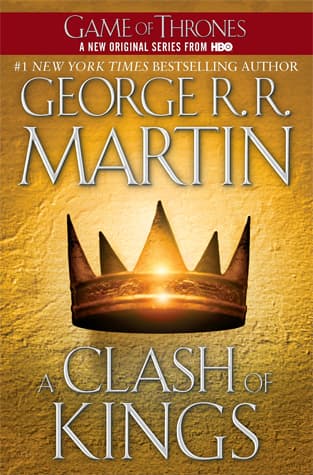
George R.R. Martin (1998)
Genre
Fantasy
Reading Time
16-20 hours (approx. based on 300 words per minute)
Key Themes
See below
Sign in to track this book
Kings clash and chaos reigns across a divided Westeros as a red comet signals a brutal war for the Iron Throne, where treachery, magic, and cold steel decide who survives incest, fratricide, and the rising dead.
The book begins with a red comet appearing, seen by characters as a sign of victory or destruction. After Robert Baratheon and Eddard Stark die, the Seven Kingdoms enter civil war. Joffrey Baratheon sits on the Iron Throne in King's Landing, but his claim is questioned. Stannis Baratheon, Robert's older brother, declares himself the rightful king from Dragonstone, rejecting the Lannisters and Joffrey. Renly Baratheon, Robert's younger brother, also declares himself king, gaining support from the powerful Tyrells and much of the Reach. Robb Stark, King in the North, continues his fight against the Lannisters, seeking independence for the North and the Riverlands. The realm is broken, with each claimant raising armies and fighting for power, setting up widespread conflict.
Arya Stark, disguised as 'Arry' and traveling with Yoren of the Night's Watch, is caught by Lannister forces after a fight near the God's Eye. She and her fellow recruits, including Gendry and Hot Pie, are taken to Harrenhal, a ruined castle now controlled by Tywin Lannister. Arya serves as a cupbearer for Lord Tywin, always fearing discovery. There, she meets Jaqen H'ghar, Rorge, and Biter, three dangerous prisoners she helped free from a burning wagon. Jaqen offers to kill three people for her as payment. Arya uses this to remove various tormentors and guards, subtly affecting events inside the castle and showing her growing cleverness and ruthlessness.
Tyrion Lannister arrives in King's Landing as Hand of the King, appointed by his father, Tywin. He quickly takes charge, much to his sister, Queen Regent Cersei's, dislike. Tyrion finds the city's defenses neglected and the small council full of incompetence and corruption. He fires Janos Slynt, commander of the City Watch, sending him to the Wall, and replaces him with his loyal man, Bronn. Tyrion tries to control Joffrey's cruel behavior and outwit Cersei, using intelligence, cunning, and a network of spies, including Varys and Shae, to strengthen his power and prepare the city for Stannis Baratheon's attack. He also tries to form alliances and get food for the capital.
Daenerys Targaryen and her small group arrive at the rich city of Qarth in the Free Cities. The wealthy merchant Xaro Xhoan Daxos welcomes her, offering lodging and support, hoping to gain influence through her dragons. Daenerys looks for ships and an army to return to Westeros, but finds that while the Qartheen are fascinated by her dragons, they are unwilling to commit resources to her cause. She gets mysterious advice from the Undying Ones in the House of the Undying, where she sees visions of the past and future. In the end, Pyat Pree of the warlocks betrays her, trying to steal her dragons, forcing her to leave Qarth and continue her search for a fleet.
Theon Greyjoy, sent by Robb Stark to form an alliance with his father Balon Greyjoy, instead gives in to his father's ambition and joins the Ironborn's invasion of the North. Desperate to prove himself, Theon captures the undefended Winterfell, the Stark family home, taking Bran and Rickon Stark hostage. He struggles to keep control, earning the scorn of his own men and the Northmen. When Bran and Rickon escape, Theon, unable to recapture them, kills two peasant boys and burns their bodies, presenting them as the Stark princes to keep his authority. This act of cruelty and deceit confirms his betrayal, alienating even his closest companions and setting the stage for the castle's eventual fall.
Stannis Baratheon's fleet, carrying his large army, launches a major attack on King's Landing. Tyrion Lannister, despite being disrespected by Cersei and Joffrey, takes command of the city's defenses. He uses wildfire, a very unstable substance, to destroy a large part of Stannis's fleet in the Blackwater Rush, creating a fiery inferno. He leads the City Watch and Lannister men in a desperate ground defense against the landing forces. During the battle, Joffrey flees, lowering troop morale, but Tyrion rallies them, fighting bravely at the front lines. The battle is brutal and bloody, turning the tide against Stannis. However, Tyrion is badly wounded by one of his own Kingsguard, leaving the outcome uncertain until Tywin Lannister and the Tyrell forces arrive.
After Winterfell is taken by Theon Greyjoy, Bran and Rickon Stark, along with Hodor and the direwolves Summer and Shaggydog, escape with the wildling woman Osha. They first hide in the crypts beneath Winterfell, avoiding Theon's search parties. After Theon burns Winterfell and the peasant boys, the group comes out and travels north. Jojen and Meera Reed, children of Howland Reed, who have special abilities, eventually join them. Jojen, a greensight dreamer, reveals that Bran also has strong warging abilities. The group decides to split, with Osha taking Rickon to a safer, unknown place, while Bran, Hodor, and the Reeds head further north, seeking the three-eyed crow.
Robb Stark, the King in the North, continues to show his military skill, winning several key battles against Lannister forces, including the Battle of Oxcross and the Battle of the Crag. He is called 'The Young Wolf' and proves a tough opponent. During one campaign, Robb is wounded and cared for by Jeyne Westerling, a noblewoman from the Westerlands. Out of honor and a growing liking, Robb breaks his promise to marry a Frey daughter and marries Jeyne Westerling. This decision, though emotionally driven, has serious political effects, alienating the powerful House Frey and risking his alliance. This move will have terrible results for his war effort and the future of the North.
Jon Snow travels with Lord Commander Mormont and the Night's Watch beyond the Wall, deep into the Haunted Forest. Their mission is to investigate missing rangers and the growing activity of wildlings and the mysterious Others. They find old wildling settlements abandoned and signs of the Others' return. Jon is part of a scouting party that captures a wildling named Ygritte. He is ordered to kill her but hesitates, letting her escape. Later, a large wildling host led by Rattleshirt captures him, and he is brought before Mance Rayder's second-in-command, the Lord of Bones. To save himself and gather information, Jon pretends to defect and is taken to meet Mance Rayder, the King-Beyond-the-Wall.
Sansa Stark remains a captive in King's Landing, enduring the unpredictable and cruel moods of King Joffrey and Queen Cersei. She is often beaten and shamed, especially after Robb Stark's victories. Sansa finds comfort in her ladies-in-waiting, especially Shae, who offers some relief. During the Battle of the Blackwater, she is confined to Maegor's Holdfast with the other noblewomen, where she sees Cersei's drunken despair. Sansa is almost raped by the mob during the battle but is saved by Sandor Clegane, who offers her a chance to flee King's Landing. She refuses, clinging to a naive hope for rescue, though Clegane's departure leaves her more vulnerable.
After his terrible defeat at the Battle of the Blackwater, Stannis Baratheon retreats to Dragonstone with a small part of his forces. His pride is shattered, and his claim to the throne is severely weakened. In his despair, he relies even more on the advice of Melisandre, the red priestess of R'hllor. Melisandre convinces him that the defeat was due to too little faith and that greater sacrifices are needed. She urges him to fully embrace the Lord of Light and to use 'king's blood' for powerful magic. Stannis, now desperate, lets Melisandre burn several of his bannermen who refuse to convert, solidifying her dangerous influence over him and hinting at darker rituals to come.
After Theon Greyjoy captures Winterfell and falsely claims to have killed Bran and Rickon, Rodrik Cassel, the master-at-arms, leads Northmen to retake the castle. Theon's small garrison is overwhelmed, but before Rodrik can execute Theon, Ramsay Snow (later revealed to be Ramsay Bolton, Roose Bolton's bastard) arrives with forces from the Dreadfort, claiming to help Theon. Ramsay betrays Theon, killing Rodrik's men and then sacking Winterfell, burning it down. Ramsay takes Theon captive, starting his long and horrible ordeal as 'Reek,' a broken, tortured servant. This symbolizes the final failure of his ambition and the destruction of the Stark family home.
The Protagonist/Supporting
Tyrion transforms from a cynical but relatively detached observer to a key player, bravely defending King's Landing and proving his worth, only to be gravely injured and betrayed.
The Protagonist
Arya's innocence is further eroded by the brutalities of war; she learns to survive by her wits and begins to embrace a darker, more vengeful path.
The Protagonist
Sansa endures extreme abuse, forcing her to shed some naivety and develop a stronger, more cunning sense of self-preservation.
The Protagonist
Jon's journey beyond the Wall forces him to confront his loyalties and make difficult choices that challenge his vows and identity.
The Protagonist
Daenerys navigates the political intrigue of Qarth, learning to distinguish true allies from false ones and gaining strength and determination in her quest.
The Antagonist/Supporting
Theon's desperate ambition leads him to betray his friends and commit atrocities, culminating in his capture and torture, marking the beginning of his profound fall.
The Antagonist/Supporting
Stannis's rigid belief in his right to the throne leads him to embrace the fanaticism of Melisandre, culminating in a devastating defeat and a deeper reliance on dark magic.
The Supporting/Antagonist
Melisandre solidifies her power and influence over Stannis, demonstrating her potent magic and driving him towards increasingly fanatical acts in the name of R'hllor.
The Protagonist
Bran begins to awaken to his warging and greensight abilities, guided by Jojen Reed, setting him on a path towards understanding ancient magic.
The Supporting
Robb achieves significant military victories but makes a fateful decision regarding his marriage, prioritizing honor and affection over political necessity, setting the stage for future complications.
The novel clearly shows the terrible effects of the War of the Five Kings, going beyond just battles to show widespread suffering. Arya's journey through the Riverlands reveals burned villages, starving peasants, and constant violence from all sides. The treatment of the common people at Harrenhal, subjected to torture and execution, highlights how conflict takes away humanity. The Battle of the Blackwater, with its wildfire inferno and brutal hand-to-hand combat, stresses the horrifying scale of death and injury, reminding readers that war's true cost extends far beyond noble houses to the lives of countless innocent people.
“War is not a game, child. War is a monster. It devours and it defecates.”
Many characters in *A Clash of Kings* must take on new identities, both literally and figuratively, to survive. Arya Stark's disguise as 'Arry' and her later role as Tywin Lannister's cupbearer show her ability to adapt and the need to shed her noble identity for survival. Sansa Stark, while not physically disguised, learns to hide her true feelings and act compliant for Joffrey and Cersei, a form of emotional disguise. Theon Greyjoy struggles with his identity as both a Stark ward and an Ironborn prince, eventually betraying his adopted family in a desperate attempt to embrace his heritage, only to lose his identity completely as 'Reek.' These changes highlight how dangerous and shifting self is in a world of constant danger.
“A man must be what he must be. And you, girl, are a boy.”
The novel looks at how power corrupts those who have it and those who seek it. Joffrey Baratheon's rule is marked by unchecked cruelty and sadistic whims, showing the dangers of absolute power in a child's hands. Cersei Lannister uses her power as Queen Regent to manipulate and punish, often out of spite and paranoia. Theon Greyjoy's brief taste of power at Winterfell leads him to commit terrible acts, including killing innocent boys, in a desperate attempt to keep control and prove his authority. Even Stannis Baratheon, driven by a strict sense of justice, falls to Melisandre's magic, letting her burn men alive for his claim, showing how even 'righteous' power can become tyrannical.
“Power is a queer thing. It sits on a man's shoulders like a hungry hawk. Sometimes it's a blessing, sometimes a curse.”
The growing presence of magic in Westeros challenges the known, rational world. Melisandre's shadow-baby killing of Renly Baratheon and her use of king's blood for prophecies directly affect politics, proving magic is a real, dangerous force. Daenerys's dragons are not just symbols but powerful, living weapons. Bran Stark's awakening warging and greensight abilities add a mystical dimension to the North. These magical parts directly influence character choices and plot, forcing characters to face a reality that defies their understanding. This suggests a shift from a world of political games and war to one where ancient, supernatural forces are reawakening and changing destiny.
“The dragons are not just a dream, Daenerys. They are fire and blood, and they are coming.”
Loyalty and betrayal are main themes, driving much of the conflict. Theon Greyjoy's terrible betrayal of Robb Stark, his childhood friend and king, for his father's approval, is a clear example of personal ambition overriding loyalty. Tyrion Lannister faces constant betrayal and suspicion from his own family, especially Cersei, despite his efforts to protect King's Landing. Daenerys faces betrayal in Qarth, learning that many who offer help simply want to use her. These acts of loyalty and betrayal highlight how uncertain alliances are in wartime and the deep personal costs of changing sides, leading to both tragic outcomes and surprising acts of devotion.
“A man may be loyal to his king and still a good friend to his father.”
A celestial omen interpreted differently by various characters.
The red comet serves as a powerful symbol, appearing at the beginning of the book and signaling the turbulent times to come. Its interpretation varies wildly among characters: a sign of dragons and Daenerys's rise, a harbinger of victory for Stannis, or a bloody omen of destruction for others. This device highlights the characters' differing beliefs and superstitions, reflecting their hopes, fears, and biases, while also foreshadowing the escalating violence and supernatural elements that will dominate the narrative.
A magical vision quest that reveals glimpses of past, present, and future.
Daenerys's visit to the House of the Undying in Qarth is a classic vision quest. It provides her with cryptic, symbolic visions that offer glimpses into her family's past (Rhaegar), the present state of Westeros (Robb's victories), and potential futures (her dragons' power, future betrayals). This device serves to both foreshadow future events and reinforce Daenerys's destiny, while also providing a moment of magical spectacle and a deeper understanding of the mystical forces at play in the world, guiding her path without giving away explicit details.
A highly destructive, magical incendiary weapon used in the Battle of the Blackwater.
Wildfire is a potent, alchemical substance that burns with an intense green flame and cannot be easily extinguished. Its use by Tyrion Lannister during the Battle of the Blackwater is a pivotal plot device. It not only provides a spectacular and terrifying visual for the battle but also demonstrates Tyrion's strategic brilliance and ruthlessness. More significantly, it introduces a powerful magical weapon that significantly impacts the outcome of a major conflict, blurring the lines between conventional warfare and sorcery, and showcasing the ancient, dangerous powers that are resurfacing in Westeros.
Bran Stark's burgeoning magical abilities to enter animals' minds and foresee events.
Bran Stark's developing abilities to warg (enter the mind of an animal, specifically his direwolf Summer) and experience greensight (prophetic dreams) introduce ancient, mystical elements of the North. These powers allow him to perceive events beyond his physical limitations, providing glimpses of the wider world and foreshadowing the deeper magical lore of the series. This device establishes Bran as a character connected to the supernatural, setting him on a path distinct from the political struggles and hinting at a greater, older conflict involving magic and the Children of the Forest.
“The night is dark and full of terrors.”
— Melisandre often uses this phrase when speaking about the dangers of the world and the power of her god.
“A mind needs books as a sword needs a whetstone, if it is to keep its edge.”
— Tyrion Lannister says this while discussing the importance of knowledge and reading.
“Power resides where men believe it resides. It's a trick. A shadow on the wall. And a very small man can cast a very large shadow.”
— Varys explains the nature of power to Tyrion Lannister.
“What do we say to the god of Death?”
— Syrio Forel's last words to Arya Stark, teaching her about courage in the face of death.
“No. Not today.”
— Arya Stark's response to Syrio Forel's question, internalizing his lesson.
“Words are like arrows, Arys. Once loosed, you cannot call them back.”
— Cersei Lannister advises Ser Arys Oakheart on the power and permanence of words.
“It is not a question of 'can' or 'cannot'. It is a question of 'will' or 'will not'.”
— Jaime Lannister challenges Catelyn Stark's perception of his capabilities.
“The maester says I'm growing too fast. He says I'll be a giant.”
— Bran Stark expresses his feelings about his growth and future after his accident.
“A true king does not need to use his crown to make men obey.”
— Catelyn Stark reflects on the qualities of a true leader.
“There are no heroes, only men.”
— Jaime Lannister dismisses the romantic notion of heroism.
“A man who must say 'I am the king' is no true king.”
— Tywin Lannister's observation about Joffrey Baratheon's ineffective rule.
“The world is not a song, Sansa. There is no joy in it, only pain and fear and hunger.”
— Sandor Clegane offers Sansa Stark a harsh dose of reality.
“The greatest fools are often the ones who think they are the wisest.”
— Tyrion Lannister reflects on the nature of arrogance and true wisdom.
“You are no longer a wolf, girl. You are a queen.”
— Robb Stark tells his mother, Catelyn, that she must act with the dignity of a queen.
Ready to see how well you understood this book? Take our interactive quiz with 10 questions.
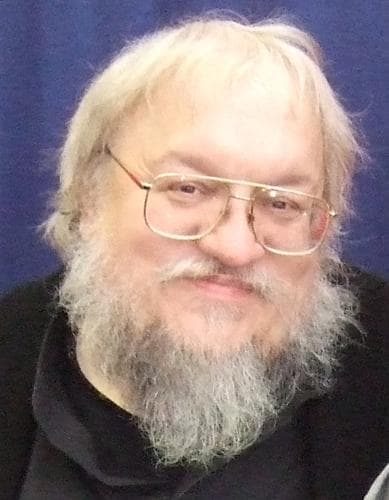
Biography coming soon.







