“It's fruitcake weather!”
— Buddy's cousin, Miss Sook, exclaims this at the start of the story, signaling the beginning of their Christmas preparations.

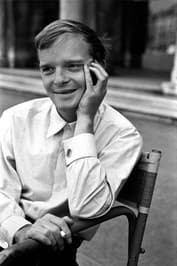
Truman Capote (1956)
Genre
Children's
Reading Time
30 min
Key Themes
See below
Sign in to track this book
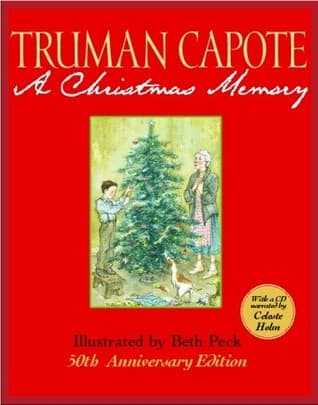
In rural Alabama, a seven-year-old boy named Buddy and his eccentric, elderly cousin, Miss Sook, celebrate Christmas with their cherished and peculiar holiday traditions, from making fruitcakes to flying kites.
The story opens in a rural Alabama house, where seven-year-old Buddy lives with his much older, eccentric cousin, Sook Falk. With the first chill of November, Sook declares, "It's fruitcake weather!" This starts their cherished Christmas ritual. They gather ingredients, including costly whiskey from a bootlegger named Mr. Haha Jones, who is initially scary but kind. Buddy and Sook's bond is clear as they work together, their shared activity showing their unique friendship, set apart from the other, more typical relatives in the household. Their excitement for the holiday season centers on the simple, joyful act of creation.
Buddy and Sook begin their annual search for fruitcake ingredients. They save pennies all year, getting just enough to buy flour, sugar, spices, and the crucial whiskey. Their trip to get the whiskey from Mr. Haha Jones, a tough-looking but gentle Choctaw bootlegger, is a highlight. Haha, impressed by Sook's honest nature, always gives them a little extra or a discount. They also gather pecans from their own trees and buy other fruits and nuts. This hard work is filled with shared laughter and quiet understanding, strengthening their deep connection as they prepare for their beloved tradition.
With all the ingredients ready, Buddy and Sook begin baking thirty fruitcakes. The kitchen becomes a fragrant, busy place. Sook, despite her weakness, works with surprising energy, while Buddy helps, stirring batter and greasing pans. The fruitcakes are not for them, but for many people: friends, distant relatives they've never met, and even public figures like President Roosevelt. Each fruitcake is a symbol of their generosity and wish to spread joy, showing their unique view on gift-giving and community.
After the fruitcakes are baked, wrapped, and stored, Buddy and Sook celebrate by trying the leftover whiskey. Sook, who rarely drinks, allows herself a small, celebratory sip, sharing some with Buddy. They become lighthearted and giddy, dancing and singing together. This innocent fun, however, brings strong disapproval from the other, more typical relatives living in the house. They scold Sook for giving alcohol to a child, showing the difference between Sook and Buddy's free-spirited joy and the strict expectations of the adults.
With fruitcakes delivered, Buddy and Sook focus on finding a Christmas tree. They go into the cold, wintry woods, carrying an old wagon and Sook's rusty ax. The search is a shared adventure, filled with Sook's whimsical thoughts about nature and Buddy's eager help. They find a magnificent, tall tree that they think is perfect. Cutting it down and dragging it home shows their determination and the strength of their bond, as they work together, driven by their shared Christmas spirit.
Back home, Buddy and Sook lovingly decorate their chosen Christmas tree. Their ornaments are not bought but homemade: strung popcorn and cranberries, paper cutouts, and saved trinkets. The most important decoration is a cardboard angel, worn and faded, which Sook carefully places at the top. Decorating is a quiet, joyful ritual, filled with memories and anticipation. The tree, though simple, shines with a special warmth and beauty, reflecting the simple, heartfelt nature of their Christmas celebrations and their deep affection for each other.
Christmas morning arrives, and Buddy and Sook exchange gifts. Their presents are always handmade and deeply personal. Buddy gives Sook a kite, which he has carefully made and decorated, and Sook gives Buddy a homemade kite, along with a new book. The simplicity and thoughtfulness of their gifts contrast sharply with the more elaborate, often impersonal presents exchanged by the other relatives. Their exchange is a moment of pure joy and mutual appreciation, showing the true spirit of giving and receiving from the heart, rather than from duty or material value.
After exchanging gifts, Buddy and Sook rush outside to a nearby field to fly their new kites. The wind is perfect, and their homemade creations fly high into the sky, dancing against the winter blue. This act of flying kites is a strong moment of shared freedom and happiness. It shows their escape from the limits and judgments of their household and the world, allowing them to connect with each other and with nature in a pure, unburdened way. The kites are a visual symbol for their spirits: light, joyful, and soaring above the everyday.
As the years pass, Buddy grows older, and Sook's health begins to decline. Her memory falters, her steps become less steady, and her once bright spirit dims slightly. Despite these changes, their Christmas rituals continue, but with a growing sense of fragility. Buddy, now a young boy nearing adolescence, sees these changes with a quiet sadness, understanding that their time together is precious and limited. The changing seasons and Sook's failing health are a sad reminder of time passing and the impermanence of even the most cherished relationships.
Eventually, the other relatives decide that Buddy needs a more structured upbringing, and he is sent away to a military academy. This separation is devastating for both Buddy and Sook. Buddy struggles to adapt to the strict environment of the school, feeling a deep sense of loss and loneliness for his cousin and their shared life. He writes letters to Sook, filled with longing, and she responds with simple, loving notes, often enclosing a small, pressed autumn leaf. Their letters show the lasting strength of their bond despite the physical distance and the changes in their lives.
The final Christmas in the story is a sad one. Sook, now very weak, still tries to make fruitcakes, but her memory is failing, and she struggles with the process. Buddy, still at the military academy, is not there to help her. The joy and energy that once marked their preparations are gone, replaced by a quiet sadness. This Christmas symbolizes the end of an era, a sad reflection on time passing and the inevitable loss of cherished traditions when key people are no longer present or able to participate fully.
One day, Buddy receives a letter telling him of Sook's death. The news, though expected, is a deep blow. He imagines her spirit, light and free, finally soaring like one of their kites. Buddy realizes that Sook was the last true link to his childhood innocence and the purest form of love he had known. The story ends with Buddy, now an adult, thinking about Sook and their shared memories. He understands that while people and seasons change, the love and lessons learned from Sook remain with him, an eternal part of his identity, like the memory of flying kites on a bright winter day.
The Protagonist/Narrator
Buddy matures from an innocent child observing the world through Sook's eyes to an adult reflecting on the profound impact of their relationship after her death.
The Protagonist/Mentor
Sook remains largely consistent in her childlike innocence and generosity, but her physical decline highlights the fragility of life and the inevitability of change.
The Supporting
Haha's character remains consistent, serving as a symbol of unexpected kindness and generosity within the community.
The Supporting/Antagonistic
The relatives remain static, serving as a foil to Buddy and Sook's unconventional bond.
The story looks at innocence through the eyes of both Buddy and Sook. Sook, despite her age, has a childlike wonder and a free spirit, seeing magic in everyday rituals like baking fruitcakes or flying kites. Buddy, as a child, shares this innocence, finding joy in simple pleasures and shared adventures with Sook. Their world is one of imagination, generosity, and pure joy, untouched by adult cynicism, as seen when they enjoy their homemade gifts and the freedom of flying kites.
“A day of winter trees, funereal but beautiful. A day of a cold sun and a wind that shakes the tops of the pecan trees. A day when the chimney smoke smells like pine needles and everybody is happy.”
At its heart, 'A Christmas Memory' shows the power of an unusual, yet deeply loving, friendship between Buddy and Sook. Their bond goes beyond age, societal expectations, and the disapproval of others. They are each other's closest friends and partners, sharing secrets, dreams, and rituals that define their lives. Their relationship shows that love can appear in many forms, giving comfort, understanding, and a sense of belonging that goes against traditional family structures, as shown by their shared joy in baking and gift-giving.
“We are not cousins; we are friends. And that is a different thing altogether.”
The story has a sad sense of time passing and the certainty of loss. As Buddy grows older, he sees Sook's declining health and the eventual end of their shared Christmases. The story's structure, told from an adult Buddy's view, highlights the bittersweet nature of memory and the understanding that cherished moments are fleeting. Sook's death and Buddy's thoughts afterward show the deep impact of those lost, yet the lasting legacy of their love and the lessons learned remain, like the memory of a kite flying high.
“Life separates us. Those whom we love, and those who love us, are separated by the passage of time.”
A main theme is generosity, not in terms of money, but in acts of kindness and love. Buddy and Sook, despite their own limited means, spend their Christmas baking thirty fruitcakes for many people, from close friends to distant figures like President Roosevelt. Their gifts to each other are handmade and deeply personal, showing thoughtfulness over cost. This theme shows that true giving comes from the heart and is about sharing joy and connection, rather than fulfilling a duty or showing wealth.
“Oh, my, it's fruitcake weather! We are going to make thirty cakes this year.”
The entire story is a nostalgic memory, with the adult Buddy looking back on his childhood Christmases with Sook. This theme explores how memories shape who someone is and provide comfort, even after loss. The clear descriptions of sights, sounds, and smells take the reader, and Buddy, back to a simpler, magical time. Remembering itself becomes a way to keep Sook's spirit alive and to process the deep impact she had on his life, highlighting the lasting power of cherished experiences.
“And when that happens, I know it's not the memory of a lost friend that I'm seeing, but the friend herself, as she was in the last days of our long friendship.”
The story is told by an adult Buddy looking back on his childhood.
The entire narrative is framed as a first-person account by an adult Buddy reflecting on his childhood memories with Sook. This device allows for a tone of tender nostalgia and poignancy, as the narrator understands the significance of events in hindsight. It also enables the blending of childlike wonder with adult wisdom, creating a bittersweet perspective on innocence, love, and loss. The retrospective lens emphasizes the enduring impact of Sook on Buddy's life and the preciousness of fleeting moments.
Kites represent freedom, joy, and the soaring spirits of Buddy and Sook.
Kites are a recurring symbol throughout the story, representing the freedom, joy, and unburdened spirits of Buddy and Sook. They make kites for each other as Christmas gifts, and flying them together is a moment of pure, unadulterated happiness and escape from the mundane. In the story's conclusion, Buddy imagines Sook's spirit 'soaring like a kite,' solidifying the kite as a symbol of her enduring, free-spirited essence and his everlasting connection to her, even after her death.
The annual fruitcake baking serves as a central ritual connecting Buddy and Sook.
The annual ritual of baking thirty fruitcakes is a central plot device that structures the narrative and symbolizes the core of Buddy and Sook's relationship. It is their shared purpose, a source of joy, and a testament to their generosity. The meticulous process of gathering ingredients, baking, and distributing the cakes highlights their cooperation, their unique bond, and their defiance of conventional norms. This ritual provides comfort, predictability, and meaning in their lives, making its eventual fading all the more poignant.
Contrasting the childlike wonder of Buddy and Sook with the mundane reality of the adult world.
This device highlights the stark differences between the simple, joyous world of Buddy and Sook and the more conventional, often disapproving world of the other relatives. The 'other relatives' represent societal expectations, practicality, and judgment, while Buddy and Sook embody innocence, imagination, and a disregard for material wealth. This contrast is evident during the whiskey incident and when Buddy is sent away to military school, emphasizing the preciousness and fragility of their unique, unburdened existence against a backdrop of conformity.
“It's fruitcake weather!”
— Buddy's cousin, Miss Sook, exclaims this at the start of the story, signaling the beginning of their Christmas preparations.
“Life seemed to be a series of farewells.”
— The narrator reflects on the transient nature of their lives and the many goodbyes they've experienced.
“Oh, my, it's a good thing we're not rich.”
— Miss Sook often says this, highlighting their contentment with their simple, humble life despite their poverty.
“A person who doesn't like dogs can't be all bad.”
— A humorous observation by Miss Sook, showing her unique way of judging character, particularly concerning their dog Queenie.
“We are not to be confused with those who have a lot of money.”
— Miss Sook's gentle reminder of their social standing and financial reality.
“Buddy. I'm afraid to leave you alone.”
— Miss Sook expresses her deep affection and dependence on Buddy, even as she herself is much older.
“We have never had a Christmas without fruitcake.”
— Emphasizes the central role of the fruitcake in their Christmas tradition and their unwavering commitment to it.
“The wind is like a violin.”
— A poetic description of the winter wind, showcasing Capote's evocative language.
“It's funny how you remember little things.”
— The adult narrator reflecting on the vividness of childhood memories, even seemingly insignificant details.
“The only thing that ever really frightened me was when I was a child and I would wake up in the middle of the night and my cousin was gone.”
— Reveals the depth of Buddy's fear of abandonment and his reliance on Miss Sook.
“A day of winter sunlight, the air like ice, and the smell of woodsmoke and pine needles.”
— Sensory details that paint a vivid picture of the Christmas season in their rural setting.
“We are each other's best friend.”
— A simple yet profound statement of the bond between Buddy and Miss Sook.
“Queenie, a small, white, bellicose terrier.”
— A memorable description of their beloved dog, Queenie, who is a constant companion.
“And that's the way it was, one Christmas after another, until, without warning, it wasn't.”
— The poignant closing line, signaling the end of their shared Christmases and the passage of time.
Ready to see how well you understood this book? Take our interactive quiz with 10 questions.
Biography coming soon.

Dan Gemeinhart
4.5

Kate O'Hearn
4.4

Jeanne Birdsall
4.4

Jen Wang
4.4
Wendelin Van Draanen
4.3

John Marsden
4.3

Chris Van Allsburg
4.3
Jennifer A. Nielsen
4.2