“Bah! Humbug!”
— Scrooge's dismissive response to Christmas greetings.

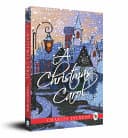
Charles Dickens (2015)
Genre
Fantasy / Historical Fiction
Reading Time
120 min
Key Themes
See below
Sign in to track this book
Ebenezer Scrooge, a miser, goes on a journey led by three ghosts, making him face his past, present, and a future without kindness, all on Christmas Eve.
On a cold Christmas Eve in London, the miserly Ebenezer Scrooge rejects all holiday joy. He turns down his nephew Fred's invitation to Christmas dinner, scolds his clerk Bob Cratchit for wanting the day off, and dismisses two gentlemen collecting donations for the poor. Back in his dark rooms, Scrooge sees the ghost of his dead business partner, Jacob Marley. Marley, chained by his own greed and indifference in life, warns Scrooge he will suffer a similar fate unless he changes. Marley explains he must wander the earth, seeing suffering he can no longer help. He says Scrooge will be visited by three spirits, giving him a chance to change before his own chains become too heavy.
As promised, the first spirit, the Ghost of Christmas Past, appears. It is a childlike figure with a glowing head. It takes Scrooge through his past. They visit his lonely school days, where he was left alone for holidays, finding comfort only in books. Scrooge sees his sister Fan come to take him home for Christmas, which reminds him of her early death and his nephew Fred. He sees his time as an apprentice under the kind Mr. Fezziwig, a generous boss who threw happy Christmas parties. This contrasts sharply with Scrooge's own stinginess. Finally, Scrooge must relive the moment his fiancée, Belle, ended their engagement. He realizes his growing focus on money had replaced his love for her, leaving him sad and alone.
The second spirit, the happy, large Ghost of Christmas Present, appears in a room that looks like a festive feast. It shows Scrooge current Christmas celebrations. They visit Bob Cratchit's small home. Despite their poverty, the family shares a small Christmas dinner with real warmth and love, especially for the sick Tiny Tim. Scrooge is touched by Tiny Tim's weakness and the Spirit's warning that he will die. The Spirit also takes Scrooge to his nephew Fred's lively Christmas party, where Fred and his guests gently make fun of Scrooge's meanness, but still toast his health. Before leaving, the Spirit shows two thin, monstrous children hidden under its robe, named Ignorance and Want. It warns Scrooge of the dangers these represent to people.
The third and most frightening spirit, the Ghost of Christmas Yet To Come, appears as a silent, hooded figure, like Death. It does not speak but points, showing Scrooge visions of the future. Scrooge sees businessmen discussing a recently deceased man whose death brings only indifference and relief. He sees his own belongings being stolen and sold by people looking for a profit. He sees a couple express relief that their debt is slightly reduced by the man's death. The spirit then takes him to the Cratchit home, where the family mourns Tiny Tim's death. This scene deeply upsets Scrooge. Finally, the spirit points to an uncared-for grave, where Scrooge reads his own name on the headstone: EBENEZER SCROOGE. Overwhelmed with fear and regret, Scrooge begs for a chance to change his future.
Scrooge wakes in his own bed on Christmas morning, happy to be alive and that the visions were not a fixed future. He feels giddy with relief and a new sense of purpose. He feels light, joyful, and completely changed. His first act is to send a large, prize turkey anonymously to the Cratchit family. He then meets the kind gentlemen who had asked for donations the day before and makes a big contribution, promising to give more. He even wishes a Merry Christmas to the boy who runs his errands and to people on the street, something impossible just hours earlier. Scrooge's heart, once cold, is now full of warmth and generosity.
Scrooge goes out and, finding courage, attends his nephew Fred's Christmas dinner party. He is warmly welcomed and enjoys himself greatly, laughing and talking with everyone. The next morning, Scrooge arrives at his office early, waiting for Bob Cratchit. When Bob arrives late, expecting a scolding, Scrooge surprises him by raising his salary, promising to help his family, and buying a new coal-scuttle. He becomes like a second father to Tiny Tim, who, with Scrooge's help, lives. Scrooge spends the rest of his life living by Christmas principles, showing generosity, kindness, and compassion. He earns a reputation as someone who truly understands how to celebrate Christmas.
The Protagonist
Scrooge transforms from a misanthropic miser to a benevolent, joyful, and charitable man, embracing the spirit of Christmas year-round.
The Supporting
Marley's 'arc' is largely complete before the story begins, but his appearance serves to initiate Scrooge's journey, making him a messenger of potential redemption.
The Supporting
Bob's situation improves dramatically due to Scrooge's transformation, receiving a raise and support for his family.
The Supporting
Tiny Tim's life is saved and his health improves due to Scrooge's intervention and generosity.
The Supporting
Fred's consistent kindness eventually breaks through Scrooge's hardened exterior, leading to a joyful family reunion.
The Supporting
The Ghost of Christmas Past helps Scrooge confront his past mistakes and the emotional cost of his choices.
The Supporting
The Ghost of Christmas Present makes Scrooge aware of the suffering of others and the joy he is missing in the present, fostering empathy.
The Supporting
The Ghost of Christmas Yet To Come forces Scrooge to confront his own mortality and the desolate legacy he is set to leave, motivating his final, desperate plea for change.
The Mentioned
Belle's story is primarily a static past event that serves as a pivotal moment in Scrooge's character development, illustrating his choices.
The Mentioned
Fezziwig's character is a static representation of an ideal employer and the spirit of generosity from Scrooge's past.
The main theme of 'A Christmas Carol' is that people can change and find redemption. Ebenezer Scrooge, at first a symbol of greed and dislike for people, changes completely in one night. Through the ghost visits, he faces his past mistakes, the effects of his current actions, and the grimness of his possible future. This journey shows that even the hardest heart can soften with empathy and a willingness to change, leading to a life of generosity and joy. His change shows Dickens's belief that good is in people, waiting to be brought out.
“"I will honour Christmas in my heart, and try to keep it all the year. I will live in the Past, the Present, and the Future. The Spirits of all Three shall strive within me. I will not shut out the lessons that they teach."”
The novel looks at the true meaning of Christmas beyond buying things and parties. It highlights charity, compassion, generosity, kindness, and friendship. Scrooge first calls Christmas 'humbug,' but through his journey, he learns its meaning is in human connection, good will toward others, and the joy of giving. The Cratchit family, despite being poor, show this spirit perfectly, finding happiness in their love for each other. The story says Christmas is a time to open one's heart, share what one has, and remember those less fortunate.
“"I have always thought of Christmas time... as a good time; a kind, forgiving, charitable, pleasant time: the only time I know of, in the long calendar of the year, when men and women seem by one consent to open their shut-up hearts freely, and to think of people below them as if they really were fellow-passengers to the grave, and not another race of creatures bound on other journeys."”
Dickens uses 'A Christmas Carol' to show the widespread poverty and social inequality in Victorian England. The struggles of the Cratchit family, especially Tiny Tim's illness and their need for basic things, are a reminder of the suffering of the poor. The figures of Ignorance and Want, shown by the Ghost of Christmas Present, directly warn against society's neglect and the dangers of ignoring others' suffering. The story asks for more empathy, charity, and social responsibility from the wealthy toward the less fortunate, arguing that individual actions can lessen widespread suffering.
“"Spirit, are they yours?" Scrooge could say no more. "They are Man's," said the Spirit, looking down upon them. "And they cling to me, appealing from their fathers. This boy is Ignorance. This girl is Want. Beware them both, and all of their degree, but most of all beware this boy, for on his brow I see that written which is Doom, unless the writing be erased."”
The novel shows how much one's past affects their current character and future. The Ghost of Christmas Past makes Scrooge revisit key moments from his youth, showing where his isolation and greed began. These memories, from his lonely school days to his lost love with Belle, show how past choices and experiences made him the bitter man he became. By facing these early moments, Scrooge understands himself and realizes the path he strayed from, making his current change possible. The past is not just a memory, but a force that must be understood to make changes.
“"Your lip is trembling," said the Ghost. "And what is that upon your cheek?" Scrooge muttered, with an unusual catching in his voice, that it was a pimple. To see him tremble, and hear him miscall himself, would have been a surprise to his business friends in the City, indeed.”
A main theme is the bad results of indifference and a lack of empathy for other people. Jacob Marley's chains are a physical sign of his 'heavy' and 'money-related' sins, specifically his failure to care for humanity. Scrooge's initial character shows this indifference, leading to his isolation, unhappiness, and the grim future seen by the Ghost of Christmas Yet To Come. The novel says that ignoring one's duty to humanity leads to a spiritual death and a legacy of being unmourned. On the other hand, being empathetic and actively compassionate leads to a full, connected, and meaningful life.
“"No space of regret can make amends for one life's opportunity misused!"”
Allegorical guides representing past, present, and future.
The Ghosts of Christmas Past, Present, and Yet To Come are the primary supernatural plot devices driving Scrooge's transformation. Each spirit serves a distinct narrative function, guiding Scrooge through different temporal perspectives. The Past reveals the origins of his character, the Present shows him the immediate impact of his choices, and the Future presents the ultimate consequences. Their sequential appearance provides a clear, structured journey of self-discovery and redemption, allowing Scrooge to gain a comprehensive understanding of his life from multiple angles and motivating him to change.
Representing the burdens of greed and indifference.
The chains worn by Jacob Marley are a potent symbol of the burdens accumulated through a life of avarice and neglect for humanity. Each link is forged from 'cash-boxes, keys, padlocks, ledgers, deeds, and heavy purses wrought in steel.' This imagery immediately establishes the spiritual cost of materialism and lack of compassion. Marley warns Scrooge that he is forging similar, heavier chains. When Scrooge awakens, he checks his own bed-curtains, symbolizing his fear of being similarly bound, and his subsequent actions demonstrate his successful escape from this fate.
Warnings and glimpses of future events to compel change.
The narrative frequently employs foreshadowing and prophecy to build suspense and motivate Scrooge. Marley's initial warning about the three spirits is a direct prophecy that drives the entire plot. The Ghost of Christmas Present's statement about Tiny Tim's potential death ('If these shadows remain unaltered by the Future, the child will die') is a powerful piece of foreshadowing that deeply affects Scrooge. These glimpses of what *could* happen, rather than what *will* happen, underscore the theme of free will and the possibility of altering one's destiny through changed actions in the present.
Highlighting differences to emphasize moral messages.
Dickens extensively uses contrast to underscore the novel's themes. The stark differences between Scrooge's cold, dark home and Fred's warm, lively party, or between the Cratchits' humble love and Scrooge's isolated wealth, highlight the emptiness of a life without compassion. The kind Mr. Fezziwig is juxtaposed with the miserly Scrooge, showing two different approaches to business and human relations. These comparisons effectively emphasize the moral lessons, making Scrooge's transformation from one extreme to the other more impactful and illustrating the benefits of generosity over greed.
Scrooge's recurring dismissal of Christmas and sentiment.
Scrooge's repeated exclamation of 'Humbug!' is a recurring motif that encapsulates his initial disdain for Christmas, generosity, and any form of sentimentality. It serves as a stark verbal representation of his cynical, materialistic worldview. As the story progresses and Scrooge begins to change, the absence of this word, and its eventual replacement with expressions of joy and goodwill, subtly tracks his internal transformation. The motif effectively establishes his character at the outset and provides a clear measure of his redemption by the end.
“Bah! Humbug!”
— Scrooge's dismissive response to Christmas greetings.
“I will honour Christmas in my heart, and try to keep it all the year.”
— Scrooge's vow after his transformation.
“God bless us, every one!”
— Tiny Tim's hopeful exclamation.
“There is nothing in the world so irresistibly contagious as laughter and good humour.”
— Narrator's observation during Fezziwig's party.
“Mankind was my business. The common welfare was my business; charity, mercy, forbearance, and benevolence, were, all, my business.”
— Marley's ghost admonishing Scrooge.
“I wear the chain I forged in life.”
— Marley's ghost explaining his punishment.
“It is required of every man that the spirit within him should walk abroad among his fellowmen, and travel far and wide; and if that spirit goes not forth in life, it is condemned to do so after death.”
— Marley's ghost describing his eternal fate.
“No space of regret can make amends for one life's opportunity misused.”
— The Ghost of Christmas Past showing Scrooge his lost love.
“For it is good to be children sometimes, and never better than at Christmas, when its mighty Founder was a child himself.”
— Narrator reflecting on the spirit of Christmas.
“I am as light as a feather, I am as happy as an angel, I am as merry as a schoolboy. I am as giddy as a drunken man.”
— Scrooge's joyful exclamation after his transformation.
“He had no further intercourse with Spirits, but lived upon the Total Abstinence Principle, ever afterwards.”
— Narrator describing Scrooge's reformed life.
“Old Marley was as dead as a door-nail.”
— Opening line describing Jacob Marley's death.
“The happiness he gives, is quite as great as if it cost a fortune.”
— Scrooge reflecting on Fezziwig's generosity.
“This boy is Ignorance. This girl is Want. Beware them both, and all of their degree, but most of all beware this boy, for on his brow I see that written which is Doom, unless the writing be erased.”
— The Ghost of Christmas Present showing Scrooge allegorical children.
Ready to see how well you understood this book? Take our interactive quiz with 10 questions.
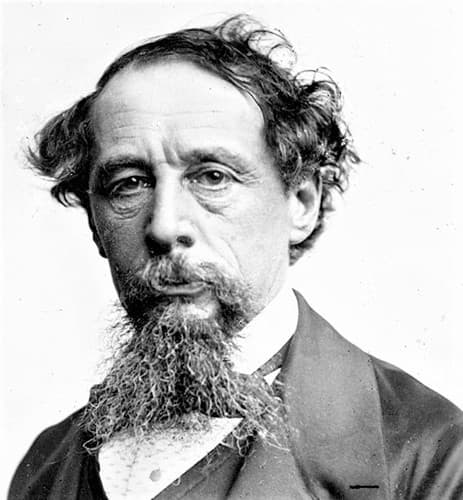
Charles John Huffam Dickens was an English writer and social critic who created some of the world's best-known fictional characters and is regarded by many as the greatest novelist of the Victorian era. His works enjoyed unprecedented popularity during his lifetime and, by the 20th century, critics and scholars had recognised him as a literary genius. His novels and short stories are widely read today.







