BookBrief
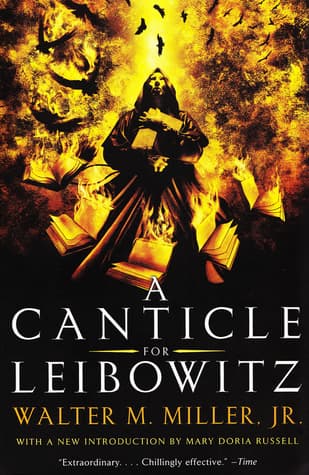
A Canticle for Leibowitz cover
Archivist's Choice

A Canticle for Leibowitz

Walter M. Miller Jr. (1959)

Genre

Fantasy / Spirituality / Science Fiction

Reading Time

600 min

Key Themes

See below

Track Your Reading

Sign in to track this book

In a post-apocalyptic world, cloistered monks guard ancient knowledge, watching centuries of rediscovery, hubris, and humanity's endless cycle of self-destruction.

Synopsis

In a post-apocalyptic future, centuries after a global nuclear war called the "Flame Deluge," the Albertian Order of Leibowitz works to preserve what remains of pre-deluge knowledge. The novel has three parts, spanning over a millennium. In "Fiat Homo," Brother Francis Gerard finds ancient relics tied to Saint Leibowitz, a Jewish engineer who became a Catholic monk and martyr after the war. His discovery, a blueprint and a shopping list, leads him on a journey to New Rome to seek sainthood for Leibowitz. The relics are stolen, and Francis dies tragically. In "Fiat Lux," centuries later, the abbey becomes a learning center as the world slowly recovers. Dom Paulo, the abbot, considers the ethics of rediscovered science as a new renaissance begins, causing conflict between faith and emerging scientific thought. Finally, in "Fiat Voluntas Tua," the world faces another nuclear war. Abbot Zerchi confronts the ultimate moral choice as humanity, having relearned its destructive technology, prepares for a second global disaster. The monks, dedicated to preserving life and knowledge, plan an 'Operation Ark' to send a mission to the stars, hoping to escape humanity's self-destructive pattern.
Reading time
600 min
Difficulty
Hard
Pacing
Slow
Mood
Philosophical, Bleak, Satirical, Reflective, Hopeful (in a long-term sense)
✓ Read this if...
You enjoy thought-provoking science fiction that explores themes of history, religion, the cyclical nature of humanity, and the ethical implications of technology.
✗ Skip this if...
You prefer fast-paced action, clear-cut heroes and villains, or straightforward narratives without deep philosophical inquiry.

Plot Summary

Fiat Homo: Brother Francis and the Wanderer

In the Utah desert, 600 years after the Flame Deluge, novice Brother Francis Gerard of Utah is on a Lenten vigil. He meets a mysterious old Wanderer who seems to know things he shouldn't and leaves a stone with ancient Hebrew writing. While looking for rocks, Francis finds an old fallout shelter with a skeleton and a metal box of ancient items. These include a shopping list, a blueprint, and a note from a physicist named Leibowitz. Francis's order, the Order of Leibowitz, preserves pre-Deluge 'Memorabilia.' Francis believes the Wanderer was Leibowitz or a divine messenger, but his abbot dismisses the idea. The Church authenticates the discovery, and Leibowitz is canonized.

The Framing of the Blueprint

Brother Francis spends the next six decades creating an illuminated manuscript of the ancient electrical blueprint from the fallout shelter. This detailed work, the 'Memorabilia,' is meant as a gift for New Rome, a distant Church center. His artistic effort shows the Order's mission to preserve knowledge, even if its true meaning is lost. The blueprint itself symbolizes the forgotten technological past, its complex diagrams now purely decorative or devotional. Francis's work is slow and careful, reflecting monastic dedication to a task whose ultimate purpose remains unknown, yet holds deep spiritual meaning for the Order.

Francis's Journey to New Rome

At 60, Brother Francis is chosen to travel to New Rome to present his illuminated blueprint. The journey is hard and dangerous, through a world still wild and full of bandits. He meets various people, some hostile, some indifferent, showing civilization's fragile state. Upon arrival, some high-ranking Church officials greet the gift with polite skepticism and bureaucracy, seeing it more as a curiosity than a vital piece of the past. Despite this, Francis's dedication and the symbolic value of the Memorabilia are recognized, though its practical importance isn't understood by those outside the Order. He eventually returns, his mission complete but with a sense of the world's continued ignorance.

The Return and the Encounter

After his mission to New Rome, Brother Francis begins his journey back to the abbey. Tired and feeling his age, he again meets the mysterious Wanderer. This time, the meeting is more significant and unsettling. The Wanderer, seemingly ageless, makes cryptic comments hinting at a deeper understanding of the world and its cycles. Francis, still convinced the Wanderer is Leibowitz or a divine messenger, is deeply affected. Shortly after this meeting, Francis is tragically killed by a group of mutants, fulfilling a dark prediction the Wanderer had hinted at. His death ends the 'Fiat Homo' section, symbolizing the close of an era of pure preservation and simple faith.

Fiat Lux: Dom Paulo and the Scholar

Six centuries after Francis, in the 'Fiat Lux' section, the world begins to recover from barbarism. Dom Paulo, the Abbot of the Leibowitzian Order, welcomes a secular scholar, Thon Taddeo Pfardentrott, to the abbey. Thon Taddeo, a brilliant scientist and philosopher, represents the world's new intellectual awakening. He wants to study the Memorabilia, especially the old technical documents. The monks, who preserved these texts for generations without understanding them, now help a new scientific revolution. Thon Taddeo quickly deciphers much of the preserved knowledge, leading to a technological rebirth that mirrors the pre-Deluge era, bringing both hope and worry to the abbey.

The Debate and the Discovery

Thon Taddeo's quick progress in deciphering the Memorabilia leads to major scientific breakthroughs, including the rediscovery of electricity. His secular, rational approach often conflicts with the monks' faith-based understanding. While Thon Taddeo focuses on applying ancient knowledge, the monks wrestle with the implications for their spiritual beliefs. At the same time, the political landscape changes, with powerful city-states emerging and old rivalries flaring up. The abbey hears about a new, devastating weapon being developed by secular powers, similar to the one that caused the Flame Deluge, hinting at a possible repeat of humanity's past mistakes.

Fiat Voluntas Tua: Abbot Zerchi and the Approaching War

Another six centuries pass, bringing us to the 'Fiat Voluntas Tua' section. The world is on the edge of global nuclear war, a terrifying echo of the Flame Deluge. Abbot Zerchi, the current head of the Leibowitzian Order, sees the growing tensions between the two main superpowers, Texarkana and the Asian Coalition. Humanity has again developed weapons of mass destruction, and the cycle of destruction seems unavoidable. The Church, led by Pope Leo XXIII, prepares 'Operation Ark,' a desperate plan to send a starship with selected children and the Memorabilia into space, hoping to save humanity's spiritual and intellectual heritage from the coming disaster.

The Refuge and the Crisis

As the war gets worse, the Leibowitz Abbey becomes a refuge for thousands of displaced people, many suffering from radiation sickness. Abbot Zerchi struggles with the immense suffering and the moral questions of euthanasia, as many sick refugees ask for a merciful death. He firmly upholds Church doctrine against it, even as the world around him collapses. The scenes in the abbey show humanity's despair and loss of hope. The contrast between the abbey's mission to preserve life and the widespread death and destruction outside creates a deep sense of tragedy and moral conflict for Zerchi.

The Final Deluge and Operation Ark

The inevitable happens: nuclear war breaks out, and the world is engulfed in a second Flame Deluge. Abbot Zerchi witnesses the horrifying destruction and the collapse of civilization. Amid the chaos, 'Operation Ark' is carried out. The starship, carrying the carefully chosen children and the collected Memorabilia, launches into space, a desperate gamble for humanity's future. The launch symbolizes both human resilience and self-destructive tendencies. The future of these space travelers is uncertain, but it represents the last hope for human civilization and the preservation of its accumulated knowledge and spiritual heritage.

The Last Supper and the Aftermath

Immediately after the nuclear war, Abbot Zerchi, badly wounded, walks through the devastated land. He meets Mrs. Grales, a two-headed mutant woman, and her 'sister,' Rachel, who shares her body. In a profound and unsettling scene, Rachel dies, and Mrs. Grales is left alone. Zerchi, seeing tragic innocence and suffering, performs a final communion for Mrs. Grales, offering a sacrament of hope in a world completely without it. He later dies from his injuries among the ruins, leaving behind a world reborn into a new, horrific silence, but with the faint echo of the Ark's departure as a sign of the enduring human spirit.

Principal Figures

Brother Francis Gerard of Utah

The Protagonist (Fiat Homo)

From a naive novice, he becomes a dedicated artist and catalyst for the Order's mission, ultimately dying a martyr.

Saint Isaac Leibowitz

The Founding Figure/Symbol

His historical actions and martyrdom establish the core mission of the Order, providing a symbolic anchor across the ages.

The Wanderer / Benjamin

The Mysterious Figure/Possible Incarnation

Remains largely unchanged, serving as a timeless observer and cryptic guide, embodying the cyclical nature of history.

Dom Paulo

The Protagonist (Fiat Lux)

He guides the Order through a period of intellectual awakening, navigating the tension between faith and emerging science.

Thon Taddeo Pfardentrott

The Antagonist/Catalyst

His discoveries rapidly advance humanity's technological capabilities, inadvertently setting the stage for future conflict.

Abbot Zerchi

The Protagonist (Fiat Voluntas Tua)

He carries the burden of humanity's impending destruction, upholding moral principles and orchestrating a final desperate act of preservation.

Mrs. Grales / Rachel

The Supporting/Symbolic

Their existence serves as a living testament to humanity's past mistakes, culminating in a scene of tragic grace.

Brother Kornhoer

The Supporting

He transitions from a preserver of knowledge to an active, if limited, practitioner of scientific inquiry.

Themes & Insights

The Cycle of Destruction and Rebirth

The novel is structured around humanity's repeated pattern of technological progress, self-destruction, and a slow, painful rebirth. This cycle appears through the 'Flame Deluge' (first nuclear war), the 'Dark Ages' that follow, the 'Renaissance' (Fiat Lux), and the second, approaching nuclear war (Fiat Voluntas Tua). The Order of Leibowitz, by preserving knowledge, unintentionally helps this cycle, showing the paradox of human intelligence. The book suggests humanity is bound to repeat its mistakes, driven by its nature, as seen when Thon Taddeo's discoveries directly lead to new weapons.

For Man had been at his game again, and had made a thing of doom, and called it a 'weapon.'

Narrator

The Preservation of Knowledge vs. Its Application

A main tension in the novel is between the monastic ideal of preserving knowledge (the Memorabilia) for its own sake and the secular drive to understand and use that knowledge. In 'Fiat Homo,' Brother Francis preserves without understanding. In 'Fiat Lux,' Thon Taddeo deciphers and applies, leading to a new scientific age. However, this application eventually creates new weapons, questioning knowledge's true value if humanity lacks the wisdom to use it responsibly. The Order struggles with whether their mission is a blessing or a curse, as their preserved texts are used to rebuild the very destructive capabilities they aimed to outlast.

The Memorabilia was the Ark of the Covenant, and its contents were the sacred scrolls, but the meaning of the scrolls was lost.

Narrator

Faith vs. Reason

The conflict between religious faith and scientific reason is a common theme. The monks represent faith, dedicating centuries to preserving knowledge they don't grasp, believing in a divine plan. Thon Taddeo embodies pure reason, seeking empirical truth and dismissing spiritual explanations. The novel doesn't definitively favor one over the other but explores their complex interaction. Faith offers comfort and purpose during the dark ages, while reason drives progress. Yet, unchecked reason can lead to destruction, and blind faith can hinder understanding. The book suggests a necessary, though often tense, dialogue between the two.

Ignorance was a kind of innocence, and it was bliss. But bliss was a luxury.

Narrator

The Nature of Humanity and Original Sin

The novel quietly explores the idea of Original Sin, suggesting that humanity's inherent flaws—pride, greed, aggression—repeatedly cause its downfall. Despite times of enlightenment and spiritual devotion, humans inevitably give in to their darker impulses, leading to war and destruction. The repeated cycles of self-annihilation suggest a fundamental, unchanging aspect of human nature. The final act of sending children into space (Operation Ark) can be seen as a desperate attempt to break this cycle, or perhaps just to postpone the inevitable, highlighting the lasting question of whether humanity can ever truly overcome its destructive tendencies.

The Man had sown the wind, and was now reaping the whirlwind.

Narrator

Hope and Despair

Throughout the novel, hope appears amid great despair. The monks' steady dedication to their mission, even when facing persecution or indifference, represents a form of hope. The scientific renaissance in 'Fiat Lux' offers a brief sense of progress and a brighter future. However, humanity's destructive tendencies consistently undermine this hope, leading to deep despair as the world falls into a second nuclear war. The final act of 'Operation Ark' is a desperate, fragile hope for humanity's legacy to survive, but it carries the tragedy of the world left behind. The novel ultimately presents a complex mix of these two emotions, never fully embracing one over the other.

The world was a dead thing, and the Ark was an empty shell, but the children were alive.

Narrator

Plot Devices & Literary Techniques

The Memorabilia

The collection of pre-Deluge documents and artifacts preserved by the Order of Leibowitz.

The Memorabilia serves as the central MacGuffin and symbolic core of the novel. Initially, it's a collection of incomprehensible relics, preserved out of faith and reverence. As the world progresses, it becomes the key to unlocking lost scientific knowledge. Its contents, ranging from shopping lists to technical blueprints, highlight the mundane and profound aspects of the past. The Memorabilia drives the plot across centuries, acting as a catalyst for both intellectual awakening and technological advancement, ultimately leading to the recreation of destructive weapons, thus embodying the double-edged sword of knowledge.

The Flame Deluge

The catastrophic nuclear war that destroyed civilization and initiated the 'Dark Ages.'

The Flame Deluge is the foundational event of the novel's backstory, a nuclear holocaust that wiped out most of humanity and technology. It serves as a constant cautionary tale and a looming threat. The fear of a 'second Deluge' drives much of the later narrative and underscores the theme of humanity's cyclical self-destruction. The Deluge is not merely a historical event but a psychological and spiritual scar on humanity, shaping its institutions and fears. Its persistent memory influences the actions of characters like Abbot Zerchi, who tries to prevent its recurrence.

The Leibowitzian Abbey

The isolated monastery that serves as a sanctuary for knowledge and a beacon of stability.

The abbey is more than just a setting; it's a character in itself, embodying the enduring spirit of preservation and faith. Located in the Utah desert, it remains a constant amidst fluctuating secular powers and periods of barbarism. It acts as a temporal anchor, connecting the three distinct eras of the novel. The abbey's mission and physical structure symbolize the continuity of human endeavor and the resilience of spiritual institutions in the face of overwhelming destruction. It is a place of refuge, study, and moral struggle throughout the centuries.

The Wanderer / Benjamin

An enigmatic, seemingly immortal figure who observes and subtly influences events across centuries.

The Wanderer is a mysterious figure, possibly Saint Leibowitz himself or a divine entity, who appears at critical junctures in the narrative. His appearances to Brother Francis and later to Abbot Zerchi (as Benjamin) serve as a narrative device to connect the disparate eras and to provide cryptic foreshadowing. He represents a timeless wisdom or perhaps a curse, observing humanity's repeated follies without directly intervening. His ambiguous nature invites speculation and adds a layer of spiritual mystery, reinforcing the cyclical nature of human history and the enduring presence of certain archetypal figures.

Operation Ark

The Church's desperate plan to send a starship carrying children and knowledge into space before a second nuclear war.

Operation Ark is the climactic plot device in the 'Fiat Voluntas Tua' section. It represents humanity's last-ditch effort to break the cycle of destruction and preserve its future. This desperate measure highlights the ultimate failure of humanity to learn from its past, as the only hope lies in escaping Earth. The Ark symbolizes both hope and profound despair: hope for a new beginning, but despair at the necessity of abandoning a destroyed world. It is a physical manifestation of the theme of preservation, taken to its most extreme and uncertain conclusion.

Critical analysis

Notable Quotes

The closer men came to perfecting for themselves a paradise, the more impatient they became with it, and with each other, and with the residual imperfections that always remained.

Reflecting on humanity's cyclical nature of progress and destruction.

Ignorance is not bliss, it is oblivion.

A harsh realization about the state of knowledge after the Flame Deluge.

Look, if a man can't do what he wants, then he's a slave. If he can do what he wants, he's a king. If he can do what he wants, but he's afraid to, then he's a fool.

Brother Francis pondering the meaning of freedom and will.

The simple truth was that they had been too proud to be humble, and too humble to be proud.

Describing the dilemma of the intellectual elite before the Flame Deluge.

Learning is a process of discovery, and discovery is a process of elimination.

A philosophical take on the pursuit of knowledge.

Does it matter whether we call it God or the Ultimate Principle, or the First Cause? So long as we acknowledge Something beyond ourselves?

A debate about the nature of divinity and belief.

That knowledge which is too dangerous for men, God keeps to Himself.

A belief held by some monks regarding forbidden knowledge.

The road to hell is paved with good intentions.

A classic proverb used in the context of humanity's repeated mistakes.

There was a time when men went all the way to the stars. Now they're just trying to get a fire started.

A stark contrast highlighting humanity's regression.

The Ark was still afloat, but the Flood was coming again.

A metaphor for the cyclical nature of destruction and preservation.

A thing is not necessarily true because a man dies for it.

A skeptical view on the validation of beliefs through martyrdom.

Perhaps there was no 'answer' to anything, but only 'answers' to questions that were never asked, and never would be.

A reflection on the elusive nature of ultimate truths.

In a world of ciphers, the man who knew how to count was king.

Illustrating the value of basic knowledge in a post-apocalyptic world.

For Man, the only thing that is constant is change itself.

A universal observation about human existence and history.

Quiz

Test Your Knowledge

Ready to see how well you understood this book? Take our interactive quiz with 10 questions.

10
Questions
~5
Minutes
?
Best Score

Key Questions (FAQ)

The novel explores humanity's cyclical nature of destruction and rebirth through the lens of a monastic order, the Albertian Order of Leibowitz, dedicated to preserving knowledge after a devastating global nuclear war. It spans over a millennium, showcasing the slow rediscovery of science and the inevitable repetition of past mistakes, culminating in another apocalyptic event.

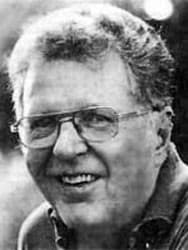
About the author