“The world is what it is; men who are nothing, who allow themselves to become nothing, have no place in it.”
— Salim's early reflections on his place in the world and the expectations of his community.

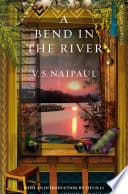
V. S. Naipaul (2020)
Genre
Literary Fiction / Historical Fiction
Reading Time
540 min
Key Themes
See below
Sign in to track this book
In the chaotic wake of post-colonial independence, an Indian merchant seeks a new beginning at a sleepy bend in an unnamed African river, only to find his dreams consumed by the continent's violent unraveling.
Salim, a young man of Indian descent from a long-established trading family on the East African coast, decides to leave his familiar but unchanging community. He feels drawn to the continent's interior, a place he thinks holds more promise and less rigid tradition. He travels by steamer up a large river to a small, isolated town at a bend. This former colonial outpost is now part of an unnamed, newly independent African nation. He buys a small shop from a departing European, planning to sell various goods to the local people. The town is shown as a place of decay and uncertainty, still showing its colonial past and dealing with the new, often chaotic, realities of post-independence rule. Salim is initially hopeful, seeing the town as a fresh start for his plans.
Salim begins his business, selling everyday provisions, household items, and some luxuries. He observes the town's people: the local Africans, the remaining Europeans, and other immigrant traders. He notices the widespread poverty, the slowly crumbling remnants of colonial buildings, and the uneasy relationship between different tribal groups. He befriends Metty, an older African woman who helps him at home, and Indar, a successful Indian trader who has moved to the capital. Salim also meets Father Huismans, a European priest interested in local masks, and Big Man, the charismatic leader of the new nation, whose image and words are everywhere. The town feels like it is waiting, with subtle tension and political instability underneath.
Salim meets Ferdinand, a bright, ambitious young African man who is the son of Zabeth, a once-powerful local woman. Ferdinand first works for Salim, but his intelligence and drive are clear. Salim becomes a mentor to Ferdinand, encouraging his education and offering advice. Their friendship crosses racial and cultural lines, giving Salim more insight into the local community and the hopes of the younger generation. Ferdinand represents the hope and potential of the new Africa, but also the challenges faced by those caught between old ways and modern goals. Salim watches Ferdinand struggle to balance his tribal background with the new national identity Big Man is creating.
Salim travels to the capital city, a sprawling, chaotic place where power is concentrated. He stays with Indar, who has become a successful academic, navigating the complexities of the new government. Through Indar, Salim meets Raymond, a French academic and former colonial official, and his beautiful wife, Yvette. Salim is attracted to Yvette, and they start a secret, passionate affair. This relationship is a departure from Salim's reserved nature and shows him a different world of European sophistication and unclear morals. The affair is turbulent and ultimately unfulfilling, reflecting the wider unease and rootlessness that affects many characters in the post-colonial setting.
Back at the bend in the river, the political situation becomes more unstable. Big Man's government tightens its control, and the 'Youth Guard,' a paramilitary group, acts as a tool of control and fear. They patrol the town, enforce rules, and create fear. The local currency loses value, businesses struggle, and uncertainty becomes normal. Salim sees the arbitrary nature of power and the loss of individual freedoms. The once-quiet town becomes a place of high tension, where suspicion and watching are constant. The economic hardship forces many to adapt or suffer, and Salim finds himself increasingly at risk.
Big Man's government begins a project to 'Africanize' the country, which includes destroying colonial symbols. The 'Domain,' a European-built compound meant to be a modern educational institution, is torn down. Its materials are reused or left to rot. This act shows the rejection of the past and the often-destructive nature of the new order. At the same time, Father Huismans, the priest who collected masks, is found murdered, likely by local thugs or the Youth Guard. His collection is stolen. His death shows the lawlessness and violence that have become common, and the disregard for both foreign presence and cultural heritage in the chaotic change.
Overwhelmed by the instability and personal problems, Salim decides to leave the country and travels to London. He stays with Indar, who has now fully adopted a Western lifestyle, leaving behind his African identity. Salim finds London to be an alienating city where he feels even more disconnected than in Africa. He struggles to find a sense of belonging or purpose. The experience in London highlights his deep rootlessness. Despite the chaos at the bend, Salim realizes his place, however uncertain, is there. He eventually decides to return, having found no comfort or future in the West, understanding that his fate is tied to the uncertain future of the African continent.
Upon his return, Salim finds the town even more changed. The political oppression has grown, and economic conditions have worsened significantly. He manages to reopen his shop, but business is hard. Goods are scarce, and the Youth Guard's presence is more widespread and threatening. Salim observes the deeper despair among the local people. He reconnects with Ferdinand, who has risen in the government, but their friendship is now strained by Ferdinand's involvement in the system that oppresses Salim. The future of the town and its people seems increasingly bleak, controlled by fear and the whims of Big Man's government.
The government's 'Africanization' policies reach a peak when Salim's shop, along with other foreign-owned businesses, is officially taken by the state. This act leaves Salim without money or a way to make a living. He is given a short time to leave the country. With Ferdinand's help, who, despite his position, still has some loyalty to Salim, he gets passage out of the country on a steamer. Salim's departure is sudden and forced, the result of the political and economic collapse that has taken over the nation. He leaves the bend in the river, his initial hopes gone, a refugee of the forces he had tried to understand.
The Protagonist
Salim begins with optimistic detachment, hoping to build a future, but ultimately becomes a refugee, stripped of his possessions and forced to confront the transient nature of his existence.
The Supporting
Ferdinand rises from a local boy to a functionary within the regime, demonstrating both adaptability and the moral compromises required for survival and advancement.
The Antagonist
Though never directly encountered, Big Man's policies and increasing grip on power drive the plot, leading to the country's economic and social decay.
The Supporting
Yvette remains largely static, a figure of European disillusionment who offers Salim fleeting passion but no lasting solace.
The Supporting
Indar transforms from a locally ambitious academic to a fully Westernized intellectual, symbolizing the abandonment of African identity for global success.
The Supporting
Metty remains a constant, resilient figure, embodying the quiet endurance of the local people amidst political upheaval.
The Supporting
Father Huismans's arc ends tragically with his murder, symbolizing the destruction of both European and indigenous cultural heritage in the new regime.
The Supporting
Zabeth remains a strong, traditional figure, representing the enduring cultural roots of the local community.
The Mentioned
Raymond remains a static figure, a symbol of European intellectual detachment and fading influence.
The novel explores identity, especially for those between cultures. Salim, of Indian descent in Africa, feels constantly without a home, neither fully African nor truly Indian. His journey to the interior and then to London only increases this feeling. Characters like Indar choose to leave their African identity for Western life, while Ferdinand struggles to balance his tribal background with the new national identity. The collapse of colonial structures leaves a gap, forcing individuals to redefine themselves in a chaotic, often violent, new world. Old identities are challenged, and new ones are forced, often leaving people without a true home.
“The world is what it is; men who are nothing, who allow themselves to become nothing, have no place in it.”
Naipaul shows the disappointment after African independence. Initial hopes for self-rule and progress give way to corruption, authoritarianism, and economic collapse under Big Man's government. The 'Africanization' policies lead to destruction (like the demolition of the Domain) instead of real development. Rule of law is replaced by arbitrary power and violence, seen in the Youth Guard. The novel suggests that independence, rather than bringing freedom, simply exchanged one type of oppression for another, leaving the people in fear, poverty, and constant uncertainty. The 'bend in the river' shows a continent struggling with its own problems.
“The new independence was like a great excitement, but it was just like the excitement of a slave who has been given a new master.”
Power in 'A Bend in the River' is shown as arbitrary, corrupting, and violent. Big Man's government uses fear, propaganda, and brutal enforcement by groups like the Youth Guard. The violence is not always open warfare but a widespread atmosphere of intimidation, theft, and disregard for human life, as seen in Father Huismans's murder. This theme explores how power, once taken, controls, exploits, and destroys, leading to a breakdown of social order and a pervasive sense of insecurity. The novel shows how individuals, from Salim to Ferdinand, must navigate or give in to these forces of power and violence to survive.
“The bush was full of spirits, and the spirits were the spirits of the dead. They were the spirits of the people who had been killed, and they were the spirits of the people who had died of hunger and disease.”
The novel explores the clash and decay of various cultures—local African traditions, the remnants of European colonialism, and the Indian trading culture. The town at the bend is where these cultures clash, exist uneasily, and eventually fall apart. Colonial buildings crumble, traditional masks are stolen or destroyed, and the 'Africanization' movement often means getting rid of anything not considered 'African,' even if it is a vital part of the country's makeup. This cultural decay adds to the overall sense of loss, confusion, and the struggle to create a clear national identity among the ruins of the past and the uncertainties of the present.
“The past was not a country to return to. It was a place where things had happened, and they had happened irrevocably.”
Provides an intimate, subjective lens on post-colonial Africa.
The entire story is narrated by Salim, offering a deeply personal and often detached perspective on the events unfolding around him. His observations are filtered through his unique position as an outsider, an Indian in an African country, which allows him to critically examine both African society and the lingering European influence. This subjective lens heightens the sense of alienation and uncertainty, as the reader experiences the chaos and decay through Salim's often bewildered and disillusioned eyes. His internal monologues and reflections are central to understanding the novel's themes of identity and rootlessness.
The setting symbolizes the broader state of post-colonial Africa.
The town at the 'bend in the river' functions as a powerful symbol and a microcosm for the larger post-colonial African continent. Its isolation, decay, and constant state of flux – from colonial outpost to independent nation under authoritarian rule – reflect the broader political and social upheavals of the time. The river itself represents both a path to opportunity and a conduit for the flow of chaos and change. The specific events and characters within this small town mirror the grander failures and struggles of the new nations, making the local universal.
Material objects represent cultural heritage, destruction, and aspiration.
Throughout the novel, specific objects carry significant symbolic weight. Father Huismans's collection of African masks represents a vanishing cultural heritage and the European gaze upon it; their theft and his murder signify the destruction of both. The 'Domain,' a grand, decaying European-built compound, symbolizes the failed aspirations of colonialism and the destructive, often misguided, efforts of the new regime to erase the past. These objects are not merely props but encapsulate the larger themes of cultural clash, decay, and the loss of identity in the changing landscape.
The leader's unseen but pervasive influence generates fear and uncertainty.
Big Man, the country's authoritarian leader, never appears directly in the novel, yet his presence is felt everywhere through his omnipresent portraits, pronouncements, and the actions of his regime (like the Youth Guard and nationalization policies). This unseen but all-encompassing power creates a constant atmosphere of fear, paranoia, and uncertainty. His invisibility makes him seem larger than life, an almost mythical figure whose whims dictate the fate of the nation and its inhabitants, effectively symbolizing the arbitrary and absolute nature of totalitarian rule.
“The world is what it is; men who are nothing, who allow themselves to become nothing, have no place in it.”
— Salim's early reflections on his place in the world and the expectations of his community.
“Every man has to make his own living, and if he doesn't, he's just a parasite.”
— Salim's pragmatic and somewhat cynical view on self-reliance and the struggles of the town.
“History was a story, and you could make it up as you went along.”
— Salim's observation on the malleable nature of history and the narratives created by those in power.
“The river was still there, but it was not the same river. Nothing was the same.”
— Salim's reflection on the constant change and decay he witnesses in the town and the natural world.
“Africa was not a place where you could be simple. It was a place where you had to be complicated.”
— Salim's internal thoughts on the complexities and challenges of living in post-colonial Africa.
“He understood that he was living in a place that had no future, only a past that was being erased.”
— Salim's growing despair about the state of the town and the country.
“All that was certain was the present, and even that was a kind of illusion.”
— Salim's philosophical musings on the nature of reality and the fleetingness of existence.
“The forest was not a place of beauty, but a place of terror and decay.”
— Salim's perception of the untamed jungle surrounding the town, reflecting its destructive power.
“Every new thing was old, and every old thing was new, depending on how you looked at it.”
— Salim's contemplation on the cyclical nature of events and the subjective experience of time.
“To be a man was to be responsible for yourself, and for nothing else.”
— Salim's individualistic philosophy, shaped by his experiences of abandonment and self-reliance.
“The world was full of people who were pretending to be something they were not.”
— Salim's observation of the various characters in the town, many of whom are living false lives.
“He felt like a man who had come to the end of a long journey, only to find that there was no destination.”
— Salim's feeling of disillusionment and lack of purpose after years of striving in the town.
“The past was not something that was over and done with. It was always there, waiting.”
— Salim's realization that the past, both personal and historical, continues to influence the present.
“Nothing was ever truly owned. Everything was just borrowed for a while.”
— Salim's reflections on the impermanence of possessions and the transient nature of life.
Ready to see how well you understood this book? Take our interactive quiz with 10 questions.
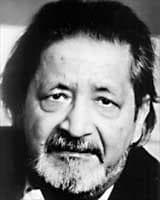
Sir Vidiadhar Surajprasad Naipaul was a Trinidadian-born British writer of works of fiction and nonfiction in English. He is known for his comic early novels set in Trinidad, his bleaker novels of alienation in the wider world, and his vigilant chronicles of life and travels. He wrote in prose that was widely admired, but his views sometimes aroused controversy. He published more than thirty books over fifty years.







