“A bear? On Paddington station?”
— Mrs. Brown's initial reaction upon seeing Paddington for the first time.

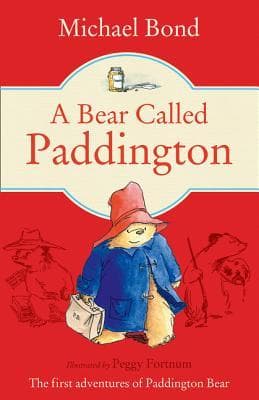
Michael Bond (1960)
Genre
Fantasy / Children's
Reading Time
150 min
Key Themes
See below
Sign in to track this book
A polite bear from Peru, who loves marmalade and causes unintentional chaos, finds a home and adventure with the Brown family in London.
Mr. and Mrs. Brown are at Paddington Station. They are there to meet their daughter Judy. They see a small bear sitting on a suitcase. He wears a tag that says, 'PLEASE LOOK AFTER THIS BEAR. THANK YOU.' The bear says he is from Darkest Peru. His Aunt Lucy taught him English, and he traveled to England in a lifeboat. Mrs. Brown feels sorry for him and decides to take him home. They name him Paddington, after the station. Before leaving, Paddington gets his paw stuck in a taxi meter, which Mr. Brown has to pay for.
At the Browns' house, Paddington goes to his new room. He likes marmalade sandwiches and eats one before bed. Mr. Brown suggests he take a bath. Paddington has never seen a bath. He fills the tub to the very top, then scrubs hard. This causes a lot of water to overflow, flooding the bathroom and the stairs. Mr. Brown hears the noise and finds Paddington happily scrubbing in the mess. Despite the chaos, the Browns find Paddington charming.
The Browns decide to take Paddington shopping for clothes. They ride the underground train, which Paddington finds interesting. On the train, he sees a man selling tickets and tries to sell some himself, causing confusion. Later, in the department store, Paddington gets separated from the Browns. He finds the food department and thinks the display is a picnic. He starts eating pastries and cakes directly from the shelves, getting covered in cream and jam. Mr. Brown eventually finds him, to the amusement of other shoppers.
Paddington wants to redecorate his room after seeing a picture. He buys wallpaper, paste, and brushes. He starts to wallpaper the room himself. He misunderstands the instructions and puts paste on the patterned side of the wallpaper. Then he tries to stick it to the ceiling. The wallpaper keeps falling, and Paddington ends up covered in sticky paste and paper scraps. When Mrs. Brown checks on him, she finds him stuck to the ceiling. This leads to another funny and messy rescue.
Paddington visits an art gallery with the Brown children, Jonathan and Judy. He likes a painting of a bear. Later, he tries painting. He uses household items like marmalade, boot polish, and a sardine tin to create a unique piece of art. Mr. Brown first dismisses it but then sees it is striking. They enter it in a local art competition. Paddington's painting wins first prize. An art critic praises its 'bold originality' and 'unusual texture,' which delights Paddington.
The Brown family takes Paddington to the seaside. Paddington likes the beach and builds a sandcastle. He uses various items he finds, including a bucket and spade. While building, he argues with a grumpy man over a good spot on the beach. Later, Paddington tries to make his sandcastle bigger. He digs too deep and causes a small tidal wave. It washes over the grumpy man and his things, amusing other beach-goers and the Brown children.
One day, a pipe in the Browns' house leaks. Paddington tries to fix it himself using a 'Do-It-Yourself' manual. He gets tools and tries to tighten the pipe. His efforts make the leak worse, turning it into a gush of water. He tries to stop it with household items, like a rubber hot water bottle, which makes things more chaotic. Mr. Brown has to call a plumber, who finds Paddington's well-meaning but disastrous attempts at repair funny.
The Browns take Paddington to see a pantomime at the theatre. Paddington is excited and brings many marmalade sandwiches. During the show, he misunderstands a scene where an actor pretends to be a villain. Thinking the actor is truly threatening the heroine, Paddington rushes onto the stage to 'rescue' her, armed with a marmalade sandwich. This causes a commotion, but the audience thinks it is part of the show and finds it entertaining. The manager is annoyed at first but then sees the humor. Paddington becomes an accidental star of the evening.
Christmas is coming, so Paddington does his own Christmas shopping. He goes to a department store, carefully choosing presents for each Brown family member and their housekeeper, Mrs. Bird. His choices are unusual: a large, strong rope for Mr. Brown, a tiny thimble for Mrs. Brown, a toy train for Judy, and a book for Jonathan. He also buys a small, strange-looking hat for Mrs. Bird. The shop assistant is confused by his choices, but Paddington says they are perfect. The Browns are later amused and touched by his thoughtful, if odd, gifts.
Christmas Day arrives, and Paddington loves the festivities. He helps give out presents and enjoys the excitement. His own gifts include a special hat, a new suitcase, and a lifetime supply of marmalade. During Christmas dinner, Paddington, still learning manners, pulls a cracker too hard, sending half of it across the room. Later, when the Browns sing carols, Paddington improvises loudly, adding his unique charm to the family celebration. The Browns think about how much joy and adventure Paddington has brought into their lives.
The Protagonist
Paddington transitions from a bewildered newcomer to a beloved, if accident-prone, member of the Brown family, finding his place and bringing joy to their lives.
The Supporting
He evolves from a hesitant and somewhat skeptical figure to a doting, if often bewildered, adoptive father.
The Supporting
She remains a consistently nurturing and accepting figure, providing a stable foundation for Paddington.
The Supporting
Jonathan remains a constant, supportive, and amused friend to Paddington throughout his initial adventures.
The Supporting
Judy remains a constant, supportive, and amused friend to Paddington throughout his initial adventures.
The Supporting
Mrs. Bird maintains her practical, caring nature, slowly revealing her affection for Paddington despite his antics.
The Supporting
Mr. Gruber consistently provides wisdom and friendship to Paddington, serving as a mentor figure.
The Mentioned
Aunt Lucy's role is primarily foundational, setting Paddington's journey in motion.
The main theme is Paddington, an outsider from 'Darkest Peru,' finding a home and acceptance with the Brown family in London. Despite his frequent mistakes and unusual ways, the Browns welcome him. They show unconditional love and patience. This theme starts when Mrs. Brown takes him home from Paddington Station and continues through his adventures. He is always forgiven and loved, which shows the importance of family and finding your place.
“'Please look after this bear. Thank you.'”
Paddington is innocent and naive, which leads to many funny situations. He grew up in Peru and does not know human customs or inventions. He often misunderstands everyday things like baths, tube trains, or wallpapering. His literal understanding of instructions or his well-meaning but wrong attempts to help (like fixing a pipe or 'rescuing' an actress) come from this innocence. They create chaos that is always charming, never mean-spirited.
“'A very rare sort of bear,' said Mr. Brown. 'There aren't many of them about.'”
The book shows how a fresh perspective can turn an ordinary life into a series of adventures. Paddington's presence makes common activities like shopping, decorating, or going to the theatre special. His unique way of interacting with the world, always with enthusiasm and a bit of mischief, shows that adventure can be found anywhere. A little chaos can bring great joy and laughter to a family. The Browns, who had a quiet life, find it better with Paddington.
“'Things are always happening to me. I'm that sort of bear.'”
Paddington is very polite. He always says 'please' and 'thank you' and tries to have good manners, even when his actions cause problems. This theme is often funny, as his politeness sometimes makes a situation worse or contrasts with the chaos he creates. His strong 'bear' principles and etiquette, taught by Aunt Lucy, gently poke fun at human social rules. They suggest that good intentions and politeness are important, even if things do not go perfectly.
“'I'm a very rare sort of bear,' said Paddington, 'and there aren't many of us left.'”
Giving human characteristics and behaviors to an animal character.
Paddington Bear is the prime example of anthropomorphism in the book. He walks upright, talks, wears clothes, eats human food (especially marmalade), and possesses complex emotions and logical thought processes. This device is crucial for the story, as it allows Paddington to interact fully with the human world and for the audience to empathize with his experiences and misunderstandings, making him a relatable and endearing character despite being a bear from Peru. His bear-like qualities (e.g., love for marmalade, sometimes clumsy movements) are blended seamlessly with human traits.
Placing a character in an unfamiliar environment to highlight cultural differences and generate humor.
The entire premise of 'A Bear Called Paddington' hinges on this device. Paddington, a bear from the jungles of Darkest Peru, is suddenly placed in the bustling, highly structured environment of London. His unfamiliarity with everyday human customs, technology (like tube trains or baths), and social norms creates constant humor as he navigates this new world. His misunderstandings and well-meaning blunders are a direct result of being a 'fish out of water,' allowing for gentle satire and exploration of cultural differences through a charming, innocent lens.
Repeated phrases or situations that add to characterization and humor.
Several elements serve as running gags. Paddington's constant supply and love for marmalade sandwiches, which he keeps under his hat, is a frequent and iconic motif. The phrase 'sticky situation' is often used to describe the messes Paddington gets into. These recurring elements not only provide humor but also reinforce Paddington's unique personality and habits, making him instantly recognizable and endearing. They become comforting and expected parts of the narrative, enhancing the book's lighthearted tone.
A series of self-contained adventures or incidents rather than a continuous, overarching plot.
The book is structured as a collection of short, largely independent stories or chapters, each detailing a new adventure or mishap Paddington experiences. While there's a loose chronological progression (Paddington's arrival, then various first experiences), each chapter presents a complete narrative arc with its own conflict, climax, and resolution. This episodic format is typical for children's literature, allowing young readers to enjoy individual stories while still following the development of the main character and his integration into the Brown family life.
“A bear? On Paddington station?”
— Mrs. Brown's initial reaction upon seeing Paddington for the first time.
“Please look after this bear. Thank you.”
— The label around Paddington's neck when the Browns find him.
“Bears like marmalade.”
— Paddington explaining his preference for marmalade sandwiches.
“Things are always happening to me. I'm that sort of bear.”
— Paddington reflecting on his tendency to get into mishaps.
“It's a good job bears' fur is waterproof.”
— Paddington after getting into trouble with water or baths.
“I'm not a very tidy bear.”
— Paddington admitting to his messy habits.
“I think I'll have a marmalade sandwich to help me think.”
— Paddington's go-to solution when faced with a problem.
“Bears can't help being curious.”
— Paddington explaining why he investigates things.
“I'm a bear of very little brain.”
— Paddington modestly downplaying his intelligence.
“It's nice having someone to talk to.”
— Paddington expressing gratitude for the Browns' companionship.
“I expect it's because I'm a foreign bear.”
— Paddington attributing misunderstandings to his origins.
“A bear's life is full of surprises.”
— Paddington philosophizing about his experiences.
“I'll try my hardest.”
— Paddington's earnest promise when attempting something new.
Ready to see how well you understood this book? Take our interactive quiz with 10 questions.
Biography coming soon.







