“Hope for the best, plan for the worst.”
— Jack Reacher's pragmatic mindset while preparing for a dangerous situation.

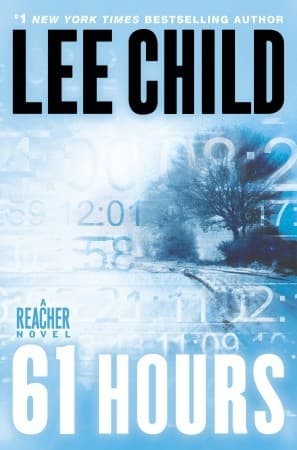
Lee Child (2010)
Genre
Thriller / Mystery
Reading Time
360 min
Key Themes
See below
Sign in to track this book
Stranded in a brutal South Dakota snowstorm, Jack Reacher finds himself in a desperate race against a professional assassin to protect a lone woman whose testimony could expose a town's deadly secrets, all while a ticking clock counts down their final 61 hours.
Jack Reacher is a passenger on a Greyhound bus traveling through South Dakota when a severe blizzard causes the bus to crash on an icy road. No one is seriously hurt, but the passengers are stranded in a vast, frozen plain, miles from any town. With the bus broken, Reacher and the other passengers are picked up by a local sheriff's deputy and taken to a small motel in the town of Bolton. The deputy explains that the extreme weather has cut off Bolton from the outside world, and they will have to wait for the storm to end before continuing their journeys. Reacher, always observing, immediately notices the tension in the small community.
At the motel, Reacher learns about Gladys Hutton, an elderly woman who is the only witness in a major drug trafficking trial against a biker gang, the Praetorian. She is protected by local law enforcement, including Sheriff Ryman and his deputies, due to threats against her life. Gladys saw the gang's drug lab and is set to testify. Her safety is important, as her testimony is needed for the prosecution. Reacher, despite his usual transient nature, gets involved, his instincts telling him that something is wrong and that Gladys's life is in danger, made worse by the blizzard's isolation.
As the blizzard continues, a new, chilling person arrives in town via snowmobile, seemingly unaffected by the extreme conditions. This person is a skilled, professional assassin, hired by the drug cartel to eliminate Gladys Hutton before she can testify. The assassin's presence increases the tension, as the local police force, already busy and new to such a high-stakes threat, struggles to keep Gladys safe. Reacher, with his military background and sharp mind, quickly sees the assassin's skills and the weaknesses of the current protection, realizing that the situation is more dangerous than the local authorities understand.
Knowing the local police cannot protect against a professional killer, Reacher begins to take charge of Gladys Hutton's security. He points out problems in their procedures, suggests changes to their defense, and starts a more strict plan. This causes conflict with Sheriff Ryman and his deputies, who are at first bothered by the outsider's interference. However, as Reacher's expertise and calm manner prove useful, and the threat grows, they reluctantly start to listen to him. Reacher strengthens Gladys's motel room and sets up observation points, preparing for the attack.
The assassin, showing patience and precision, begins a series of attempts and direct attacks on the motel where Gladys Hutton is. These attempts are meant to test the defenses, find weaknesses, and create chances. Reacher, expecting these moves, stops each one, often through quick thinking and action. One attempt involves a power outage, another a diversion. Each stopped attack shows the assassin's skill and determination, increasing the suspense and forcing Reacher to constantly change his defense plans. The motel becomes a tense, claustrophobic fortress under attack, with the clock counting down to Gladys's testimony.
During his investigations around Bolton, Reacher finds a shocking secret: a large, underground drug laboratory operating directly beneath the town. This facility is more extensive and professional than anything linked to a local biker gang. He realizes that the Praetorian gang is just a front for a larger, more dangerous criminal group. This discovery changes Reacher's understanding of the situation, revealing a deeper, more sinister plan at work within the seemingly quiet town.
As Reacher puts together clues from the drug lab and the assassin's movements, a truth appears: Sheriff Ryman, the head of local law enforcement, is part of the drug operation. Reacher figures out that Ryman has been working against Gladys Hutton's protection, subtly stopping efforts and giving information to the assassin. This betrayal breaks the trust Reacher had in the local authorities and leaves him feeling isolated and in greater danger. The realization that the people sworn to protect Gladys are her enemies creates an immediate and deadly internal threat.
With time running out before Gladys Hutton's testimony, the assassin launches a brutal, coordinated final assault. The attack is relentless and sophisticated, using explosives and advanced tactics to break the motel's defenses. Reacher, along with the few trustworthy deputies, fights back fiercely, engaging in close combat. The motel becomes a war zone, with gunfire and explosions echoing through the blizzard. Casualties increase, and the situation becomes desperate. Reacher's focus remains on protecting Gladys, but he knows that even his skills might not be enough against such a determined enemy.
After the assault on the motel, Reacher pursues the remaining threats, leading him directly to the underground drug lab. Here, he confronts both the assassin and the corrupt Sheriff Ryman. A brutal and intense fight happens within the lab's confined, winding spaces. Reacher, using his cunning, strength, and combat experience, stops the remaining threats. The fight is a desperate struggle for survival, ending in a violent confrontation where Reacher finally takes down both the professional killer and the treacherous sheriff, dismantling the drug operation and securing Gladys's immediate safety, though with personal cost.
After the battles, Reacher ensures that Gladys Hutton is safe and can testify. The drug lab is exposed, and the remaining corrupt people are caught. However, the victory is not entirely happy, marked by the loss of innocent lives and the destruction in the small town. Reacher thinks about the personal toll of fighting for justice in a place where corruption was deep. As the blizzard finally breaks and the outside world connects with Bolton, Reacher, true to his nature, prepares to move on, leaving the broken town behind, its secrets now exposed and its future uncertain.
The Protagonist
Reacher, initially an unwilling participant, fully commits to protecting Gladys Hutton and exposing the deep-seated corruption, reaffirming his role as a lone wolf who fights for justice.
The Supporting
Gladys endures immense danger and fear but ultimately survives to deliver her testimony, embodying resilience and the power of an ordinary person's courage.
The Antagonist
Ryman's facade of a struggling sheriff crumbles, revealing him as a corrupt orchestrator who is ultimately exposed and defeated by Reacher.
The Antagonist
The assassin is a relentless force of nature, ultimately brought down by Reacher's superior tactical mind and combat prowess.
The Supporting
Nelson grows from an inexperienced deputy into a more capable and morally upright officer under Reacher's influence, ultimately siding with justice.
The Supporting
Griezman remains loyal to Ryman's corruption and is ultimately neutralized along with the rest of the criminal enterprise.
The Mentioned
The gang's role is diminished as Reacher uncovers the true scope of the drug operation, revealing them as minor players.
The Antagonist
The cartel's operation in Bolton is dismantled by Reacher, though the organization itself is too large to be fully eradicated in this single narrative.
This theme is central to '61 Hours,' as Jack Reacher, a lone agent of justice, battles a deeply corrupt network. The peaceful town of Bolton is a hub for a drug operation, helped by the law enforcement meant to protect its citizens, like Sheriff Ryman. Reacher's pursuit of truth and his commitment to protecting Gladys Hutton, despite the odds and the internal betrayal, show the difference between moral integrity and the power of greed.
“Sixty-one hours. Not a minute to spare.”
The book looks at how evil works, not just in the assassin's violence but also in the corruption of Sheriff Ryman and the drug cartel. Evil is shown as systematic and patient, willing to sacrifice anyone to protect its interests. Reacher faces both the force of a professional killer and the quiet betrayal of a trusted authority figure, showing that evil can have many faces, from obvious threats to hidden betrayers. The hidden drug lab itself shows the deep, hidden evil.
“He knew it for a fact: one good witness was better than ten bad ones. And Gladys Hutton was a good one.”
The extreme blizzard and the remote setting of Bolton, South Dakota, create a sense of isolation, making Gladys Hutton more vulnerable and increasing Reacher's challenges. Cut off from outside help, the characters must rely on their immediate resources, making the internal threat of corruption even stronger. The isolation makes escape impossible and outside assistance unavailable, increasing the tension and the danger to Gladys's life as the clock counts down. The small, claustrophobic environment increases the psychological pressure on everyone.
“The storm was a wall, thick and white and solid. Nothing was getting in, and nothing was getting out.”
The title '61 Hours' reflects this central theme. The story is driven by a countdown to Gladys Hutton's testimony, and the deadline for the assassin to eliminate her. Time is a constant enemy, pressing on Reacher and his allies. Every minute lost, every delay, every setback brings them closer to the confrontation. The ticking clock creates suspense and forces quick decisions, emphasizing the urgency and high stakes of the situation, and making Reacher's task harder.
“The clock was ticking. It always was. But this time, Reacher could hear it.”
A literal countdown to a critical event, driving narrative tension.
The entire narrative of '61 Hours' is structured around a literal ticking clock: the 61-hour countdown to Gladys Hutton's scheduled court testimony. This device creates immense suspense and urgency, as Reacher and the local police must protect Gladys from a relentless assassin before time runs out. Each chapter and event is framed by the dwindling hours, constantly reminding the reader of the high stakes and the impending deadline, forcing Reacher to make quick decisions and escalating the tension with every passing minute. It's not just a plot element, but the very title and core organizing principle of the story.
Extreme weather cuts off the town, intensifying the internal threat.
The severe blizzard that strands Reacher in Bolton serves as a powerful plot device. It physically isolates the town, cutting off all avenues of escape for Gladys Hutton and preventing outside help from reaching Reacher. This isolation forces the characters to deal with the threat entirely from within, amplifying the danger posed by the assassin and the internal corruption of Sheriff Ryman. The blizzard also adds to the oppressive atmosphere, making the environment itself an antagonist and increasing the sense of claustrophobia and vulnerability.
A perceived threat that distracts from the true, larger conspiracy.
The Praetorian biker gang initially appears to be the primary antagonist, the group responsible for the drug lab and the threats against Gladys Hutton. This serves as a red herring, leading Reacher and the reader to believe the conflict is localized and manageable. However, Reacher's deeper investigation reveals that the Praetorians are merely a front for a much larger, more sophisticated drug cartel and that the true mastermind is Sheriff Ryman. This device allows for a major plot twist and reveals the deeper, more pervasive nature of the corruption.
A powerful, hidden criminal organization pulling the strings.
While the assassin and Sheriff Ryman are immediate antagonists, the ultimate power behind the drug operation is an unnamed, unseen drug cartel. This device adds a layer of menace and scale to the conflict, suggesting that even if Reacher stops the immediate threat in Bolton, he is merely chipping away at a much larger, global criminal enterprise. The anonymity of the cartel enhances their power and highlights the seemingly endless nature of the fight for justice, leaving the reader with a sense of the vastness of the criminal underworld.
“Hope for the best, plan for the worst.”
— Jack Reacher's pragmatic mindset while preparing for a dangerous situation.
“The only way to guarantee a thing is to do it yourself.”
— Reacher explaining his self-reliant approach to solving problems.
“In an investigation, details matter. The smallest thing can be the key.”
— Reacher emphasizing careful observation during the mystery.
“Fear is a reaction. Courage is a decision.”
— Reacher reflecting on facing threats in the frozen town.
“Sometimes the best defense is a good offense.”
— Reacher strategizing against adversaries in the climax.
“Trust your gut. It's smarter than you think.”
— Reacher advising another character based on instinct.
“In the cold, everything slows down. Including your enemies.”
— Reacher noting the tactical advantage of the winter setting.
“A promise is a promise. Even if it's hard to keep.”
— Reacher discussing his commitment to helping others.
“The truth doesn't care about convenience. It just is.”
— Reacher uncovering a key revelation in the plot.
“You don't need a plan if you're ready for anything.”
— Reacher's flexible approach to unpredictable situations.
“Silence can be louder than words.”
— Reacher observing a tense moment during the investigation.
“Justice isn't always pretty, but it's necessary.”
— Reacher justifying his actions in the resolution.
“In a fight, the first move isn't always the best move.”
— Reacher analyzing combat tactics against opponents.
“The past has a way of catching up, whether you want it to or not.”
— Reacher reflecting on how history influences the present crisis.
Ready to see how well you understood this book? Take our interactive quiz with 10 questions.

Biography coming soon.







