“Every kid thinks about this, at some point. The idea of a secret passage. A hidden door. A way into the unknown.”
— From 'Pop Art', reflecting on childhood imagination and discovery.

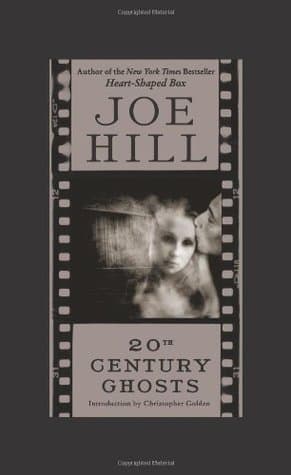
Joe Hill (2007)
Genre
Fantasy
Reading Time
316 min (approx. 1 min per page)
Key Themes
See below
Sign in to track this book
From a spectral projectionist's kiss in 1945 to an inflatable boy's lonely quest for friendship, and a murdered child's chilling calls from the dead, Joe Hill's collection blurs the line between the living and the spectral, proving the past is never truly gone.
Arthur Roth is born an inflatable boy, a unique condition that causes him to float and makes him extremely fragile. His mother struggles to care for him, fearing he will pop. Arthur finds comfort in his friendship with a neighborhood boy named Joe, who treats him with kindness and understanding, unlike most other children. They develop a deep bond, sharing secrets and experiences. As they grow older, Arthur's condition becomes more challenging, limiting his ability to participate in normal life. Joe remains his steadfast companion, helping him to experience the world as much as possible, even as Arthur's existence becomes increasingly difficult and lonely.
Alvin Hammond, a struggling artist, gains the ability to see ghosts after a childhood accident. Initially, he tries to ignore them, but the spirits are persistent, often appearing in grotesque forms. One particular ghost, a man named Crandall who died a violent death, begins to torment Alvin, appearing frequently and growing more aggressive. Crandall's presence disrupts Alvin's life and work, pushing him to his limit. Alvin eventually learns the truth about Crandall's death and must help the ghost find peace, leading to a dangerous and psychologically taxing confrontation where Alvin uses his unique ability to lay Crandall's spirit to rest.
John Finney is abducted by a serial killer known as 'The Grabber' and locked in a soundproof basement. In the basement, he finds an old, disconnected black rotary phone. To his astonishment, the phone rings, and he hears the voices of The Grabber's previous victims. These spectral children, including his friend Finney, offer him clues and advice on how to escape and fight back against their murderer. John, terrified but determined, uses their spectral guidance to gather resources, plan an escape, and ultimately turn the tables on his captor, using the combined wisdom of the dead to save his own life.
Nolan, a bright but troubled boy, struggles to connect with his severely autistic younger brother, Simon. Simon spends his days drawing incredibly detailed maps and blueprints of an imaginary town called 'Imaginaryland.' Nolan slowly realizes that Simon's creations are not just drawings but are appearing in a hidden, physical space within their house, a place only Simon seems to fully access. This hidden world, built from Simon's mind, becomes a refuge and a source of wonder, but also a place of danger as its rules are dictated by Simon's unpredictable thoughts. Nolan tries to understand and navigate this world, fearing for Simon's safety and sanity.
Eric, as a child, believed his tattered red blanket was a magical cape that granted him the power of flight. After a tragic accident involving his younger brother, Nicky, which he blames on his cape's failure, Eric abandons the fantasy. Years later, as an adult, Eric is a bitter and resentful man. He rediscovers the blanket, and this time, it seems to possess a genuine, malevolent power. The cape grants him the ability to fly and other dark powers, but at a terrible cost, twisting his personality and fueling his anger. He uses its power to get revenge and control, becoming a villainous figure rather than the hero he once imagined.
Mr. Kaye, an elderly man with a terminal illness, learns about a mysterious service that allows individuals to have their 'last breath' captured and preserved. Intrigued, he visits the establishment, run by an enigmatic woman. The process involves a complex ritual where his final exhalation is collected and stored in a glass vial, a physical memento of his life's end. This service offers a strange form of immortality, a way to leave a tangible piece of oneself behind. Mr. Kaye grapples with the philosophical implications of this act, reflecting on life, death, and legacy as he prepares for his final moments.
Jack and his younger sister, Laura, are staying at their eccentric parents' remote country house. They find a collection of bizarre, animalistic masks and observe their parents engaging in strange, ritualistic games at night. These games are unsettling and seem to involve role-playing as mythical creatures, with the parents showing disturbing changes in personality and behavior. The children become increasingly frightened, unsure if their parents are simply playing a strange game or if something more sinister is at play, blurring the lines between reality and a terrifying fantasy, forcing them to question the true nature of their parents.
Bobby Conroy, a struggling actor, works as a zombie extra on a horror film set. He is apathetic and disillusioned with his life. During a break, he meets another zombie extra, a woman named Lexine, who he recognizes as an old acquaintance from acting classes. They strike up a conversation, bonding over their shared experiences and frustrations. As they talk, a genuine connection forms between them amidst the grotesque makeup and artificial horror of the film set. This unexpected encounter offers Bobby a glimmer of hope and a chance at a new beginning, pulling him out of his cynical rut and reminding him of the possibility of human connection.
A group of friends goes on a camping trip into an isolated forest, seeking adventure and escape. As they go deeper, they notice strange phenomena: trees that seem to move, unnatural sounds, and a sense of dread. They soon realize that the forest itself is a living, malevolent entity, actively trapping and consuming anything that enters it. One by one, the friends fall victim to the forest's sinister will, becoming entangled in its roots and branches. The remaining survivors must fight for their lives against the sentient 'dead-wood,' desperate to escape its suffocating grasp and the horrifying fate it has planned for them.
The narrator, a man on his deathbed, describes his life as a continuous movie playing in his mind, projected onto the inside of his eyelids. This 'movie' is a fragmented, non-linear compilation of his memories, regrets, and fleeting joys. As he nears his end, the film becomes more vivid and intense, showing him moments of his past, both significant and mundane. He reflects on the nature of memory, the passage of time, and the inevitability of death, finding a strange comfort in this internal cinematic experience. The story explores the idea that our lives are narratives we construct and replay until the final credits roll.
Alec Sheldon is the projectionist at the dilapidated Rosebud Theater, a place steeped in cinematic history and fading glory. He is a solitary man, finding solace in the flickering images on screen. One afternoon in 1945, he meets Imogene, a beautiful young woman who knows everything about movies, from obscure facts to the perfect kiss. Imogene, however, is a ghost, one of the many spirits who haunt the old theater. She falls in love with Alec, and they share a poignant, spectral romance, united by their shared passion for film. Their relationship transcends the boundaries of life and death, offering Alec a deep, if ethereal, connection.
A young boy, a talented and passionate baseball player, dreams of making it big. He idolizes his local team and spends every waking moment practicing. During a crucial game, he suffers a horrific injury, shattering his arm and his dreams of a professional career. The injury is not only physically painful but also emotionally devastating, as it forces him to confront the end of his aspirations. He deals with the loss of his identity as an athlete and the future he had envisioned, navigating the difficult path of accepting his new reality and finding a new purpose in life beyond the baseball diamond.
In a bleak, post-apocalyptic world, two brothers, Jack and Danny, scavenge for survival in a ravaged landscape known as 'The Rundown.' They face constant threats from other desperate survivors, mutated creatures, and the harsh environment itself. Their bond is tested by the constant struggle for resources and the psychological toll of their desolate existence. They rely on each other for protection and companionship, their relationship a fragile beacon in a world without hope. The story focuses on their arduous journey, their desperate attempts to find safety, and the sacrifices they make to stay alive in a world that has forgotten humanity.
A struggling writer acquires an antique typewriter rumored to have magical properties. He soon discovers that anything he writes on it, particularly stories, begins to happen in reality. Initially, he uses this power to improve his life and create fantastical scenarios, but the magic proves to be unpredictable and dangerous. His creations often take on lives of their own, twisting his intentions and leading to chaos and unintended consequences. The writer must deal with the immense power he wields and the responsibility that comes with it, learning that bringing fiction to life can be far more perilous than he imagined.
Poe, an elderly and reclusive writer, lives in a decaying mansion, his mind slowly succumbing to dementia. He is haunted by memories of his deceased wife and the guilt of past mistakes. His daily routine is marked by strange rituals and conversations with unseen entities. The line between reality and hallucination blurs as his mental state deteriorates. He meticulously prepares a 'widow's breakfast' each day, a symbolic act of remembrance and penance. The story looks at his fragmented consciousness, exploring grief, regret, and the fragility of the mind as he confronts his haunting past in a world that is increasingly his own creation.
The Protagonist
Arthur learns to accept his unique existence and finds profound connection in an unlikely friendship, ultimately embracing his identity.
The Protagonist
Alvin transitions from denying his ability to reluctantly embracing it, using his gift to bring peace to a tormented spirit.
The Protagonist
John transforms from a terrified victim into a cunning survivor, using supernatural aid to overcome his captor.
The Protagonist
Nolan moves from confusion and frustration to a deeper, albeit unsettling, understanding of his brother's extraordinary mind.
The Protagonist/Antagonist
Eric's journey shows a descent from a child's innocent fantasy into an adult's dark embrace of malevolent power, corrupted by his past and the cape.
The Supporting Character
Imogene, a static character, finds a profound, albeit ghostly, connection with Alec, fulfilling her longing for companionship.
The Protagonist
Alec, a lonely man, finds an unexpected and profound love that transcends the boundaries of life and death, bringing meaning to his solitary existence.
The Protagonist
Poe's arc is a tragic descent into the depths of his own mind, as he grapples with the loss of self and the ghosts of his past.
Many stories in the collection explore how narratives, whether literary, cinematic, or internal, shape reality and provide escape or meaning. In '20th Century Ghosts,' Imogene and Alec's love is forged over their shared passion for film; the stories on screen become their shared language. 'Voluntary Committal' shows Simon's imaginary world appearing physically, demonstrating the tangible power of a vivid imagination. 'Scheherazade's Typewriter' directly illustrates the dangerous power of a writer's words to alter reality, highlighting the responsibility that comes with creation. Stories serve as both refuge and a source of deep influence.
“''Movies are dreams,'' Imogene whispered. ''They're the only dreams that last forever.''”
The collection often explores the impact of grief and the persistence of memory, often appearing as literal ghosts or haunting presences. 'The Widow's Breakfast' portrays Poe's descent into dementia, driven by his inability to process his wife's death and past regrets. In 'You Can See the Dead,' Alvin is tormented by ghosts, particularly Crandall, whose unresolved death leaves a lingering, malevolent imprint. The spectral children in 'The Black Phone' are not just guides but also embodiments of past loss, their memories reaching out from beyond the grave. Memory, both cherished and painful, is a strong force that shapes the living and the dead.
“''The past isn't dead. It isn't even past.''”
Several stories explore what it means to be different, to live outside societal norms, or to have one's identity irrevocably altered. Arthur Roth in 'Pop Art' is literally an 'inflatable boy,' physically distinct and fragile, forcing him to deal with his unique existence and find connection despite his otherness. Eric in 'The Cape' struggles with his identity after a childhood trauma, and the magical cape transforms him into a darker version of himself. The zombie extras in 'Bobby Conroy Comes Back from the Dead' embody a kind of living death, finding connection in their shared, unusual profession. These narratives look at the challenges and occasional beauty of being an outsider.
“''I was a boy, true. But I wasn't like other boys. I was lighter. I floated.''”
A recurring theme is the porous boundary between the living and the dead, with ghosts and spectral phenomena common throughout the collection. In 'The Black Phone,' deceased children communicate with John from the afterlife, directly influencing his survival. 'You Can See the Dead' features Alvin's involuntary ability to perceive the deceased, who often linger due to unresolved issues. The titular story, '20th Century Ghosts,' presents a tender romance between a living man and a ghost, demonstrating that love and connection can transcend the ultimate boundary. Death is not an ending but often a transition, leaving a lasting mark on the world of the living.
“''There was a phone in the basement. It didn't work. Except when it rang.''”
Characters gaining powers or witnessing otherworldly phenomena.
This device is central to many stories. Alvin Hammond gains the ability to see ghosts in 'You Can See the Dead,' while John Finney receives calls from the deceased in 'The Black Phone.' Simon in 'Voluntary Committal' manifests his imaginary world physically, and the cape in 'The Cape' grants Eric dark powers. These abilities often serve as catalysts for the plot, forcing characters to confront extraordinary circumstances and explore the limits of reality.
The reader's perception is skewed by the narrator's compromised state.
This device is prominently used in 'The Widow's Breakfast,' where the elderly writer Poe's deteriorating mental state blurs the line between reality and delusion, making it difficult for the reader to discern what is actually happening. It's also present in stories like 'My Father's Mask,' where the children's limited understanding and fear color their interpretation of their parents' bizarre games, creating a sense of psychological suspense and uncertainty for the audience.
Nature itself acts as a malevolent force.
In 'Dead-Wood,' the forest is not merely a setting but an active antagonist, a living, malevolent entity that traps and consumes the characters. This device elevates the natural world from a backdrop to a character, imbuing it with sinister intent and creating a claustrophobic, inescapable horror. It reflects a primal fear of nature's indifference or hostility towards humanity, making the environment itself a source of dread and danger.
An everyday item imbued with extraordinary power.
This device drives the plots of several stories. In 'The Cape,' Eric's childhood blanket becomes a genuine source of malevolent power. 'The Black Phone' features a disconnected phone that rings with calls from the dead. 'Scheherazade's Typewriter' introduces a typewriter that brings written stories to life. These objects serve as focal points for the supernatural, acting as conduits for power or communication that fundamentally alter the characters' realities and introduce fantastical elements into their lives.
“Every kid thinks about this, at some point. The idea of a secret passage. A hidden door. A way into the unknown.”
— From 'Pop Art', reflecting on childhood imagination and discovery.
“There are always two sides to a story. And one is always wrong.”
— From 'The Black Phone', a grim observation about conflict.
“The past is a place you can visit, but you can't live there.”
— From 'Voluntary Committal', a character's realization about memory and moving on.
“The dead don’t go away. They’re just… different.”
— From 'Bobby Conroy Comes Back from the Dead', a reflection on loss and presence.
“It’s not the monsters in the dark that scare you, it’s the ones you invite in.”
— From 'Best New Horror', a meta-commentary on the nature of fear and storytelling.
“Every story has a beginning, a middle, and an end. Even the ones that don't make sense.”
— From 'The Cape', considering narrative structure even in chaotic lives.
“Some things, once broken, can never truly be put back together.”
— From 'My Father's Mask', a somber thought on irreparable damage.
“Kids are like that. They believe in things you don't. And sometimes, they're right.”
— From 'Pop Art', about the unique perspective and intuition of children.
“The world is full of ghosts, if you only know where to look.”
— A thematic line that could apply to many stories, emphasizing hidden presences.
“There’s a difference between being alone and being lonely.”
— From 'The Black Phone', a character's internal reflection on isolation.
“Hope is a tricky thing. Sometimes it's a lifeline. Sometimes it's a noose.”
— From 'Best New Horror', a cynical view on the double-edged nature of hope.
“Memory is a kind of haunting.”
— A general theme across the collection, particularly in stories dealing with the past.
“The best stories are the ones that scare you into remembering something you thought you'd forgotten.”
— From 'Best New Horror', a meta-commentary on the power of horror literature.
“Even the smallest kindness can echo through time.”
— From 'Bobby Conroy Comes Back from the Dead', a moment of unexpected empathy.
Ready to see how well you understood this book? Take our interactive quiz with 10 questions.
Biography coming soon.







