“The world isn't always as it seems. Sometimes the things we think are real are just illusions, and the things we think are illusions are really real.”
— Tanya's grandmother explaining the nature of the unseen world and fae.

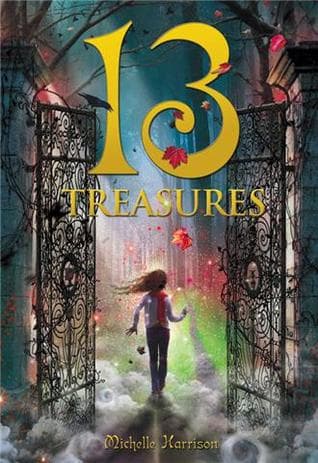
Michelle Harrison (2011)
Genre
Fantasy / Children's / Mystery / Young Adult
Reading Time
450 min
Key Themes
See below
Sign in to track this book
Banished to her grandmother's manor, a 13-year-old girl haunted by invisible, malevolent fairies discovers a chilling mystery in the surrounding woods that threatens to pull her into their treacherous realm forever.
Tanya is a thirteen-year-old girl. She has terrifying encounters with unseen fairies. These creatures are invisible to everyone else, but they torment her, scratching her, pulling her hair, and whispering threats. Her family, especially her mother, believes Tanya imagines things or is mentally ill because of a past traumatic event involving her younger brother, Alex, who drowned. Unable to cope with Tanya's 'delusions' and the disruption they cause, her mother sends her to live with her estranged grandmother, Florence, at Elvesden Manor in the countryside. Tanya does not want to leave her home and friends but has no choice, hoping the change of scenery might offer some relief from the fairy attacks.
Upon arriving at Elvesden Manor, Tanya finds her grandmother, Florence, stern and secretive. The house is old and full of strange objects, including a collection of glass eyes. Tanya soon meets her grandmother's groundskeeper, Warwick, a quiet but observant man. While exploring, Tanya discovers a hidden room behind a tapestry. It contains an old dollhouse, a tiny silver thimble, and a single shoe. Florence warns her to stay away from the woods, but Tanya is drawn to them. She also learns of the local legend of Felicity, a girl who disappeared from Elvesden Manor fifty years ago, never seen again. This sparks Tanya's curiosity about the house's past.
Tanya begins to spend time with Warwick. Despite his initial gruffness, he seems to understand her problem and does not dismiss her experiences with fairies. He tells her about the local belief in 'changelings' and the dangers of the woods, reinforcing the idea that the 'fair folk' are not always kind. Warwick also shares details about Felicity. He explains that Felicity's mother, Lady Beatrice, was obsessed with fairies and believed her daughter was taken by them. Tanya later finds a small, folded paper doll in the hidden room. It contains a message written in tiny script: 'The 13 treasures will show you the way home. F.' This note confirms Felicity's presence and her belief in the treasures.
Inspired by Felicity's note, Tanya starts searching the manor for the 'thirteen treasures.' She finds several small, seemingly insignificant objects: a thimble, a button, a shard of glass, a dried flower. While searching, she finds Felicity's hidden journal. Reading it, Tanya is shocked to discover that Felicity also saw and was tormented by fairies. The journal entries mirror Tanya's own experiences, describing the fairies' cruelty and Felicity's desperate attempts to understand them. The journal also reveals Felicity's growing belief that the fairies want something from her, and her plan to collect thirteen specific items to protect herself or find a way home.
As Tanya continues to find treasures and read Felicity's journal, she learns about the powerful and cruel Fairy Queen, ruler of the local fairy realm. The journal details how the Queen uses her glamour to trick humans and how she has a particular interest in children who can see her. Tanya begins to understand that the fairies are not just tormenting her aimlessly; they are trying to lure her into their world, as they did with Felicity. The attacks become more frequent and aggressive, and Tanya feels an increasing pull towards the woods. This dangerous allure echoes Felicity's experiences, confirming the threat to her safety.
Tanya confronts Florence with Felicity's journal and the treasures. Overwhelmed, Florence finally tells the truth: Felicity was her younger sister. She confesses that she, too, could see fairies as a child, but her parents dismissed it as imagination. One day, the fairies lured Felicity into their realm, and Florence witnessed it but could not stop them. She explains that Felicity was not simply 'lost' but was taken. Her parents, especially Lady Beatrice, were consumed by grief and guilt, leading to Florence's suppression of her abilities and her lasting resentment towards the fairies. Florence now fears the same fate for Tanya.
With Florence's confession, a new understanding emerges. Tanya, Florence, and Warwick realize that the thirteen treasures are not just protective charms but items that Felicity believed would help her find her way home or allow someone to follow her. They deduce that the fairies are drawn to specific human emotions or items. The final, thirteenth treasure is a lock of Felicity's hair, carefully preserved by Florence. This item, imbued with Felicity's essence, is believed to be the key to opening a doorway to the fairy realm. They plan to use the treasures to enter the fairy world and bring Felicity back.
Using the lock of hair and other treasures, Tanya, Florence, and Warwick find a hidden gateway in the woods. It is a shimmering portal visible only to those who can truly see. Tanya steps through, entering the fairy realm, a place of beauty mixed with sinister undertones. The air shimmers with glamour, and the landscape is both enchanting and disorienting. Immediately, the Fairy Queen begins to weave illusions, trying to trick Tanya and separate her from her purpose. Tanya must use her wits and the knowledge from Felicity's journal to distinguish reality from the Queen's deceitful magic, always remembering why she is there.
Deep within the fairy realm, Tanya finally finds Felicity. To Tanya's shock, Felicity is no longer a young girl but an ancient woman, aged by the passage of time in the fairy world, where years pass differently. Felicity is disoriented and frail, barely remembering her past life. The Fairy Queen appears, magnificent and terrifying, and reveals her true motive: she wants Tanya to stay in the fairy realm. The Queen offers Tanya a life of eternal beauty and wonder, free from human worries, in exchange for remaining with them forever. She attempts to manipulate Tanya, playing on her fears and desires, promising her an escape from her human troubles.
Despite the alluring promises and threats, Tanya refuses the Fairy Queen's offer. She realizes that true happiness is in her human life, imperfect as it may be, and with her family. Remembering Felicity's journal and the power of human will, Tanya uses the remaining treasures and her strong determination to resist the Queen's glamour. Florence and Warwick, waiting anxiously at the portal, create a distraction or pull Tanya back at a crucial moment. Together, they drag the frail Felicity through the portal, escaping the fairy realm as the Queen's power begins to wane over them, returning to Elvesden Manor.
Back at Elvesden Manor, Felicity is weak and disoriented, struggling to adjust to the human world after so many years. Her body is that of an old woman, but her mind is still partially trapped in the timelessness of the fairy realm. Florence dedicates herself to caring for her sister, a chance at redemption after fifty years of guilt. Slowly, with love and patience, Felicity begins to regain her memories and her sense of self. The sisters, separated for so long, start to mend their fractured relationship, finding comfort in each other's presence. Felicity's physical health remains fragile, but her spirit begins to heal.
With Felicity safe and recovering, Tanya returns home to her parents. She is no longer just the 'troubled' child but has a deeper understanding of herself and her ability to see the 'hidden folk.' Her experiences have matured her, and she is more confident in her perceptions. While her parents may never fully understand the truth of her adventures, Tanya has found her own acceptance. She maintains a connection with Florence and Felicity, knowing she played a role in reuniting them. Tanya now understands that her ability is not a curse but a gift, though a dangerous one, and she is better equipped to navigate its challenges.
The Protagonist
Tanya transforms from a frightened and misunderstood girl into a confident young woman who accepts her unique ability and uses it to help others.
The Supporting
Florence moves from a life of guilt and suppression to one of acceptance, healing, and renewed family connection.
The Supporting
Warwick remains a steadfast and reliable figure, whose quiet wisdom proves essential to the protagonists' success.
The Supporting
Felicity is rescued from her timeless captivity, slowly beginning to heal and reconnect with her sister, finding peace after decades of loss.
The Antagonist
The Fairy Queen remains a formidable and unchanging force of nature, ultimately thwarted by human resolve but not defeated.
The Supporting
She moves from a state of disbelief and concern to a more understanding, though not fully comprehending, acceptance of her daughter.
The Mentioned
Not applicable, as he is deceased.
The Mentioned
Not applicable, as she is deceased.
This theme explores how different characters see reality and the supernatural. Tanya's ability to see fairies is initially dismissed as mental illness by her parents. This shows the societal tendency to disbelieve what cannot be seen or scientifically explained. Florence's suppression of her own 'sight' for decades further illustrates the pressure to conform to conventional reality. The story asks the reader to question what is real and how our perceptions shape our understanding of the world. It ultimately proves Tanya's experiences are real and the fairy realm exists.
“"No one else could see them. No one else believed her. And the fairies knew it."”
The story looks at the long-buried secrets of the Elvesden family, especially Florence's guilt over Felicity's disappearance and her parents' subsequent breakdown. Felicity's abduction by fairies, dismissed by the wider world, created a deep rift and silence within the family. Florence's reluctance to discuss the past and her stern demeanor are direct consequences of this trauma. Tanya's arrival brings these secrets to the surface, allowing for generational healing and breaking a long-standing cycle of silence and misunderstanding.
“"The house had kept its secrets for fifty years, and Florence had kept hers even longer."”
Tanya's journey is about accepting her unique identity and her ability to see fairies. Initially, she views her 'sight' as a curse that isolates her and makes her family believe she is unwell. Her banishment to Elvesden, however, becomes an opportunity for self-discovery. Through Felicity's story and Florence's confession, Tanya learns that her ability is not a flaw but a powerful gift. By embracing this part of herself, she gains confidence, finds her purpose, and becomes the hero who can correct a past wrong, leading to a stronger sense of self-worth.
“"Being able to see them wasn't a curse. It was a warning."”
The novel shows the fairy realm as both beautiful and dangerous. The fairies are not the whimsical creatures of popular stories but cruel beings capable of tricks and permanent enchantment. The 'glamour' they cast is seductive, promising beauty and escape, yet it leads to a loss of self and eternal captivity, as seen with Felicity. This theme explores the idea that while the supernatural can be enchanting, it often hides a darker, more perilous truth. It emphasizes the importance of human resilience and the strength to resist temptation.
“"The fairy world was a beautiful prison, woven from wishes and spun from lies."”
A rare inherited ability to perceive fairies and the magical realm, central to the protagonists' experiences.
The 'Sight' is a hereditary ability possessed by Tanya, Florence, and Felicity, allowing them to see fairies and the magical world that is hidden from ordinary humans. This device is crucial as it drives the entire plot: Tanya's torment, her family's disbelief, and her eventual connection to Felicity's mystery. It serves as both a blessing and a curse, isolating the characters but also empowering them to interact with and ultimately challenge the fairy realm. Without the 'Sight,' the story of Felicity's abduction would remain an unsolved mystery, and Tanya would never embark on her heroic quest.
A hidden diary that serves as a vital source of information, foreshadowing, and a link to the past.
Felicity's journal is a pivotal plot device. Discovered by Tanya, it contains Felicity's detailed accounts of her own fairy encounters, her growing understanding of their malevolence, and her quest to find the 'thirteen treasures.' The journal acts as a direct line to the past, allowing Tanya to understand what happened to Felicity and providing crucial clues and warnings about the fairy realm. It also validates Tanya's own experiences, making her feel less alone and giving her the courage to confront the dangers. The journal is essential for deciphering the mystery and formulating the rescue plan.
A collection of seemingly ordinary objects that hold symbolic power and act as keys to the fairy realm and a means of protection.
The 'Thirteen Treasures' are a collection of small, mundane objects (like a thimble, a button, a lock of hair) that Felicity gathered and believed would help her find her way home or protect her from the fairies. For Tanya, these treasures become a scavenger hunt that uncovers Felicity's story and provides tangible links to the fairy world. The treasures function as symbolic anchors to the human world, imbued with human intention and emotion, which are powerful against fairy glamour. They are the physical tools used to open the portal to the fairy realm and to help Tanya navigate its dangers and ultimately bring Felicity back.
The primary setting, which acts as a character in itself, embodying secrets, history, and the gateway to the fairy world.
Elvesden Manor and its surrounding ancient woods are more than just a setting; they are active elements in the narrative. The manor is old, filled with hidden rooms and a palpable sense of history, reflecting the secrets buried within the family. The woods are a liminal space, beautiful yet treacherous, serving as the interface between the human and fairy worlds. They are where the fairies are most active and where the portal to their realm is located. The atmosphere of both the house and the woods contributes significantly to the mystery, suspense, and magical realism of the story, making them feel alive and integral to the plot's unfolding.
“The world isn't always as it seems. Sometimes the things we think are real are just illusions, and the things we think are illusions are really real.”
— Tanya's grandmother explaining the nature of the unseen world and fae.
“The fae are not like humans. They don't think like us, they don't feel like us. They have their own rules, their own morality.”
— Tanya learning about the true nature and dangers of the fae.
“Sometimes the greatest treasures are the ones you can't see, the ones hidden deep inside you.”
— A reflection on inner strength and personal value, rather than material wealth.
“Fear can make you do strange things, things you never thought you were capable of.”
— Tanya reflecting on her own actions and the actions of others driven by fear.
“Magic isn't just about spells and potions. It's about belief. It's about seeing the impossible and making it possible.”
— A character explaining the fundamental nature of magic in their world.
“Every family has its secrets. Some are small, some are dark, and some are ancient, waiting to be unearthed.”
— Tanya uncovering the deep, hidden history of her own family.
“The past isn't always dead. Sometimes it just sleeps, waiting for someone to wake it up.”
— As the ancient mysteries and curses begin to resurface.
“It's hard to trust someone when you don't even trust yourself.”
— Tanya struggling with her own abilities and her perception of reality, affecting her relationships.
“The truth has a way of coming out, no matter how deeply you try to bury it.”
— The inevitable revelation of long-held secrets and lies.
“Sometimes the only way to save yourself is to face what scares you most.”
— Tanya confronting her fears and the dangerous fae to protect herself and others.
“Not all monsters look like monsters. Some wear pretty dresses and have charming smiles.”
— A warning about deceptive appearances, particularly concerning the fae.
“Friendship is a powerful thing. It can give you strength when you have none left.”
— Tanya relying on her friends in moments of great danger and despair.
“To truly see, you must look with more than just your eyes.”
— Encouraging a deeper, more intuitive understanding of the world around her.
“The line between good and evil is often blurrier than we'd like to believe.”
— Tanya observing the complex motivations and actions of various characters, both human and fae.
Ready to see how well you understood this book? Take our interactive quiz with 10 questions.







